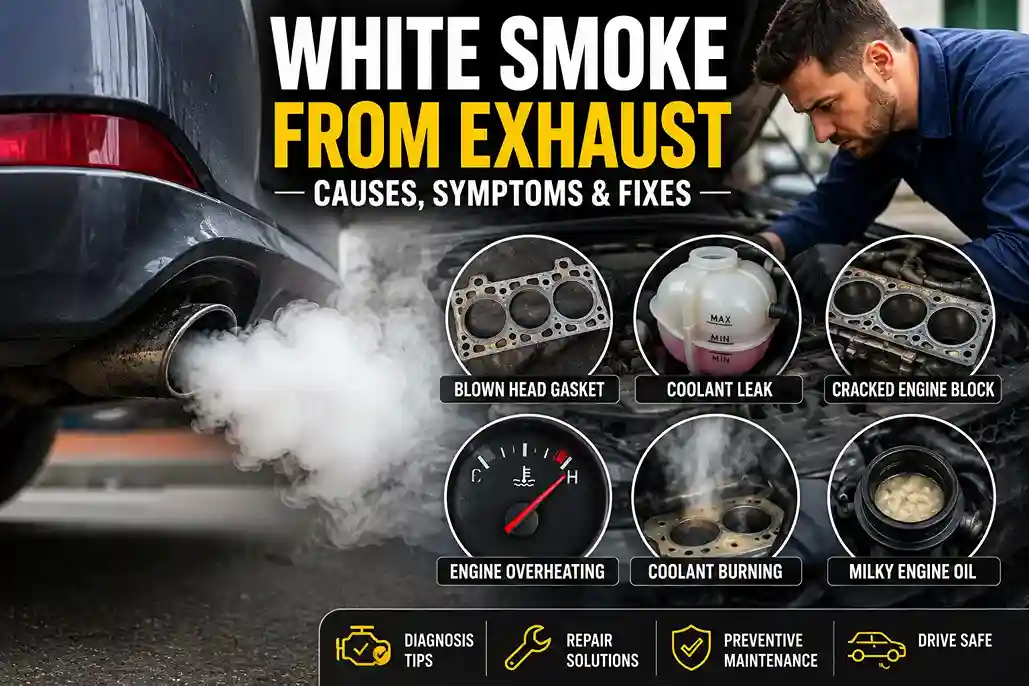
White Smoke From Exhaust Causes is a topic every vehicle owner should understand because white exhaust smoke can range from being completely harmless to indicating a serious engine problem. While a small amount of thin white vapor on a cold morning is usually normal condensation, continuous thick white smoke often points to coolant entering the engine’s combustion chamber or other mechanical issues that require immediate attention.
Ignoring persistent white smoke can lead to engine overheating, reduced performance, expensive repairs, and in severe cases, complete engine failure. Identifying the cause early helps prevent further damage and keeps your vehicle operating safely and efficiently.
In real-world situations, drivers often notice white smoke after starting the engine, during acceleration, or while idling. The appearance, thickness, and duration of the smoke provide important clues about the underlying problem.
If you’ve noticed unusual exhaust colors, you may also find our guides on Black Smoke From Exhaust Causes and Car Engine Knocking Sound Causes and Fixes helpful for diagnosing other engine-related issues.
This guide explains the most common White Smoke From Exhaust Causes, how to recognize the warning signs, methods for diagnosing the problem, and the best repair solutions.
What Does White Smoke From the Exhaust Mean?
The meaning of white exhaust smoke depends on when it appears and how long it lasts.
Normal White Vapor
Thin white vapor during cold weather is usually harmless.
It is simply water vapor created as condensation inside the exhaust system evaporates after the engine starts.
This type of vapor usually disappears within a few minutes.
Abnormal White Smoke
Continuous thick white smoke often indicates that coolant or water is entering the combustion chamber.
Unlike normal condensation, this smoke:
- Persists after the engine warms up
- May have a slightly sweet smell
- Can be accompanied by coolant loss
- Often indicates an internal engine problem
Common White Smoke From Exhaust Causes
1. Blown Head Gasket
A damaged head gasket is one of the most common White Smoke From Exhaust Causes.
The head gasket seals the engine block and cylinder head.
When it fails, coolant may leak into the combustion chamber and burn during combustion.
Common symptoms
- Thick white smoke
- Engine overheating
- Coolant loss
- Milky engine oil
- Poor engine performance
A blown head gasket should be repaired as soon as possible to avoid severe engine damage.
2. Cracked Cylinder Head
A cracked cylinder head can also allow coolant to enter the combustion chamber.
This problem is more likely after severe engine overheating.
Symptoms may include:
- Continuous white smoke
- Engine misfires
- Coolant consumption
- Rough idling
Professional inspection is required to confirm this fault.
3. Cracked Engine Block
Although less common, a cracked engine block may produce similar symptoms.
Possible warning signs include:
- Heavy white smoke
- Persistent coolant loss
- Engine overheating
- Poor compression
Repairing a cracked engine block often requires major engine work.
4. Coolant Leak Into the Combustion Chamber
Even without major engine damage, coolant may enter the cylinders through damaged seals or gaskets.
When coolant burns, it creates dense white exhaust smoke.
Drivers should monitor coolant levels regularly if white smoke appears.
5. Condensation During Cold Weather
Not all white exhaust smoke indicates a fault.
In cold or humid weather, water vapor naturally forms inside the exhaust system.
Characteristics include:
- Thin vapor
- Disappears after warming up
- No coolant loss
- No unusual engine behavior
This is considered normal.
6. Faulty Fuel Injectors (Diesel Engines)
Diesel engines may produce white smoke if fuel is not burning completely.
Possible causes include:
- Faulty injectors
- Poor atomization
- Incorrect injection timing
Incomplete combustion allows unburned fuel to exit through the exhaust.
7. Low Engine Temperature
If the engine fails to reach normal operating temperature because of a faulty thermostat, combustion may remain inefficient.
Temporary white smoke may appear until normal operating temperature is achieved.
Warning Signs That Often Accompany White Smoke
Persistent white smoke is frequently accompanied by additional symptoms.
Watch for:
- Engine overheating
- Coolant level dropping
- Sweet smell from the exhaust
- Rough idle
- Reduced engine power
- Milky engine oil
- Check Engine Light
- Poor fuel economy
Recognizing these warning signs early can help prevent expensive engine repairs.
Is It Safe to Continue Driving?
Whether you should continue driving depends on the cause of the white smoke.
It is usually safe if:
- The smoke is thin condensation.
- It disappears after a few minutes.
- The engine operates normally.
- Coolant level remains stable.
Stop driving immediately if:
- Thick white smoke continues after warming up.
- Engine temperature rises.
- Coolant level drops rapidly.
- Engine misfires occur.
- The Check Engine Light appears.
Driving with coolant entering the combustion chamber may cause severe engine damage.
According to the National Highway Traffic Safety Administration (NHTSA), drivers should address overheating and abnormal engine symptoms promptly to reduce the risk of breakdowns and safety hazards.
External Reference:
How Mechanics Diagnose White Smoke Problems
Professional technicians typically perform several diagnostic procedures.
These may include:
- Cooling system pressure testing
- Compression testing
- Leak-down testing
- Engine oil inspection
- Coolant inspection
- OBD-II diagnostic scanning
- Exhaust gas analysis
These tests help determine whether coolant is entering the combustion chamber or another engine fault is responsible.
If you’ve also noticed coolant loss or rising engine temperature, our guide on Why Your Car Is Overheating: Common Reasons & Fixes explains common overheating problems and their relationship to engine damage.
The National Institute for Automotive Service Excellence (ASE) recommends professional diagnosis whenever persistent exhaust smoke is accompanied by coolant loss, overheating, or reduced engine performance.
External Reference:
How to Fix White Smoke From the Exhaust
The correct repair depends entirely on the underlying cause. While condensation-related white vapor requires no repair, persistent white smoke caused by coolant entering the engine should be addressed immediately.
Replace a Blown Head Gasket
A failed head gasket is one of the most common causes of continuous white exhaust smoke.
Repair typically involves:
- Removing the cylinder head
- Replacing the damaged head gasket
- Inspecting the cylinder head for warping
- Refilling coolant and engine oil
- Testing for leaks
Because this repair requires significant engine disassembly, it should be performed by a qualified technician.
Repair or Replace a Cracked Cylinder Head
If diagnostic testing confirms a cracked cylinder head, repair options depend on the severity of the damage.
Possible solutions include:
- Professional welding (when appropriate)
- Cylinder head machining
- Complete cylinder head replacement
Driving with a cracked cylinder head can quickly lead to overheating and engine damage.
Repair a Cracked Engine Block
Although uncommon, a cracked engine block is one of the most serious engine failures.
Depending on the extent of the damage, repairs may involve:
- Professional engine block repair
- Engine rebuild
- Complete engine replacement
Early diagnosis can sometimes prevent further damage.
Repair Cooling System Leaks
Coolant leaks should always be repaired before they cause overheating.
Common leak locations include:
- Radiator
- Hoses
- Water pump
- Heater core
- Thermostat housing
Maintaining the cooling system helps prevent many engine-related problems.
Replace Faulty Fuel Injectors (Diesel Vehicles)
If white smoke is caused by incomplete combustion in a diesel engine, technicians may:
- Test fuel injectors
- Clean injectors
- Replace damaged injectors
- Adjust injection timing
Proper fuel delivery restores cleaner combustion and reduces exhaust smoke.
Replace a Faulty Thermostat
A thermostat stuck open may prevent the engine from reaching normal operating temperature.
Replacing the thermostat allows the engine to warm up properly, improving combustion efficiency and reducing temporary white smoke.
Common Mistakes Drivers Make
Many drivers unknowingly make engine problems worse by delaying repairs or overlooking early warning signs.
Assuming All White Smoke Is Normal
While light condensation is harmless, continuous thick white smoke after the engine has warmed up usually indicates a mechanical issue that requires inspection.
Ignoring Coolant Loss
Regularly adding coolant without investigating where it is going can allow hidden engine damage to worsen over time.
If the coolant level continues to drop, the cooling system should be inspected immediately.
Continuing to Drive an Overheating Engine
Driving while the engine is overheating can cause:
- Warped cylinder heads
- Head gasket failure
- Engine block damage
- Complete engine failure
If the temperature gauge rises above normal, stop the vehicle safely and allow the engine to cool before seeking professional assistance.
Delaying Diagnostic Testing
Persistent white smoke should never be ignored.
Early diagnosis is often far less expensive than repairing extensive engine damage caused by continued driving.
Skipping Routine Cooling System Maintenance
Old coolant, neglected hoses, and worn cooling system components increase the likelihood of overheating and internal engine damage.
Routine inspections help prevent these problems.
Best Practices to Prevent White Exhaust Smoke
Preventive maintenance can significantly reduce the risk of serious engine problems.
Recommended practices include:
- Check coolant levels regularly.
- Replace coolant according to the manufacturer’s maintenance schedule.
- Monitor the engine temperature gauge while driving.
- Repair cooling system leaks promptly.
- Service the engine at recommended intervals.
- Respond quickly to warning lights.
- Investigate unusual exhaust smoke immediately.
- Avoid driving with an overheating engine.
If you’re maintaining overall engine health, our guides on Engine Oil Leakage Symptoms and Transmission Warning Signs provide additional advice for identifying other important mechanical issues before they become costly repairs.
When Should You Visit a Mechanic?
Professional inspection is recommended immediately if you notice:
- Thick white smoke after warm-up
- Coolant loss
- Engine overheating
- Sweet-smelling exhaust
- Rough idling
- Engine misfires
- Reduced engine power
- Milky engine oil
- Check Engine Light
Prompt repairs often prevent significantly more expensive engine damage.
According to the U.S. Department of Energy, maintaining proper engine operating temperatures and following recommended maintenance schedules can improve vehicle reliability, efficiency, and long-term engine performance.
External Reference:
Frequently Asked Questions
Is white smoke from the exhaust always a problem?
No. Thin white vapor during cold weather is usually normal condensation. However, thick white smoke that continues after the engine warms up often indicates coolant entering the combustion chamber or another engine-related issue.
Can low coolant cause white smoke?
Low coolant itself does not directly produce white smoke, but coolant leaking into the engine through a damaged head gasket, cracked cylinder head, or cracked engine block can create continuous white exhaust smoke.
What does white smoke that smells sweet mean?
A sweet smell is commonly associated with burning engine coolant, which may indicate a blown head gasket or another internal cooling system leak.
Can I drive with white smoke coming from the exhaust?
If the smoke is only temporary condensation, driving is generally safe. If thick white smoke persists, especially alongside overheating or coolant loss, the vehicle should be inspected before further driving.
How expensive is it to repair white smoke problems?
Repair costs vary widely depending on the cause. Minor cooling system repairs are generally less expensive than replacing a blown head gasket or repairing internal engine damage.
Can regular maintenance prevent white exhaust smoke?
Routine cooling system inspections, timely coolant replacement, and prompt attention to overheating can significantly reduce the risk of many problems that lead to persistent white exhaust smoke.
Conclusion
Understanding White Smoke From Exhaust Causes helps drivers distinguish between harmless condensation and serious engine problems that require immediate attention. While thin white vapor on a cold morning is usually normal, continuous thick white smoke often signals coolant entering the combustion chamber because of a blown head gasket, cracked cylinder head, cracked engine block, or another cooling system fault.
Routine maintenance, regular coolant inspections, and prompt repairs are essential for protecting engine performance and preventing expensive mechanical failures. Paying attention to warning signs such as overheating, coolant loss, rough idling, and persistent exhaust smoke allows problems to be identified before they become severe.
By understanding White Smoke From Exhaust Causes, following your vehicle manufacturer’s maintenance schedule, and responding quickly to abnormal engine symptoms, you can improve vehicle reliability, extend engine life, and avoid costly repairs while maintaining safe and efficient driving.
Author: Carsinfos Editorial Team
Published: July 7th, 2026