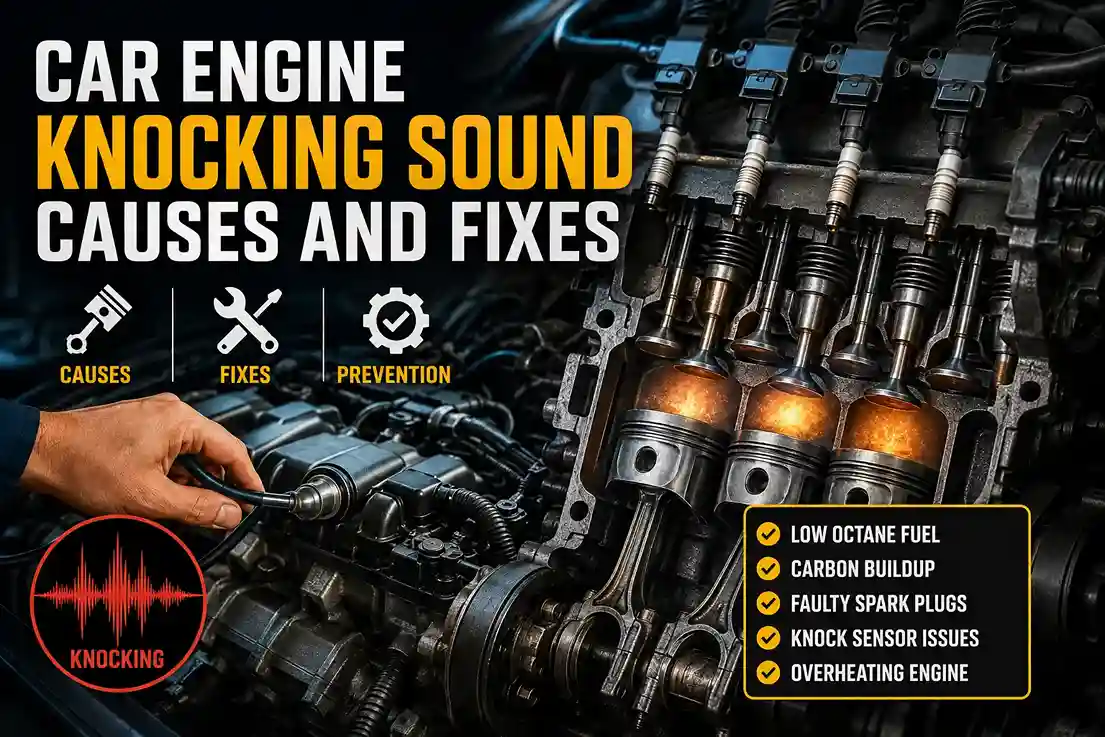
Car Engine Knocking Sound Causes and Fixes is a topic every car owner should understand because unusual knocking noises from the engine can indicate anything from a minor issue to a serious mechanical problem. While some knocking sounds are caused by poor-quality fuel or incorrect ignition timing, others may signal worn engine components that require immediate attention.
Ignoring an engine knocking sound can lead to reduced performance, poor fuel economy, and, in severe cases, expensive engine repairs. Identifying the cause early often helps prevent further damage and keeps your vehicle running safely and efficiently.
In real-world situations, many drivers notice a metallic knocking noise only when accelerating uphill or carrying heavy loads. Others may hear the sound continuously at idle. Understanding when the noise occurs is one of the first steps toward identifying the underlying problem.
If you’ve recently noticed reduced engine performance, you may also find our guides on Why Your Car Is Losing Power While Accelerating and Why Your Car Is Overheating: Common Reasons & Fixes helpful, as these issues can sometimes be related.
This guide explains the most common car engine knocking sound causes and fixes, how to diagnose the problem, when it’s safe to continue driving, and what steps you can take to protect your engine.
What Is Engine Knocking?
Engine knocking—also known as engine pinging, detonation, or spark knock—is an abnormal combustion event inside the engine cylinder.
Instead of the air-fuel mixture burning smoothly after the spark plug ignites it, part of the mixture ignites prematurely or unevenly. This creates pressure waves that produce the characteristic metallic knocking or pinging sound.
Occasional light knocking under heavy acceleration may not always indicate severe damage, but persistent knocking should never be ignored.
Why Does Engine Knocking Happen?
A petrol engine relies on precise timing between:
- Air intake
- Fuel injection
- Spark plug ignition
- Combustion
- Exhaust
When any of these processes becomes abnormal, combustion pressure changes, resulting in knocking sounds.
Several mechanical and fuel-related problems can contribute to this condition.
According to the U.S. Department of Energy, using the fuel grade recommended by your vehicle manufacturer helps ensure proper engine performance and combustion efficiency.
External Reference:
Common Car Engine Knocking Sound Causes and Fixes
1. Low-Octane Fuel
One of the most common causes of engine knocking is using fuel with an octane rating lower than the manufacturer’s recommendation.
Lower-octane fuel is more likely to ignite prematurely under high pressure.
Signs
- Knocking during acceleration
- Reduced performance
- Lower fuel efficiency
Fix
Refuel with the octane grade specified in your owner’s manual and avoid mixing poor-quality fuel from unreliable fuel stations.
2. Carbon Deposits Inside the Engine
Over time, carbon deposits build up on pistons, cylinder heads, and intake valves.
These deposits reduce combustion chamber volume and increase compression, making knocking more likely.
Signs
- Rough idle
- Reduced acceleration
- Persistent pinging
- Higher fuel consumption
Fix
Professional intake and combustion chamber cleaning may help restore proper engine operation.
3. Incorrect Ignition Timing
If the spark occurs too early, combustion pressure increases before the piston reaches the correct position.
This often produces knocking sounds.
Modern vehicles automatically adjust ignition timing, but sensor faults can still create problems.
4. Faulty Knock Sensor
Most modern vehicles use knock sensors to detect abnormal combustion.
When knocking occurs, the Engine Control Unit (ECU) adjusts ignition timing to protect the engine.
A faulty knock sensor prevents the ECU from making these corrections.
Signs
- Check Engine Light
- Persistent knocking
- Reduced engine performance
Professional diagnostic equipment is usually required to confirm knock sensor faults.
5. Lean Air-Fuel Mixture
When too much air and not enough fuel enter the combustion chamber, combustion temperatures increase.
Higher temperatures increase the likelihood of engine knock.
Possible causes include:
- Vacuum leaks
- Dirty fuel injectors
- Faulty mass airflow sensor
- Fuel pump problems
If you suspect fuel delivery issues, our guide on How Often Should You Change Engine Oil in India? also explains why proper maintenance contributes to smoother engine performance.
6. Worn Spark Plugs
Incorrect or worn spark plugs can affect ignition timing and combustion quality.
Using spark plugs that don’t meet manufacturer specifications may also increase knocking.
Always install the recommended spark plug type.
7. Engine Overheating
High engine temperatures increase combustion chamber temperatures, making premature ignition more likely.
In real-world situations, drivers often notice knocking after prolonged driving in hot weather or while climbing steep hills.
If your temperature gauge is rising, our article on Check Car Engine Coolant Level at Home in India explains how proper coolant maintenance helps prevent overheating.
8. Low Engine Oil
Engine oil reduces friction and helps dissipate heat.
Insufficient or degraded oil may contribute to increased engine temperatures and abnormal mechanical noises.
Regular oil changes remain one of the simplest ways to protect your engine.
Warning Signs That Accompany Engine Knocking
A knocking sound often appears alongside other symptoms.
Watch for:
- Poor acceleration
- Reduced fuel economy
- Engine vibration
- Rough idle
- Check Engine Light
- Excessive exhaust smoke
- Increased engine temperature
Recognizing these symptoms early helps prevent more serious damage.
Can You Continue Driving?
The answer depends on the severity of the knocking.
You may cautiously continue driving if:
- The knocking is very light.
- It occurs only briefly during heavy acceleration.
- The vehicle otherwise performs normally.
Stop driving immediately if:
- Knocking becomes loud or continuous.
- The Check Engine Light flashes.
- The engine overheats.
- Oil pressure warning appears.
- Performance drops significantly.
Driving with severe engine knock may result in extensive internal engine damage.
How to Diagnose Engine Knocking
Professional diagnosis usually includes:
- OBD-II fault code scanning
- Knock sensor testing
- Fuel pressure testing
- Spark plug inspection
- Compression testing
- Cooling system inspection
- Engine oil inspection
Modern vehicles store valuable diagnostic information that helps technicians identify the root cause more quickly.
The National Institute for Automotive Service Excellence (ASE) recommends professional diagnosis for persistent engine performance problems to avoid unnecessary parts replacement.
External Reference:
Fixes for Common Engine Knocking Problems
Once you’ve identified the likely cause of the knocking sound, the next step is to address it before it leads to more expensive engine damage.
Use the Correct Fuel
If your vehicle requires premium fuel, always use the octane rating recommended by the manufacturer.
Using higher-quality fuel can often eliminate light engine knocking caused by premature combustion.
Avoid repeatedly filling your vehicle at fuel stations with questionable fuel quality.
Replace Worn Spark Plugs
Spark plugs play a critical role in proper combustion.
Replace them:
- At the manufacturer’s recommended interval
- If they’re worn or fouled
- If the wrong heat range has been installed
Using the correct spark plugs helps restore efficient combustion and reduce knocking.
Clean Carbon Deposits
Heavy carbon buildup increases engine compression and creates hot spots inside the combustion chamber.
Possible solutions include:
- Professional intake cleaning
- Fuel system cleaning
- Combustion chamber cleaning
- Using high-quality fuel
Professional cleaning is usually more effective than relying solely on fuel additives.
Repair Cooling System Problems
Since overheating contributes to engine knock, inspect the cooling system if engine temperature is higher than normal.
Check:
- Coolant level
- Radiator
- Water pump
- Thermostat
- Cooling fan
- Coolant hoses
Our guide on Why Your Car Is Overheating: Common Reasons & Fixes explains how cooling system issues can quickly lead to serious engine damage if left unresolved.
Replace Faulty Sensors
Modern engines rely on sensors such as:
- Knock sensor
- Oxygen sensor
- Mass Air Flow (MAF) sensor
- Intake Air Temperature (IAT) sensor
A faulty sensor can cause improper ignition timing or an incorrect air-fuel mixture, resulting in engine knocking.
Professional diagnostic equipment is the best way to identify sensor-related faults.
Maintain Proper Engine Oil
Engine oil lubricates moving components and helps control engine temperature.
Old or low engine oil may contribute to abnormal engine noise and increased wear.
Follow the oil grade and service intervals specified by your vehicle manufacturer.
If you notice oil stains beneath your vehicle, our article on Engine Oil Leakage Symptoms explains the warning signs that should never be ignored.
Common Mistakes Drivers Make
Many engine problems become worse because drivers delay diagnosis or choose incorrect repairs.
Ignoring the Knocking Sound
A light knocking noise today can become a major repair tomorrow.
Ignoring unusual engine noises often results in more expensive repairs.
Using the Wrong Fuel Grade
Some drivers choose lower-octane fuel simply because it’s cheaper.
If the engine is designed for higher-octane fuel, this may increase the likelihood of knocking.
Delaying Oil Changes
Dirty or degraded engine oil increases friction and operating temperatures.
Regular oil changes remain one of the most effective ways to protect engine components.
Continuing to Drive an Overheating Vehicle
If the engine temperature gauge enters the red zone, stop driving as soon as it is safe to do so.
Continuing to drive an overheating vehicle can cause severe internal engine damage.
Ignoring Dashboard Warning Lights
A flashing Check Engine Light combined with engine knocking requires immediate attention.
Prompt diagnosis can prevent additional damage.
Our guide on Car Dashboard Warning Lights Explained explains the most important dashboard indicators every driver should recognize.
Best Practices to Prevent Engine Knocking
Good maintenance habits significantly reduce the likelihood of engine knocking.
Follow these recommendations:
- Use the manufacturer-recommended fuel.
- Replace spark plugs at scheduled intervals.
- Change engine oil on time.
- Keep the cooling system properly maintained.
- Replace air filters regularly.
- Service the fuel system when required.
- Investigate unusual engine noises promptly.
- Follow the manufacturer’s maintenance schedule.
These simple steps help improve engine reliability, fuel economy, and long-term performance.
Can Engine Knocking Damage Your Engine?
Yes.
Persistent engine knocking may eventually damage:
- Pistons
- Connecting rods
- Bearings
- Cylinder walls
- Spark plugs
- Head gasket
Repair costs increase dramatically if the problem is ignored.
Early diagnosis is almost always less expensive than repairing severe engine damage.
According to the National Highway Traffic Safety Administration (NHTSA), drivers should respond promptly to abnormal engine performance and dashboard warning indicators to reduce the risk of vehicle breakdowns and safety issues.
External Reference:
Frequently Asked Questions
Is engine knocking always serious?
Not always. Mild knocking caused by low-octane fuel may disappear after refueling with the correct fuel. However, persistent or loud knocking should always be inspected.
Can bad fuel cause engine knocking?
Yes. Fuel with an octane rating below the manufacturer’s recommendation can cause premature combustion and knocking.
Will changing the engine oil stop knocking?
If low or degraded engine oil is contributing to the problem, changing the oil may help. However, knocking caused by mechanical damage or ignition issues requires additional repairs.
Can I continue driving if my engine is knocking?
If the knocking is loud, constant, or accompanied by warning lights or overheating, stop driving and have the vehicle inspected immediately.
Is engine knocking expensive to repair?
Repair costs depend on the underlying cause. Replacing spark plugs or using the correct fuel is relatively inexpensive, while repairing internal engine damage can be significantly more costly.
How can I prevent engine knocking?
Regular maintenance, correct fuel, timely oil changes, proper cooling system care, and addressing warning signs early are the best ways to prevent engine knocking.
Conclusion
Understanding Car Engine Knocking Sound Causes and Fixes helps drivers recognize early warning signs before minor issues develop into costly engine repairs. Whether the knocking is caused by low-octane fuel, carbon deposits, worn spark plugs, overheating, faulty sensors, or lubrication problems, identifying the root cause promptly is essential for maintaining engine performance and reliability.
Routine maintenance, including scheduled oil changes, cooling system inspections, quality fuel, and timely replacement of worn components, remains the most effective way to reduce the risk of engine knocking. Ignoring unusual engine noises can result in severe internal damage, increased repair costs, and reduced vehicle safety.
By understanding Car Engine Knocking Sound Causes and Fixes, responding quickly to abnormal engine sounds, and following your manufacturer’s maintenance recommendations, you can protect your engine, improve fuel efficiency, extend your vehicle’s lifespan, and enjoy smoother, more reliable driving for years to come.
For additional guidance on maintaining engine performance, you may also find our article on Signs Your Car Battery Is Weak helpful, as overall vehicle health depends on properly maintaining all major systems.
Author: Carsinfos Editorial Team
Published: June 30th, 2026