Signs Your Car Battery Is Weak can show up long before the car refuses to start, and catching them early usually saves money, stress, and a roadside headache. A weak battery often gives small hints first: slower cranking, dim lights, odd electrical behavior, or a battery warning light on the dashboard. AAA and other vehicle-safety guides note that charging-system problems, dim lights, corrosion, and repeated short-trip use are all common clues that a battery is losing strength.
The tricky part is that battery trouble does not always look dramatic at first. A car may still run normally for a few days or weeks while the battery gets worse in the background. That is why it helps to understand the early signs instead of waiting for a complete failure. If you already read CarsInfos pieces like car dashboard warning lights explained, how often should you change engine oil in India, or why your car mileage is decreasing suddenly, you already know how small maintenance issues can quietly turn into bigger problems.
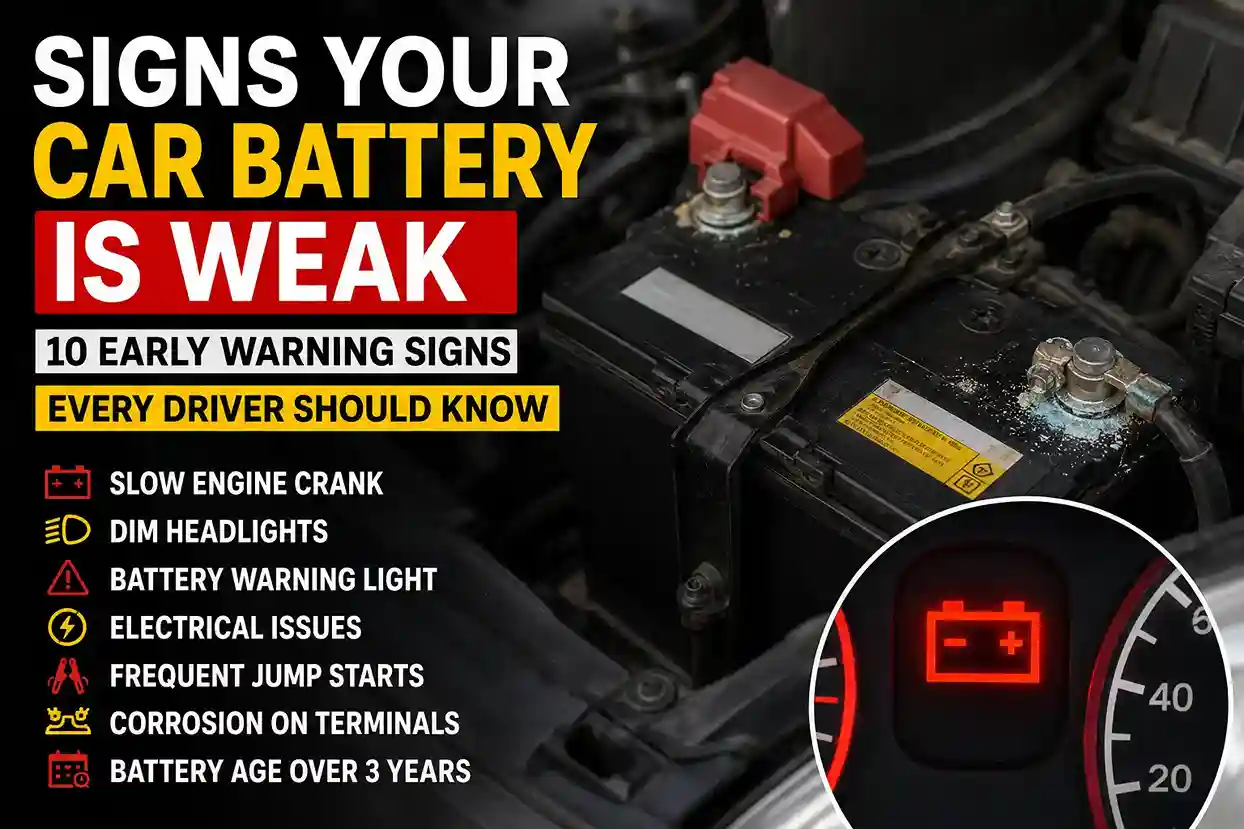
Signs Your Car Battery Is Weak: 10 Early Warning Signs
1) The engine cranks slowly
One of the first signs of a weak battery is a slow, sluggish engine crank when you turn the key or press the start button. Instead of a quick start, the engine may sound tired, hesitate, or take a second or two longer than usual. AAA says one warning sign of a weak battery is that the car does not start immediately or makes a clicking noise when you try to start it.
A common mistake people make is blaming the starter motor first. Sometimes that is the issue, but in real-world situations a weak battery is often the more likely culprit, especially if the problem is worse in the morning or after the car has been parked for a while.
2) The headlights look dimmer than usual
If the headlights seem weaker, especially at idle, the battery or charging system may be struggling. AAA specifically lists dim headlights and interior lights as a warning sign of battery trouble.
This clue is easy to miss during the day because it is subtle, but at night it becomes obvious. For example, if your lights seem fine while driving but look faint when you first start the car, that can point to a battery that is no longer holding charge properly.
3) Electrical accessories act slower
Weak batteries often show up through small electrical delays. Power windows may move more slowly, the infotainment screen may take longer to boot, or the blower motor may sound weaker than usual. AAA includes slower power windows among the warning signs drivers should watch for in cold-weather battery guidance.
In real-world situations, this can feel like a random annoyance rather than a battery problem. But if several electrical features are getting lazy at the same time, the battery deserves attention.
4) The battery warning light appears on the dashboard
The battery warning light is not always a dead-battery warning; it often means the charging system is not working properly. AAA says that the battery warning light can point to a problem with the battery, alternator, or wiring, and CAA Quebec notes that this warning can indicate a loose or broken alternator drive belt as well.
A common mistake people make is assuming this light means the battery itself is the only issue. In many cases, the battery is just the final part of a bigger charging-system problem. If the light stays on, do not ignore it. Your car may keep running for a while and then suddenly shut down once the battery is drained.
This is one reason CarsInfos readers who study car dashboard warning lights explained usually understand battery warnings faster than casual drivers. That article helps place the battery light in the wider dashboard context.
5) The engine needs frequent jump-starts
If you are jump-starting the car more often than before, the battery may be nearing the end of its useful life. Repeated jump-starts are a strong clue that the battery is not holding charge the way it should. AAA’s warning-sign guidance points to repeated no-start behavior and weak starting as major clues.
The important thing here is pattern, not one-off events. One dead battery after leaving the headlights on is not the same as a battery that repeatedly drains for no obvious reason. If it keeps happening, the battery and charging system should be checked together.
6) You notice corrosion or stains on the battery
White, blue, or greenish buildup around the battery terminals is often a sign of corrosion. AAA’s battery warning article lists corrosion on the battery itself as a warning sign drivers should notice.
Corrosion can interfere with the electrical connection and make the battery seem weaker than it really is. Sometimes the battery is fine and the terminals are the real problem. A clean terminal can restore better contact, but if corrosion is recurring, the battery should be tested.
7) The battery is more than three years old
Age matters. AAA says a battery older than three years is one of the signs that it may be weakening, especially if paired with other symptoms.
That does not mean every three-year-old battery is bad. Some last longer, some fail sooner. But once a battery passes that age mark, it is smart to watch for symptoms rather than assuming it will keep going forever. In hot climates and in cars used mostly for short trips, battery life can be shorter than many owners expect.
8) The car is used mostly for short trips
Short trips are hard on batteries because the alternator may not get enough time to recharge what the starter used up. AAA says frequent short trips, or long periods when the car is not used, are warning signs linked to battery problems.
This matters a lot for Indian driving patterns. A car used for school runs, market runs, and short office hops may look perfectly normal while the battery slowly weakens. If your routine involves lots of quick drives, this sign is especially worth watching.
9) The car smells odd or starts behaving electrically strange
Battery or charging problems sometimes come with odd electrical symptoms, such as flickering interior lights, random warning lamps, or dashboard electronics acting up. CAA Quebec notes that if the charging system fails, electrical assistance can stop working and the driver should pull over as soon as possible.
A common mistake people make is ignoring weird little glitches because they come and go. But intermittent electrical behavior is often exactly how battery and alternator issues begin.
10) The battery case looks swollen or damaged
A swollen battery case is a serious sign. Heat, age, and internal failure can cause a battery to bulge or deform. Once that happens, the battery should not be treated as a normal routine item anymore.
While the sources above focus more on battery warning lights and starting symptoms, the broader warning-light guidance from AAA and CAA Quebec supports the same practical rule: if a battery-related problem shows visible physical damage, do not keep using it as if nothing happened. Have it checked or replaced promptly.
What Weakens a Car Battery Faster?
Battery health is affected by more than age alone. Cold weather can reduce available battery power, and AAA notes that batteries lose a meaningful share of power in freezing conditions. The same AAA guidance also says the battery has to work harder when temperatures fall, because oil thickens and the engine takes more power to turn over.
Short trips, long parking periods, and constant use of electrical accessories also drain batteries faster. Michigan AAA warns that an alternator or charging-system warning may never appear even when the battery is going down, which is why routine checks matter so much.
For many drivers, the biggest battery-killers are simple:
- repeated short drives
- leaving accessories on
- infrequent use
- extreme temperatures
- loose or corroded terminals
If your car also shows other maintenance-related signs, the article on how to improve car mileage in India can help you spot habits that quietly strain the whole vehicle, not just the battery.
When You Should Not Wait
If the battery warning light stays on, the car cranks very slowly, or the car has already needed multiple jump-starts, do not keep pushing your luck. AAA and CAA Quebec both advise treating charging-system warnings seriously because the vehicle can stop running once the battery is drained.
A sensible response is:
- check battery terminals for corrosion
- confirm the battery age
- have the battery and charging system tested
- inspect the alternator and belt if needed
That approach is especially useful if you are already noticing other issues such as weak headlights or delayed starts.
Best Practices to Keep a Battery Healthy
A few simple habits can extend battery life:
- drive the car regularly
- avoid very short trips only
- turn off lights and accessories before shutting the engine off
- clean corroded terminals
- test the battery before long trips
- check the charging system if the battery light appears
AAA also recommends understanding your owner’s manual ahead of time so you know what each warning means before a problem happens. That advice may sound basic, but it saves a lot of confusion later.
If you own a city-focused car and want a practical next read, CarsInfos’ guides on best automatic cars under ₹10 lakh in India and best mileage cars in 2026 are useful because short-trip urban driving affects both mileage and battery wear.
Common Mistakes Drivers Make
One common mistake people make is replacing the battery immediately without checking the alternator or belt. Another is assuming a battery is healthy because the car started once after a jump. A third mistake is ignoring the symptoms until the car refuses to start in traffic, at night, or during a trip.
The better habit is to treat weak-battery signs as a warning system. That way, you are fixing the problem early instead of reacting to a breakdown.
Frequently Asked Questions
1) What are the first signs of a weak car battery?
Slow cranking, dim headlights, slow electrical accessories, and the battery warning light are some of the earliest signs.
2) Does the battery warning light mean the battery is dead?
Not always. It often points to a charging-system issue involving the battery, alternator, or wiring.
3) Can short trips weaken a car battery?
Yes. AAA says frequent short trips and long periods of inactivity can be warning signs that the battery is struggling.
4) How old is too old for a car battery?
A battery older than three years deserves closer attention, especially if it is showing other symptoms.
5) Can corrosion on the battery cause starting problems?
Yes. Corrosion can interfere with the connection and make the battery seem weaker than it really is.
6) Should I keep driving if the battery warning light comes on?
It is risky to ignore it. AAA and CAA Quebec both advise getting the charging system checked quickly because the car can be stranded once the battery drains.
Conclusion
Signs Your Car Battery Is Weak are usually easier to spot than most drivers think. Slow starts, dim lights, corrosion, repeated jump-starts, strange electrical behavior, and a dashboard battery light all point toward a battery that needs attention. Some of these signs may also suggest alternator or wiring problems, which is why testing the charging system matters, not just the battery itself.
The safest approach is simple: do not wait for a complete breakdown. If your car is already showing a few of these warning signs, have the battery checked early, especially if the battery is older, the car is used mainly for short trips, or the charging light has appeared. A little attention now is a lot cheaper than a tow later.
Author: Carsinfos Editorial Team
Published: May 13th, 2026