Why Your Car Mileage Is Decreasing Suddenly is a question many Indian car owners ask the moment they notice the fuel gauge moving faster than usual. A sudden drop in mileage is frustrating because it often feels like the car changed overnight, but in real-world situations the cause is usually a mix of driving habits, maintenance gaps, traffic conditions, and small mechanical issues rather than one dramatic failure. If you are also comparing how different cars behave over time, CarsInfos guides such as best mileage cars in 2026, how often should you change engine oil in India, and petrol vs diesel cars in India 2026 are useful related reads because mileage is rarely only about the engine; it is also about how the car is maintained and used.
The important thing is not to panic. A mileage drop does not always mean major engine damage. In many cases, the answer is something simple such as low tyre pressure, aggressive driving, long idling, an overdue service, or a clogged filter. The U.S. Department of Energy and AAA both point out that everyday habits and basic maintenance can have a visible impact on fuel economy, which is why it helps to check the common causes in a structured way instead of guessing.
Why Your Car Mileage Is Decreasing Suddenly
When mileage drops, the first step is to separate driver-related causes from vehicle-related causes. Driver-related causes include speeding, hard braking, idling, short trips, roof racks, and heavy cargo. Vehicle-related causes include tyre pressure, wheel alignment, oil condition, spark plugs, air filters, brakes, transmission issues, and warning-light faults. FuelEconomy.gov, the U.S. Department of Energy, and AAA all group fuel-economy problems into these same broad categories, which is why the safest approach is to check maintenance and driving behavior together.
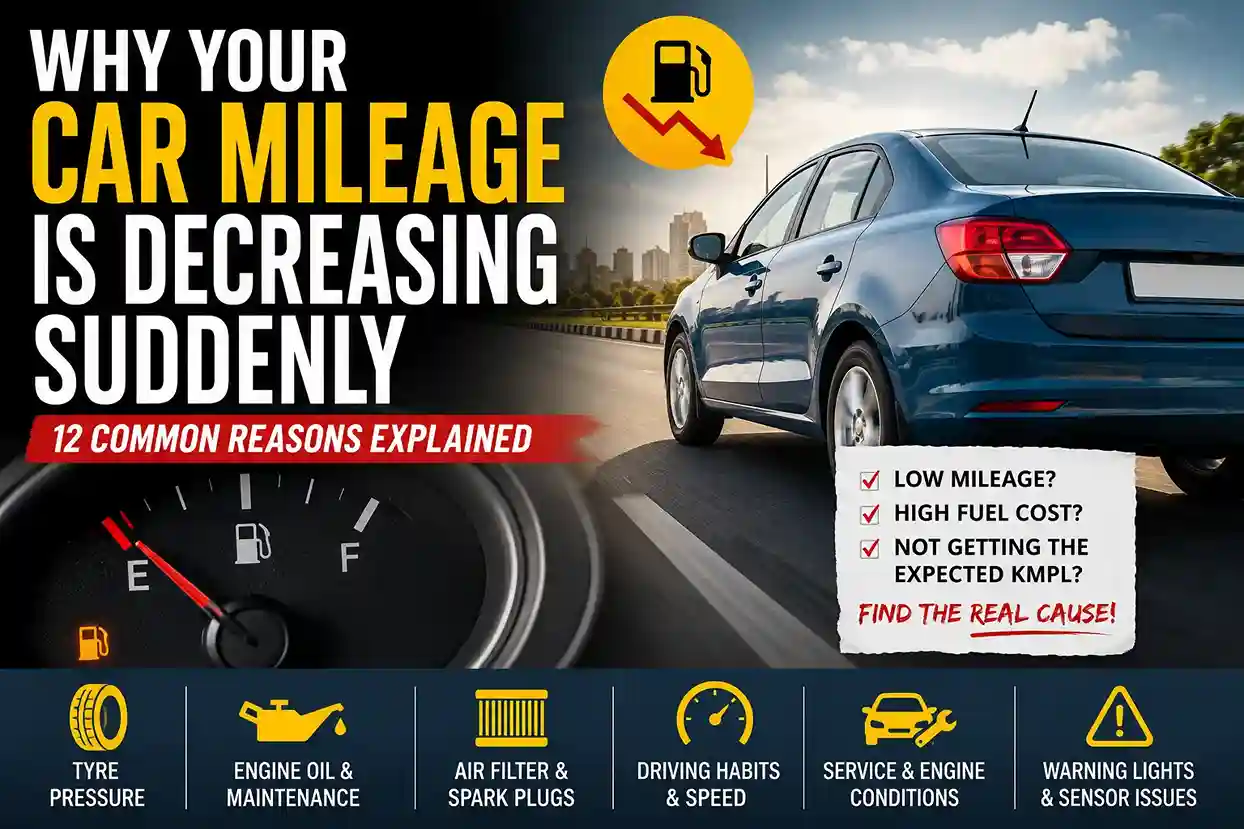
12 Common Reasons Your Mileage Drops Suddenly
1) Underinflated tyres
Low tyre pressure is one of the easiest reasons to miss because the car can still feel normal to drive. The U.S. Department of Energy says properly inflated tyres can improve fuel economy by about 0.6% on average, while underinflation can reduce mileage by about 0.2% for every 1 psi drop across all four tyres. In simple terms, a slow leak or weeks of ignoring pressure checks can quietly raise your fuel bill.
2) Aggressive driving
Hard acceleration, rapid braking, and speeding burn fuel much faster than smooth driving. The Department of Energy says aggressive driving can lower highway mileage by 15% to 30% and city mileage by 10% to 40%, which is a huge difference for a daily commuter. If your driving style changed recently, that alone could explain why the tank is emptying faster.
3) Too much idling
A common mistake people make is assuming the car is “not moving, so it is not wasting much fuel.” In reality, idling still burns fuel and contributes zero distance. The Department of Energy’s guidance for efficient driving specifically calls out idling as a fuel-wasting habit, especially in traffic-heavy use. In Indian cities, a few extra minutes at signals or in parking lots every day can add up fast over a month.
4) Short trips and cold starts
If your routine has changed to more school runs, market runs, or short office trips, mileage can drop sharply even if the car seems healthy. FuelEconomy.gov says several short trips from a cold start can use twice as much fuel as one trip covering the same distance once the engine is warm. That is why a car used for five tiny trips a day often returns worse mileage than the same car used on one longer run.
5) Driving at high speeds
Mileage usually falls as speed rises, and the drop becomes more noticeable on open roads. The Department of Energy says gas mileage drops rapidly above 50 mph, and every 5 mph above that point is like paying extra per gallon. Many drivers think only city traffic hurts mileage, but high-speed highway cruising can be equally expensive in its own way.
6) Extra weight and roof racks
If your boot has become a storage space or your roof rack is always attached, your car may be working harder than you think. The Department of Energy says extra cargo and roof racks increase drag, and roof racks can reduce fuel economy by up to 8% in city driving and up to 25% at highway speeds. It also notes that extra weight increases fuel use, so a full boot of unused items can make a real difference.
7) Overdue engine oil or the wrong oil
Engine oil affects friction, heat, and how smoothly internal parts move. If the oil is old, degraded, or not the grade your car needs, the engine may have to work harder. CarsInfos already covered how often you should change engine oil in India, and manufacturer guidance in India commonly uses service intervals such as 10,000 km or 1 year under normal conditions, with shorter intervals under severe use.
8) A dirty air filter
A clogged air filter can reduce the engine’s ability to breathe properly and can contribute to poor performance and lower fuel economy. AAA’s gas-mileage guidance says dirty filters should be checked regularly, and its maintenance articles also recommend replacing air filters on schedule. In the real world, dusty roads, construction zones, and monsoon grime can make filters load up sooner than many owners expect.
9) Worn spark plugs
Spark plugs that are dirty, worn, or misfiring can waste fuel because combustion becomes less efficient. AAA notes that worn spark plugs can cause poor fuel economy, slow acceleration, rough idling, and harder starts. If the car feels slightly sluggish and the mileage drop is paired with rough idling, this is one of the first parts worth checking.
10) Wheel alignment problems
Poor alignment does more than wear tyres unevenly. AAA says wheel alignment that is out of specification can make steering difficult and can also lower fuel mileage. It recommends checking alignment every 12,000 miles or whenever tyres are serviced. If the car pulls to one side or the steering wheel feels off-center, mileage loss may be part of the same problem.
11) Dragging brakes or transmission issues
Sometimes mileage falls because the car is fighting itself. The U.S. Department of Energy says regular maintenance can prevent fuel-economy problems linked to dragging brakes, sagging belts, low transmission fluid, or transmission problems. A dragging brake does not always announce itself loudly, but it can create heat and resistance that quietly reduce efficiency.
12) Ignored warning lights or a faulty oxygen sensor
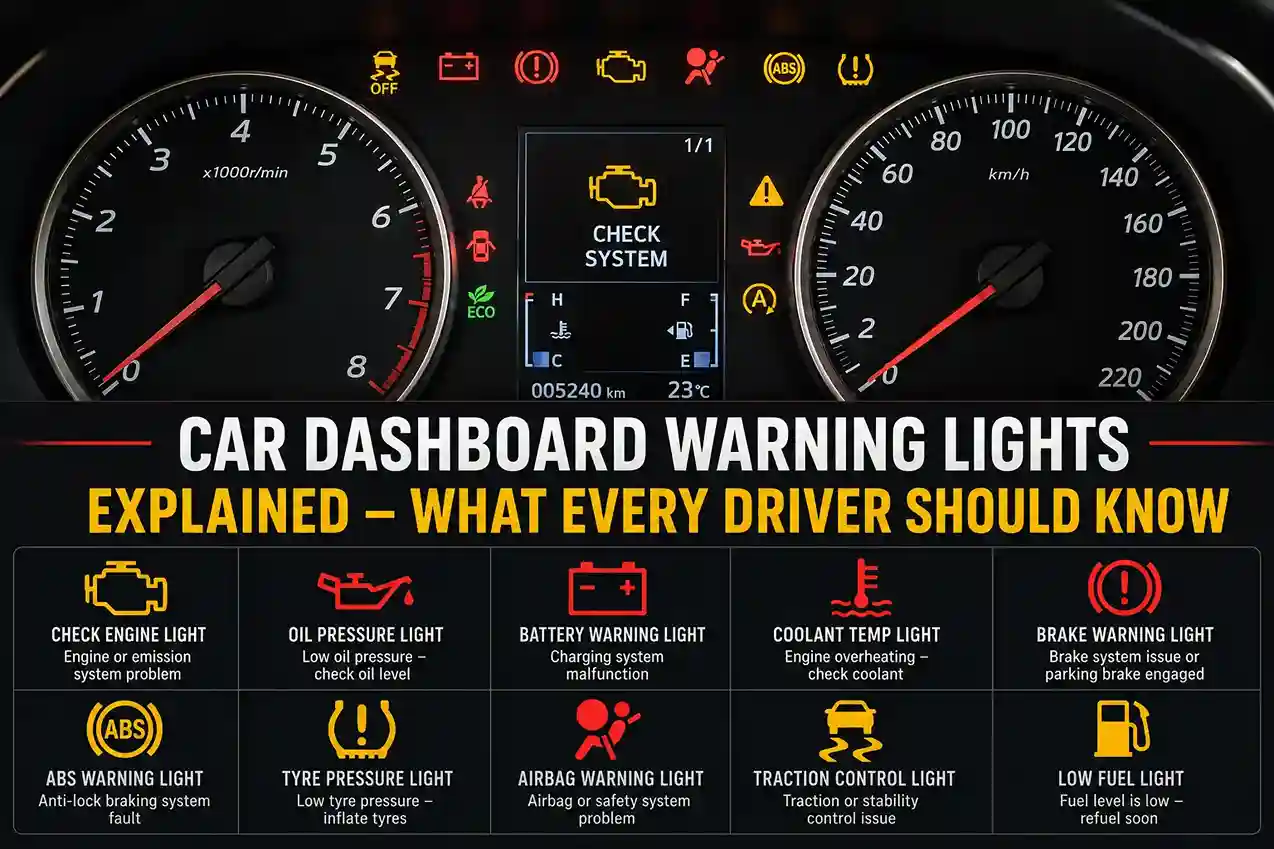
If the check-engine light is on, mileage loss may be a symptom rather than the whole problem. The Department of Energy says a serious maintenance issue such as a faulty oxygen sensor can improve mileage by as much as 40% once fixed, and it advises not to ignore the check-engine light because it can point to fuel-economy problems as well as more serious faults. That is a strong signal to get a diagnosis instead of waiting.
What To Check First If Mileage Drops Suddenly
Start with the easy checks before you jump to expensive repairs. Tire pressure, tyre condition, dashboard warning lights, oil service history, and recent driving habits are the fastest things to review. Then look at whether the car has been doing more short trips, more idling, more roof-rack use, or more heavy cargo hauling than before. Those simple changes explain a surprising number of mileage complaints.
If the car has just come back from a service and the mileage still feels off, compare what changed. Was the oil grade the same as before? Were the tyres inflated to the recommended level? Did the garage rotate tyres or adjust alignment? If you are cross-checking ownership costs more broadly, the site’s guides on best mileage cars in 2026, cars under ₹10 lakh, and best sedan cars under ₹15 lakh in India 2026 are useful next reads because they help buyers compare efficient models before the purchase stage.
Common Mistakes People Make
One common mistake people make is assuming mileage loss always means “bad engine.” In reality, many of the biggest fuel-economy losses come from tyres, driving style, alignment, and overdue maintenance. Another mistake is waiting for a major symptom before checking the basics. By the time the car feels weak, the problem may already have been affecting fuel use for weeks.
A second mistake is comparing your current mileage to a perfect memory instead of a real log. Fuel economy naturally changes with traffic, weather, routes, and cargo load. The Department of Energy specifically notes that cold starts, idling, and aggressive driving all change fuel use, which means a fair comparison should be made over several fill-ups, not just one tank.
Best Practices To Keep Mileage Stable
A simple routine goes a long way:
- check tyre pressure at least monthly
- service the car on time, not “when you remember”
- keep the boot light and remove roof racks when not needed
- avoid harsh acceleration and late braking
- watch warning lights instead of ignoring them
- replace filters, spark plugs, and oil on schedule
- keep wheel alignment in check if the car pulls or vibrates
If you drive mostly in the city, these habits matter even more because stop-and-go traffic magnifies bad habits. If you drive mostly on highways, speed, load, and roof drag become more important. The point is not to obsess over every kilometre; it is to remove the avoidable losses that quietly drain fuel.
Why This Matters More For Indian Car Owners
In India, many drivers mix city traffic, short trips, heat, dust, and occasional highway runs in the same car, which makes fuel economy especially sensitive to daily habits and maintenance. That is why a mileage drop can feel sudden even when the underlying cause has been building slowly. The same car can return very different numbers depending on whether it is used for long commutes, school runs, crowded markets, or weekend road trips.
For buyers still deciding what kind of car to own, efficient models and sensible ownership planning matter just as much as showroom price. That is why CarsInfos readers often move from mileage problems to comparison pages like petrol vs diesel cars in India 2026, how often should you change engine oil in India, and best mileage cars in 2026 once they start looking at total running cost instead of just upfront cost.
Frequently Asked Questions
1) Why is my car mileage decreasing suddenly even though the engine feels normal?
Because many mileage problems are not engine-failure problems. Underinflated tyres, aggressive driving, idling, short trips, drag from roof racks, alignment issues, and overdue maintenance can all lower fuel economy without causing obvious engine noise or warning at first.
2) Can tyre pressure really affect mileage that much?
Yes. FuelEconomy.gov says proper tyre inflation can improve mileage on average, while underinflation reduces efficiency as pressure drops. That is why tyre checks are one of the quickest first steps when fuel use suddenly rises.
3) Do short trips reduce mileage?
Yes. The Department of Energy says several short trips from a cold start can use twice as much fuel as one longer trip over the same distance once the engine is warm. That is a major reason city-only cars often feel less efficient than highway cars.
4) Can bad spark plugs or air filters really matter?
Yes. AAA says worn spark plugs can reduce fuel efficiency, while a dirty air filter can hurt performance and should be checked on schedule. These are small parts, but they can have a visible effect on how much fuel the car burns.
5) What should I do if the check-engine light is on and mileage dropped?
Get the car diagnosed sooner rather than later. The Department of Energy says warning lights can signal problems that affect fuel economy, and serious issues such as a faulty oxygen sensor can hurt mileage significantly until fixed.
6) How can I tell whether the mileage loss is from driving style or a mechanical issue?
Track fuel use over a few fill-ups and compare it with changes in your routine. If you recently started driving faster, carrying more load, idling more, or making more short trips, the cause may be behavior-based. If the loss is paired with vibrations, pulling, rough idling, or warning lights, it is more likely mechanical.
Conclusion
If Why Your Car Mileage Is Decreasing Suddenly is the problem you are trying to solve, the smartest response is to check the easy causes first and then move toward the mechanical ones. Tyre pressure, aggressive driving, idling, short trips, heavy load, oil condition, air filters, spark plugs, alignment, brakes, transmission issues, and warning lights are the most common areas to inspect. In most cases, one of these is the real reason mileage fell, and catching it early is usually cheaper than waiting.
Author: Carsinfos Editorial Team
Published: May 10th, 2026