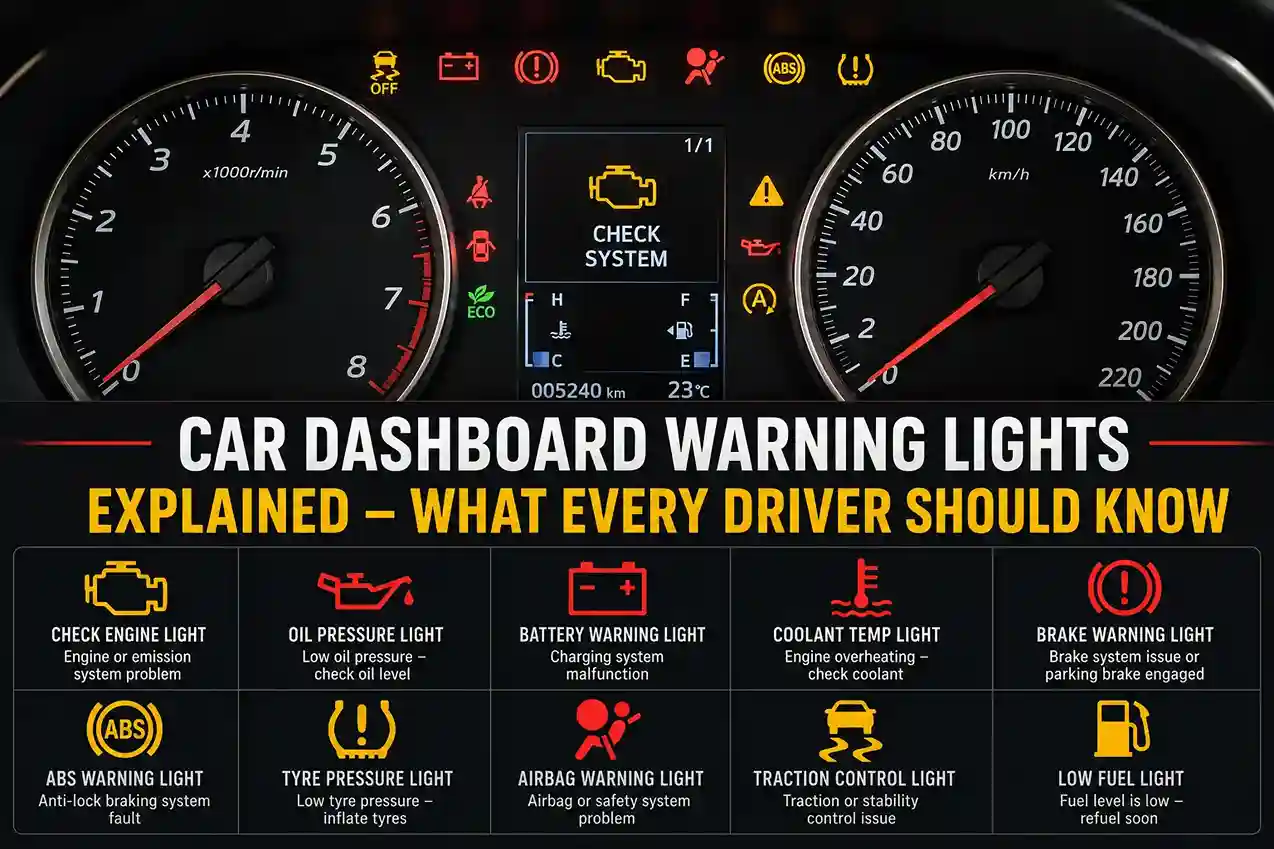
Car Dashboard Warning Lights Explained is something every driver should understand because those small symbols on your dashboard are often the first sign that your car needs attention. Some warning lights are simple reminders, while others can signal serious mechanical or safety problems that should never be ignored.
In real-world situations, many drivers continue using their car without fully understanding what the dashboard is trying to communicate. Sometimes the vehicle still feels normal to drive, which creates a false sense of safety. Unfortunately, ignoring warning lights can turn a small maintenance issue into a very expensive repair later.
Modern cars are packed with sensors and electronic monitoring systems designed to improve safety, fuel efficiency, reliability, and emissions control. If you are already trying to reduce ownership costs, guides like how often should you change engine oil in India and why your car mileage is decreasing suddenly are also useful because poor maintenance habits often trigger dashboard warning lights over time.
The important thing to remember is simple: not every warning light means panic, but some absolutely require immediate action.
Why car Dashboard Warning Lights Matter
Dashboard warning lights exist because modern vehicles constantly monitor critical systems such as:
- engine performance
- oil pressure
- battery charging
- coolant temperature
- braking systems
- tyre pressure
- airbags
- traction control
According to NHTSA tyre safety guidance, vehicle monitoring systems are designed to improve both safety and maintenance awareness by alerting drivers before problems become dangerous.
A common mistake people make is assuming a warning light can wait simply because the car still drives normally. In many cases, serious wear or damage may already be developing internally even if the vehicle feels fine temporarily.
For example, low oil pressure or overheating problems may not immediately stop the engine, but continuing to drive can severely damage internal engine components.
Understanding Dashboard Warning Light Colors
Before discussing individual warning symbols, it helps to understand the color system used in most modern vehicles.
Red Warning Lights
Red lights usually indicate urgent problems that may require immediate attention or stopping the vehicle safely.
Examples include:
- engine oil pressure warning
- overheating warning
- brake-system warning
Yellow or Orange Warning Lights
These usually indicate caution or maintenance-related problems.
Examples include:
- check engine light
- ABS warning
- tyre-pressure warning
Green or Blue Lights
These generally indicate that a system is operating normally.
Examples include:
- headlights
- cruise control
- eco-driving modes
Vehicle manufacturers may use slightly different symbols depending on the model. That is why resources like Honda India owner manuals can help drivers understand vehicle-specific warning icons.
1) Check Engine Light
The check engine light is one of the most misunderstood dashboard warnings.
It may appear because of:
- loose fuel cap
- oxygen sensor failure
- spark plug issues
- emission-system faults
- fuel-system problems
A common mistake people make is ignoring the light because the car “still feels normal.” In reality, sensor issues can gradually reduce fuel efficiency, increase emissions, and damage engine performance over time.
The U.S. Department of Energy explains in its official fuel economy guide that fixing faulty oxygen sensors can significantly improve mileage and reduce fuel waste.
If your mileage recently dropped together with the check engine light, the CarsInfos article on why your car mileage is decreasing suddenly may help identify related causes.
2) Engine Oil Pressure Warning Light
This warning usually looks like an oil can symbol.
It often means:
- oil pressure is dangerously low
- oil level is insufficient
- lubrication problems exist inside the engine
This warning should never be ignored because engine oil protects moving parts from excessive friction and heat.
In real-world situations, some drivers continue driving after seeing this warning because the engine still sounds normal. Unfortunately, serious internal wear can happen very quickly once oil pressure drops.
That is why understanding how often should you change engine oil in India is extremely important for long-term engine health.
3) Battery Warning Light
The battery warning light does not always mean the battery itself is dead.
It may indicate:
- alternator failure
- charging-system problems
- loose battery connections
- damaged drive belts
AAA explains in its battery warning light guide that charging-system failures can prevent the battery from receiving power while driving.
In practical situations, the car may continue running temporarily using stored battery power, but once the battery drains completely, the engine may stall or refuse to restart.
4) Coolant Temperature Warning Light
This warning usually appears as a thermometer symbol.
It may indicate:
- engine overheating
- coolant leakage
- radiator problems
- cooling-system failure
Overheating is one of the most dangerous engine-related warnings because excessive heat can damage:
- head gaskets
- engine blocks
- radiators
- hoses
For example, many drivers continue driving because they believe the car can “make it home.” Unfortunately, overheating damage becomes expensive very quickly.
5) Brake Warning Light
The brake warning light may appear as:
- “BRAKE”
- exclamation mark inside a circle
- parking brake symbol
Possible causes include:
- low brake fluid
- brake-system malfunction
- engaged parking brake
According to NHTSA brake safety resources, brake-system maintenance is essential because braking performance directly affects road safety.
If the brake pedal suddenly feels soft or braking distance increases, the car should be inspected immediately.
6) ABS Warning Light
ABS stands for Anti-lock Braking System.
This warning may indicate:
- wheel-speed sensor problems
- ABS module failure
- electronic braking faults
The regular brakes may still function, but emergency braking stability could be affected.
This becomes especially important during:
- heavy rain
- slippery roads
- sudden braking situations
7) Tyre Pressure Warning Light (TPMS)
This warning usually looks like a tyre with an exclamation mark.
Low tyre pressure can:
- reduce mileage
- increase tyre wear
- affect handling stability
- reduce braking performance
The NHTSA tyre-pressure safety guide explains that maintaining correct tyre pressure improves both safety and fuel economy.
Interestingly, tyre-pressure issues are also one of the most common reasons behind poor mileage. CarsInfos recently discussed this in why your car mileage is decreasing suddenly.
8) Airbag Warning Light
The airbag warning light indicates possible faults in:
- airbags
- crash sensors
- seatbelt pretensioners
- safety-restraint systems
A common mistake people make is ignoring this warning because the car drives normally.
However, safety systems may fail during an accident if the warning is ignored.
9) Traction Control Warning Light
This light often flashes temporarily when the traction-control system is actively working.
However, if it stays illuminated continuously, it may indicate:
- traction-system malfunction
- wheel-speed sensor issues
- electronic stability-control problems
Traction systems are especially important during wet or slippery road conditions.
10) Fuel Warning Light
Many drivers underestimate the risks of driving constantly with very low fuel levels.
Doing this repeatedly can:
- stress the fuel pump
- increase contamination risk
- reduce fuel-system reliability
If fuel economy matters to you, comparing the best mileage cars in 2026 can also help reduce long-term ownership costs.
Which Dashboard Warning Lights Require Immediate Attention?
Stop Driving Soon If You See:
- engine oil pressure warning
- coolant temperature warning
- serious brake warning
- severe charging-system warning
Schedule Inspection Soon For:
- check engine light
- ABS warning
- tyre-pressure warning
- traction-control warning
The safest approach is always to consult the owner’s manual and avoid guessing.
Common Mistakes Drivers Make
Ignoring Warning Lights for Weeks
Many people delay inspections until the vehicle develops obvious symptoms.
Assuming the Car Is Fine Because It Still Drives
Modern cars can continue operating temporarily even while important systems are malfunctioning.
Delaying Basic Maintenance
Skipping regular service intervals often triggers multiple warning lights over time.
This becomes especially important for owners comparing practical cars under ₹10 lakh because maintenance costs directly affect long-term ownership value.
Ignoring Tyre Health
Poor tyre condition affects:
- braking
- mileage
- steering stability
- ride comfort
Best Practices Every Driver Should Follow
Simple habits can prevent many warning-light problems:
- read the owner’s manual carefully
- service the car on schedule
- monitor tyre pressure monthly
- check fluid levels regularly
- investigate unusual sounds immediately
- avoid delaying inspections
- replace worn components early
Drivers who spend most of their time in traffic-heavy cities should also pay close attention to maintenance schedules because stop-and-go conditions increase wear on multiple systems. This is particularly true for vehicles from the best automatic cars under ₹10 lakh in India category, where urban driving patterns can accelerate wear on braking and transmission components.
Why Dashboard Awareness Matters More Today
Modern vehicles rely heavily on sensors and electronic systems. As cars become more advanced, dashboard warning lights become even more important because they often provide the earliest signs of trouble.
For buyers comparing long-term ownership costs, maintenance awareness is becoming almost as important as fuel efficiency itself. That is why many CarsInfos readers move from troubleshooting guides toward articles like best mileage cars in 2026 and ownership comparisons after experiencing repair-related expenses.
Frequently Asked Questions
1) Which dashboard warning light is the most dangerous?
The engine oil pressure warning and coolant temperature warning are among the most serious because ignoring them can severely damage the engine.
2) Can I drive with the check engine light on?
Sometimes yes, but it depends on the cause. Minor sensor issues may allow temporary driving, while severe faults require immediate diagnosis.
3) Does low tyre pressure affect mileage?
Yes. Underinflated tyres increase rolling resistance and reduce fuel efficiency significantly.
4) Why does the battery warning light appear while driving?
It often indicates charging-system problems such as alternator failure or loose battery connections.
5) Can dashboard warning lights disappear on their own?
Some temporary warnings may reset after restarting the car, but recurring lights should always be inspected properly.
Conclusion
Understanding Car Dashboard Warning Lights Explained is not just about avoiding expensive repairs — it is about safer driving, smarter ownership, and preventing small issues from becoming major problems.
Warning lights are designed to give drivers an early opportunity to act before serious damage occurs. Some warnings require immediate action, while others simply mean the vehicle needs attention soon. Either way, ignoring them is rarely a good idea.
The best approach is simple: treat dashboard warning lights as valuable information, not as an inconvenience. A little attention today can save a lot of money and stress later.
Author: Carsinfos Editorial Team
Published: May 11th, 2026