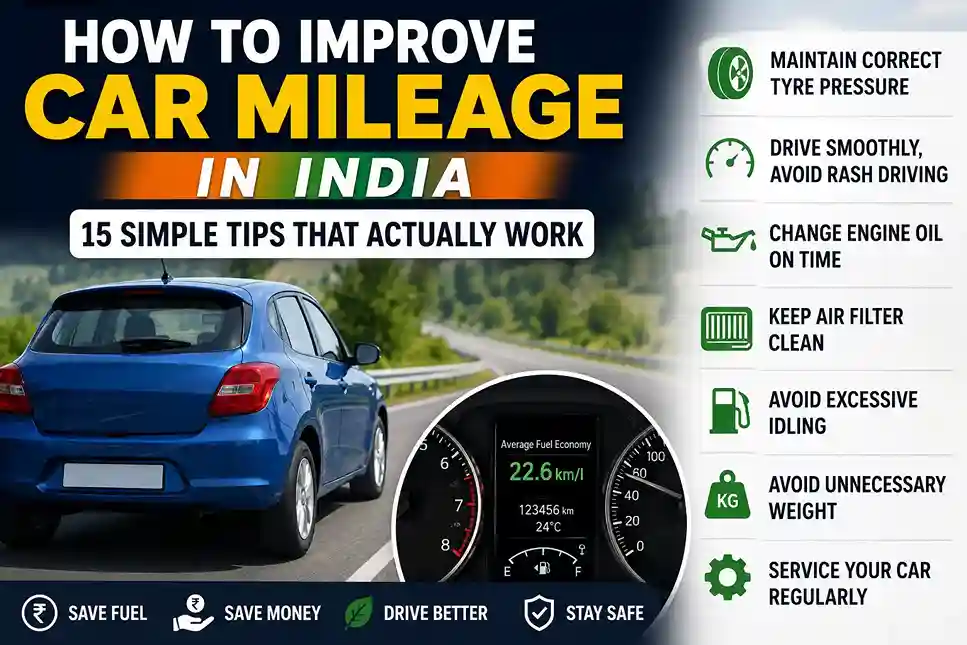
How to Improve Car Mileage in India is one of the most searched car ownership topics today because fuel prices continue to affect everyday driving costs. Whether you drive daily in heavy city traffic or regularly travel on highways, better mileage can save a significant amount of money over time. In real-world situations, many drivers unknowingly reduce their car’s fuel efficiency through small habits that seem harmless but slowly increase fuel consumption.
The good news is that improving mileage usually does not require expensive modifications or complicated mechanical upgrades. In most cases, simple maintenance habits and smarter driving techniques make the biggest difference. If you are already researching fuel efficiency and ownership costs, CarsInfos guides like why your car mileage is decreasing suddenly and how often should you change engine oil in India are useful companion reads because maintenance and driving behavior directly affect fuel economy.
The important thing to understand is that mileage improvement happens gradually through consistent habits, not overnight miracles.
Why Car Mileage Drops in Indian Driving Conditions
Indian driving conditions are unique compared to many other countries.
Common factors that reduce mileage include:
- heavy traffic
- frequent braking
- poor road conditions
- excessive idling
- hot weather
- short-distance trips
- overloaded vehicles
According to the U.S. Department of Energy’s official fuel economy guide, driving behavior and maintenance habits have a major impact on fuel efficiency.
A common mistake people make is assuming poor mileage automatically means there is a serious engine problem. In reality, daily driving habits often play a bigger role than mechanical faults.
1) Maintain Correct Tyre Pressure
Tyre pressure is one of the easiest and most overlooked mileage factors.
Underinflated tyres:
- increase rolling resistance
- make the engine work harder
- reduce fuel efficiency
- increase tyre wear
According to NHTSA tyre safety guidance, proper tyre inflation improves both safety and fuel economy.
In real-world situations, tyre pressure naturally drops over time, especially during seasonal temperature changes. Checking tyre pressure once a month can noticeably improve mileage.
2) Avoid Aggressive Driving
Sudden acceleration and hard braking waste fuel very quickly.
Aggressive driving habits include:
- rapid acceleration
- late braking
- constant speeding
- unnecessary overtaking
The Department of Energy explains in its fuel-efficient driving habits guide that smooth acceleration and steady speeds can significantly improve fuel economy.
A common mistake people make is trying to “drive fast to save time” in traffic-heavy cities where constant braking actually wastes more fuel.
3) Change Engine Oil on Time
Engine oil reduces friction and helps internal engine parts move smoothly.
Old or poor-quality oil:
- increases engine resistance
- reduces efficiency
- affects long-term engine health
That is why understanding how often should you change engine oil in India is extremely important for maintaining both engine life and fuel economy.
In practical situations, delayed oil changes often reduce mileage gradually, making the problem harder for drivers to notice immediately.
4) Reduce Excessive Idling
Idling burns fuel even when the vehicle is not moving.
Common idling situations include:
- waiting in parking areas
- long traffic signals
- warming up the engine unnecessarily
- sitting with the AC running
Many modern cars do not require long warm-up periods. Turning off the engine during extended stops can improve overall fuel savings.
5) Drive Smoothly in Traffic
Indian city driving often involves:
- stop-and-go movement
- sudden lane changes
- constant braking
Driving smoothly helps maintain momentum and reduces unnecessary fuel use.
For drivers who mostly travel inside crowded cities, fuel-efficient vehicles from the best mileage cars in 2026 category may also provide noticeable long-term savings.
6) Avoid Carrying Unnecessary Weight
Extra weight forces the engine to work harder.
Common examples include:
- unused luggage
- heavy toolboxes
- roof carriers
- unnecessary cargo
A common mistake people make is permanently storing heavy items inside the boot “just in case.” Over time, this extra load affects fuel efficiency more than many drivers realize.
7) Replace Dirty Air Filters
Air filters help supply clean air to the engine.
Dirty air filters may:
- reduce airflow
- affect combustion efficiency
- lower performance
- decrease mileage
AAA explains in its car maintenance tips for better mileage that clean filters and proper maintenance improve fuel economy.
In dusty Indian driving conditions, air filters may clog faster than expected.
8) Use the Correct Fuel Grade
Many people assume premium fuel automatically improves mileage.
In reality:
- most cars are designed for a specific fuel type
- using higher-octane fuel unnecessarily may not improve efficiency
- incorrect fuel can affect performance
The safest approach is always to follow manufacturer recommendations.
9) Maintain Proper Wheel Alignment
Poor wheel alignment increases rolling resistance and affects steering stability.
Signs of alignment problems include:
- uneven tyre wear
- steering pulling to one side
- vibration at higher speeds
According to wheel alignment and tyre maintenance guidance, alignment problems can negatively affect fuel economy and tyre life.
10) Avoid Overspeeding
Higher speeds usually increase fuel consumption significantly.
Most cars achieve their best mileage at moderate, steady speeds.
For example:
- constant high-speed driving
- rapid lane switching
- sudden overtaking
can all increase fuel usage noticeably on highways.
11) Use AC Efficiently
Air conditioning affects mileage because the compressor increases engine load.
However, completely avoiding AC during extreme heat may also reduce driving comfort and concentration.
The smarter approach is:
- use moderate cooling
- avoid maximum AC unnecessarily
- close windows at high speeds
In practical situations, open windows at highway speeds can create aerodynamic drag that also affects efficiency.
12) Keep Spark Plugs Healthy
Spark plugs play a major role in combustion efficiency.
Worn spark plugs may cause:
- rough idling
- poor acceleration
- lower mileage
- harder starting
Understanding how spark plugs affect fuel efficiency can help identify hidden mileage-related issues.
13) Follow Regular Service Intervals
Skipping maintenance often creates multiple small efficiency problems over time.
Routine servicing helps maintain:
- engine performance
- tyre condition
- filter cleanliness
- fuel-system efficiency
This becomes especially important for owners researching practical cars under ₹10 lakh because maintenance costs directly affect overall ownership value.
14) Plan Trips More Efficiently
Frequent short trips reduce mileage because engines operate less efficiently before warming up properly.
Combining errands into one longer trip can:
- reduce cold starts
- improve efficiency
- lower fuel consumption
In real-world situations, multiple short city trips often consume far more fuel than drivers expect.
15) Choose Fuel-Efficient Driving Habits
Long-term mileage improvement depends mostly on consistent habits.
The best fuel-saving habits include:
- smooth acceleration
- maintaining steady speed
- reducing unnecessary braking
- monitoring tyre pressure
- servicing the vehicle regularly
Drivers comparing efficient vehicles may also benefit from researching best automatic cars under ₹10 lakh in India because transmission type can affect urban fuel efficiency.
Common Mistakes That Reduce Mileage
Ignoring Tyre Pressure
Low tyre pressure quietly reduces efficiency every day.
Delaying Maintenance
Skipping service intervals gradually lowers mileage.
Aggressive Driving
Fast acceleration and harsh braking waste significant fuel.
Carrying Excess Weight
Extra load constantly increases engine effort.
Ignoring Warning Lights
Dashboard alerts often indicate efficiency-related problems.
This is one reason understanding car dashboard warning lights explained can help prevent larger fuel-efficiency issues later.
Best Practices for Long-Term Mileage Improvement
Here are practical habits that genuinely help:
- check tyre pressure monthly
- service the car on time
- avoid unnecessary idling
- drive smoothly
- reduce extra weight
- monitor warning lights
- maintain wheel alignment
- replace filters regularly
Mileage improvement is usually about consistency rather than dramatic changes.
Why Mileage Awareness Matters More Today
Fuel costs play a major role in long-term ownership expenses.
For many Indian drivers:
- daily commuting costs are increasing
- city traffic is getting heavier
- maintenance costs are rising
That is why improving mileage has become just as important as choosing the right vehicle itself.
Many readers who initially compare vehicles through guides like best mileage cars in 2026 eventually realize that driving habits and maintenance routines matter just as much as manufacturer mileage claims.
Frequently Asked Questions
1) What is the easiest way how to improve car mileage?
Maintaining proper tyre pressure and driving smoothly are among the easiest and most effective ways to improve mileage.
2) Does engine oil affect fuel efficiency?
Yes. Old or incorrect engine oil increases engine friction and can reduce mileage noticeably.
3) Can AC reduce car mileage?
Yes. Air conditioning increases engine load and may slightly reduce fuel efficiency, especially in heavy city traffic.
4) Why does mileage drop in city driving?
Frequent braking, idling, traffic congestion, and short trips reduce fuel efficiency in urban conditions.
5) Do dirty air filters reduce mileage?
Yes. Dirty air filters can reduce airflow to the engine and affect combustion efficiency.
6) Does aggressive driving really affect fuel consumption?
Absolutely. Rapid acceleration and hard braking can significantly increase fuel usage.
Conclusion
Understanding How to Improve Car Mileage in India is not about chasing unrealistic mileage numbers. It is about building smarter driving habits, maintaining the vehicle properly, and reducing avoidable fuel waste.
Most mileage problems develop gradually through small daily habits that drivers often overlook. Fortunately, small improvements made consistently can create noticeable long-term savings.
The best approach is simple: maintain the vehicle properly, drive smoothly, avoid unnecessary stress on the engine, and pay attention to early warning signs before small issues become expensive problems later.
Author: Carsinfos Editorial Team
Published: May 12th, 2026