How to Check Car Tyre Pressure at Home in India is one of the most useful maintenance skills every driver can learn. It takes only a few minutes, costs almost nothing, and can improve safety, tyre life, and fuel economy at the same time. NHTSA says drivers should check tyre pressure at least once a month, and it also notes that TPMS warning lights only alert you when a tyre is significantly underinflated, so they are not a substitute for regular manual checks.
In real-world situations, many Indian drivers notice tyre pressure only when the car starts feeling heavy, mileage drops, or the steering feels odd. By then, the tyres may already be running below the manufacturer’s recommendation. That is why this guide matters so much. If you have already read CarsInfos articles like why your car mileage is decreasing suddenly, you already know tyre pressure is one of the first things to check when fuel efficiency changes unexpectedly.
Why tyre pressure matters
Tyre pressure affects how your car rides, brakes, corners, and consumes fuel. Underinflated tyres increase rolling resistance, which means the engine has to work harder. Goodyear says the correct pressure should come from the vehicle’s owner’s manual or the sticker on the driver-side door jamb, while NHTSA says monthly pressure checks are still necessary even if the car has a TPMS system.
A common mistake people make is assuming tyre pressure is “close enough” as long as the tyre looks okay. Tyres can lose air slowly over time, and a drop of just a few PSI can make a noticeable difference in comfort and efficiency. US tire-safety guidance also notes that tyres can lose 1 to 2 psi per month under normal conditions, which is another reason regular checks matter.
What you need before checking tyre pressure
You do not need a workshop to do this properly. You only need a tyre pressure gauge, access to the recommended pressure for your car, and a few minutes with the car parked safely. Goodyear and NHTSA both recommend checking the vehicle’s placard or owner’s manual for the correct value rather than using a generic number.
If you are comparing mileage and ownership costs more broadly, CarsInfos also covers related topics like how to improve car mileage in India and best mileage cars in 2026, both of which connect directly to tyre maintenance because proper inflation is one of the easiest fuel-saving habits.
How to check car tyre pressure at home in India
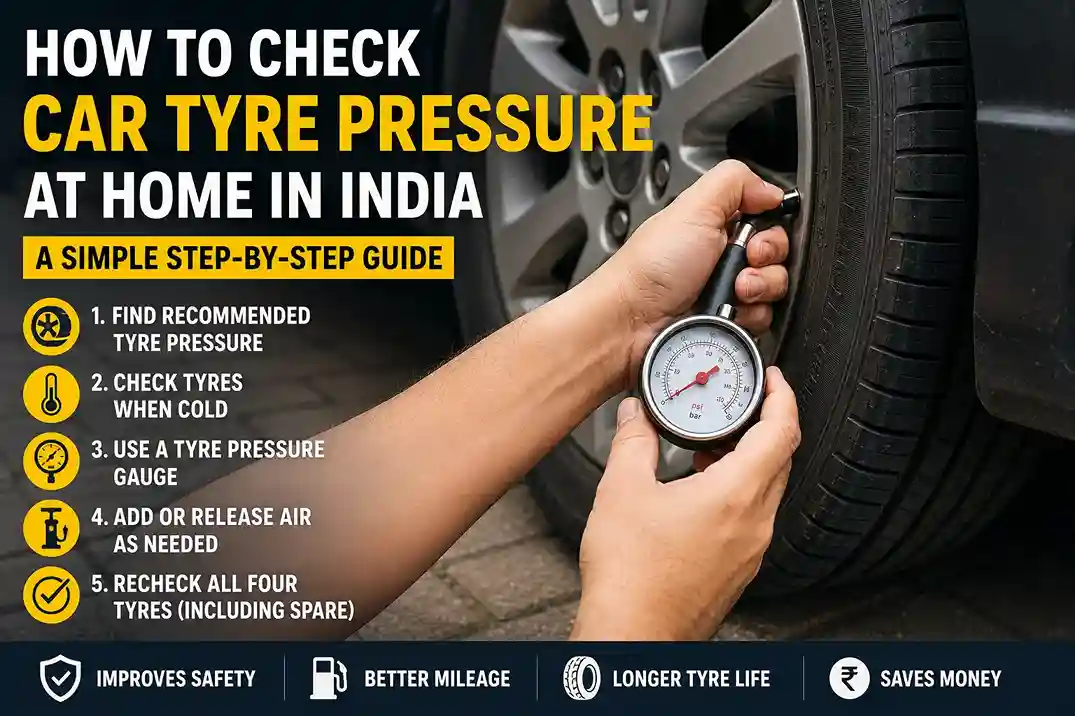
Step 1: Find the correct tyre pressure
Look for the manufacturer’s recommended pressure in the owner’s manual or on the sticker inside the driver-side door jamb. Goodyear says that is the right place to find it, and Hyundai owner’s manuals also direct drivers to the placard or tire inflation pressure label rather than the tyre sidewall.
This is important because the number printed on the tyre sidewall is not the pressure you should inflate to; it is usually the tyre’s maximum pressure rating. The recommended pressure is vehicle-specific, so a compact hatchback and a compact SUV will not always use the same number.
Step 2: Check the tyres when they are cold
NHTSA says tyre pressure should be checked when the tyres are “cold,” meaning the car has not been driven for at least three hours. That gives you a reading closer to the real recommended inflation level.
A common mistake people make is checking pressure immediately after a drive and then assuming the number is accurate. Heat from driving temporarily raises air pressure, so the reading can be misleading. If you check after a long trip, let the car sit first.
Step 3: Unscrew the valve cap
Remove the small cap from the tyre valve and keep it somewhere safe. It sounds basic, but losing valve caps happens more often than people think. Keeping the valve clean also helps avoid dirt entering the valve stem during the check.
Step 4: Press the gauge firmly onto the valve
Place the gauge squarely on the valve stem and press firmly so no air leaks out during the reading. Most handheld gauges give an immediate reading. If air hisses out, reposition and try again.
Step 5: Read the number and compare it to the recommended pressure
Compare the result with the figure from your owner’s manual or door sticker. If the pressure is lower than recommended, add air. If it is higher, release a little air until it matches the correct value. NHTSA and manufacturer guidance both emphasize sticking to the vehicle’s specified inflation pressure.
Step 6: Repeat for all tyres, including the spare if your car has one
NHTSA specifically recommends checking all tyres monthly, including the spare. That matters because a spare is useless in an emergency if it has gone flat in the boot for months.
How often should you check tyre pressure in India?
Once a month is a safe habit for most drivers. NHTSA recommends monthly checks, and Bridgestone India suggests checking tyre pressure every two weeks or before long trips. That means Indian drivers who do a lot of city driving, highway travel, or monsoon commuting may benefit from checking more often than the minimum monthly routine.
If you have recently noticed a drop in mileage, the article on why your car mileage is decreasing suddenly is a helpful companion read because tyre pressure is one of the most common reasons fuel economy slips.
What if your tyre pressure is always dropping?
If you find yourself adding air repeatedly, the issue may be more than normal air loss. Common causes include a slow puncture, damaged valve stem, a wheel problem, or a bead leak. US tire-care guidance says tyres normally lose some pressure over time, but unusual or continual pressure loss should be checked by a tyre professional.
In practical situations, a car that needs air every few days is telling you something is wrong. Do not treat that as routine. A slow leak can become a sudden flat, especially on hot roads or during highway trips.
Signs tyre pressure may be wrong even before you measure it
Tyre pressure problems often show up through driving feel. You may notice:
- the car feels heavier or less responsive
- fuel consumption gets worse
- the steering feels less sharp
- the tyre sidewall looks slightly squashed
- the TPMS light appears on the dashboard
The tyre-pressure warning light is useful, but it is not enough on its own. NHTSA says TPMS only illuminates when a tyre is significantly underinflated, so the light may not catch smaller but still important pressure losses. That is why manual checks still matter.
If your dashboard light is already on, CarsInfos’ guide on car dashboard warning lights explained can help you understand what the warning means in the broader context of your car’s systems.
Best practices for tyre pressure at home
A few habits make the process much easier:
- check pressure in the morning or after the car has been parked
- use the manufacturer’s recommended value, not the sidewall maximum
- inspect tyres for cracks, bulges, and nails while you are checking pressure
- do not forget the spare tyre
- recheck before long trips or heavy-load driving
- keep a small gauge in the car for quick checks
A common mistake people make is inflating all tyres to the same generic PSI they heard from a friend or saw online. That can be wrong for your car. The proper tyre pressure is vehicle-specific, so the manual or placard is always the right reference.
Tyre pressure and fuel efficiency
Correct tyre inflation helps the car roll more efficiently, which supports better mileage. That is one reason CarsInfos articles like best mileage cars in 2026 and how to improve car mileage in India repeatedly come back to tyre care as one of the simplest fuel-saving habits. NHTSA and Goodyear both connect proper inflation with improved safety and fuel economy.
That does not mean overinflating is a good idea. Overinflation can reduce grip and comfort, and it may increase uneven wear. The goal is the manufacturer’s recommended pressure, not the highest number you can safely add.
When to get help from a tyre professional
You should visit a tyre shop or service centre if:
- the tyre keeps losing air
- the valve is damaged
- the TPMS light keeps returning
- you see uneven tyre wear
- the tyre has a bulge, crack, or puncture
If you are also looking at broader ownership costs, CarsInfos guides such as best automatic cars under ₹10 lakh in India and best family cars under ₹10 lakh in India are useful because tyre habits, daily traffic, and load patterns often differ depending on the kind of car you own.
Frequently asked questions
1) What is the easiest way to check car tyre pressure at home?
Use a tyre pressure gauge and compare the reading with the manufacturer’s recommended pressure from the owner’s manual or driver-side door sticker.
2) How often should I check tyre pressure?
NHTSA recommends checking at least once a month, and Bridgestone India suggests every two weeks or before long trips.
3) Should I check tyre pressure when the tyres are hot?
No. Check them when cold, ideally after the car has been parked for at least three hours.
4) Is the pressure printed on the tyre sidewall the right pressure?
No. The sidewall shows the tyre’s maximum pressure rating, not your car’s recommended inflation pressure.
5) Does tyre pressure affect mileage?
Yes. Proper inflation improves fuel economy, while underinflation increases rolling resistance and fuel use.
6) What should I do if my tyre pressure keeps dropping?
Have the tyre, valve, and wheel inspected for a slow leak or puncture. Unusual repeated pressure loss should be checked by a tyre professional.
Conclusion
How to Check Car Tyre Pressure at Home in India is a simple skill that pays off in safety, comfort, and fuel savings. A monthly check with the right gauge and the correct manufacturer-recommended value can prevent underinflation, improve mileage, and help tyres last longer. NHTSA, Goodyear, and Bridgestone all stress the same basic idea: check the pressure regularly, use the placard or owner’s manual, and do it when the tyres are cold.
For many drivers, this is one of the easiest maintenance habits to build. It takes very little time, but it can save money every time you fill the tank.
Author: Carsinfos Editorial Team
Published: May 14th, 2026