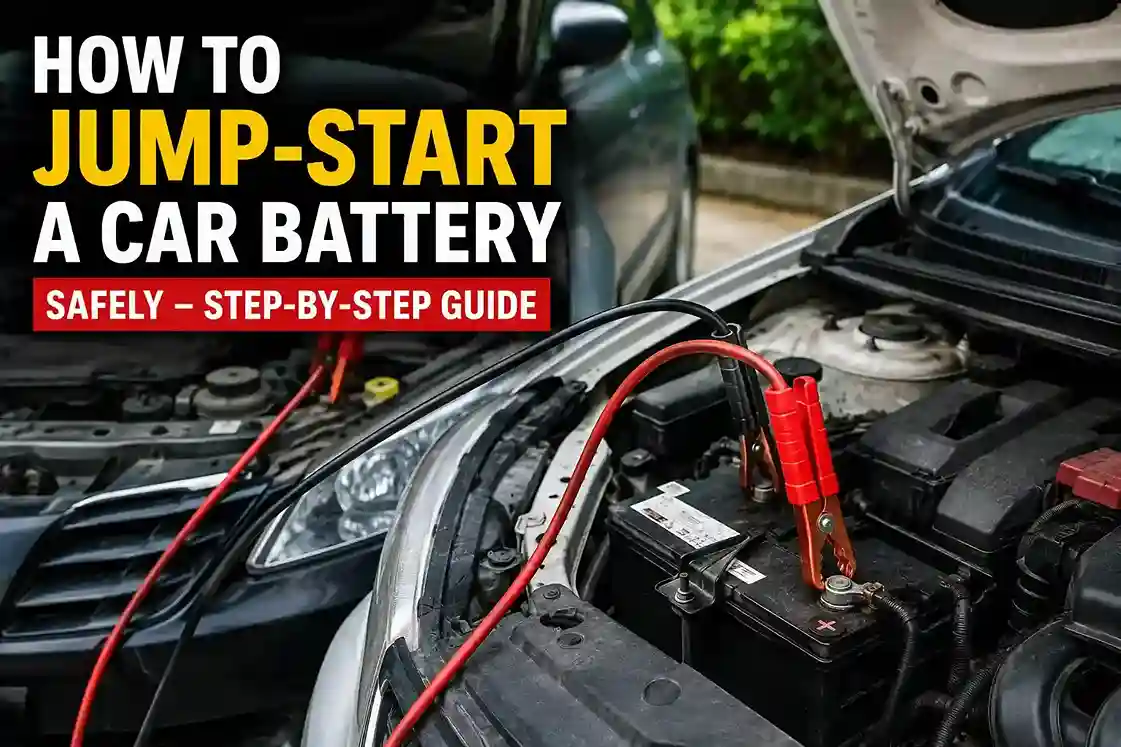
How to Jump-Start a Car Battery Safely is something every driver should learn because battery problems often happen without warning. One day the car starts normally, and the next morning it suddenly refuses to crank. In real-world situations, weak batteries are especially common during long parking periods, heavy city driving, extreme temperatures, or after accidentally leaving headlights or cabin lights switched on.
The good news is that a dead battery does not always mean the battery itself is permanently damaged. Sometimes the battery simply needs enough power to restart the engine safely. However, jump-starting a car incorrectly can damage electrical systems, create sparks, or even injure the person handling the cables. That is why understanding the correct process matters.
According to the AAA battery safety guide, weak batteries, charging-system issues, and electrical faults are among the most common reasons drivers experience starting problems.
Why Car Batteries Go Dead
Before learning the jump-start process, it helps to understand why batteries fail in the first place.
Common causes include:
- leaving headlights or interior lights on
- old battery age
- extreme heat
- long periods without driving
- alternator problems
- corroded battery terminals
- repeated short trips
A common mistake people make is assuming every dead battery means immediate battery replacement. In many cases, the battery simply discharged because of temporary conditions.
According to the NHTSA vehicle battery safety guidance, electrical-system maintenance plays a major role in overall vehicle reliability and safety.
Signs You May Need a Jump-Start
Some warning signs appear before the battery completely dies.
Common Symptoms Include:
- engine cranks slowly
- clicking sound when starting
- dim headlights
- weak dashboard lighting
- battery warning light
- infotainment system restarting
If you notice these symptoms regularly, you should also read How to Improve Car Mileage in India – 15 Simple Tips That Actually Work because charging-system and maintenance problems can indirectly affect overall vehicle efficiency.
What You Need Before Jump-Starting a Car
Before starting, gather:
- jumper cables
- another vehicle with a healthy battery
- gloves if available
- safety awareness
Modern cars contain sensitive electronics, so using good-quality jumper cables matters more than many drivers realize.
A common mistake people make is buying extremely cheap cables with thin wiring. Thin cables may struggle to transfer enough current safely.
Important Safety Rules Before Jump-Starting
Safety should always come first.
Never Jump-Start If:
- the battery is leaking
- the battery case is swollen
- you smell burning
- cables are damaged
- the battery terminals are severely broken
The CDC battery safety recommendations explain that damaged batteries can release dangerous gases and chemicals.
In real-world situations, many people rush through the process because they are stranded or stressed. However, rushing often causes mistakes like incorrect cable placement.
How to Jump-Start a Car Battery Safely
Step 1: Park Both Cars Safely
Park the working vehicle close enough for the jumper cables to reach comfortably, but make sure the vehicles do not touch each other.
Then:
- switch off both engines
- engage parking brakes
- remove keys if possible
Step 2: Identify Battery Terminals
Every battery has:
- positive terminal (+)
- negative terminal (-)
The positive terminal usually has:
- red cover
- plus symbol
- red cable connection
The negative terminal usually has:
- black cable
- minus symbol
A common mistake people make is connecting cables too quickly without checking polarity properly.
Step 3: Connect the Red Positive Cable
Connect one end of the red jumper cable to the dead battery’s positive terminal.
Then connect the other red end to the working battery’s positive terminal.
Always connect positive terminals first.
Step 4: Connect the Black Negative Cable
Now connect one black cable clamp to the working battery’s negative terminal.
The final black clamp should NOT go directly to the dead battery’s negative terminal.
Instead, attach it to:
- unpainted metal surface
- engine ground point
- solid metal bracket away from battery
According to the AAA jump-start safety recommendations, grounding the final connection away from the battery reduces spark risks near battery gases.
Step 5: Start the Working Vehicle
Start the car with the healthy battery and let it run for several minutes.
This allows some charge to transfer into the dead battery.
In practical situations, drivers often try starting the dead car immediately without waiting. Sometimes giving the battery 3–5 minutes helps significantly.
Step 6: Start the Dead Vehicle
Now attempt to start the vehicle with the dead battery.
If the engine starts:
- let it idle
- avoid shutting it off immediately
- keep electrical accessories minimal initially
If it still does not start after a few attempts, stop trying continuously because repeated cranking can damage components.
Step 7: Remove the Cables Carefully
Disconnect cables in reverse order:
- black clamp from grounded metal
- black clamp from working battery
- red clamp from working battery
- red clamp from revived battery
Avoid allowing clamps to touch each other during removal.
What to Do After a Successful Jump-Start
Many drivers think the problem is solved once the car starts.
However, the jump-start only restores temporary power.
After starting:
- drive for at least 20–30 minutes
- avoid shutting engine off immediately
- inspect battery condition soon
- check charging system if issue repeats
If your car repeatedly requires jump-starts, revisit Signs Your Car Battery Is Weak – 10 Early Warning Signs Every Driver Should Know because recurring starting problems usually indicate deeper battery or alternator issues.
Common Jump-Starting Mistakes Drivers Make
Connecting Cables Incorrectly
Wrong polarity can damage:
- alternator
- ECU
- sensors
- fuse systems
Allowing Cable Clamps to Touch
Metal-to-metal contact between clamps can create dangerous sparks.
Using Damaged Jumper Cables
Old cables with cracked insulation create safety risks.
Ignoring Corrosion
Battery corrosion affects current flow and connection quality.
Repeatedly Cranking the Engine
Continuous failed starting attempts can overheat starters and wiring.
Can Jump-Starting Damage Modern Cars?
Modern vehicles contain advanced electronics and sensors.
Improper jump-starting can potentially affect:
- infotainment systems
- ECUs
- sensors
- alternators
That is why many manufacturers now recommend using proper grounding points and following the owner’s manual carefully.
The AAA roadside battery guidance explains that safe cable connection order is extremely important for modern vehicles.
Best Practices to Avoid Battery Problems
The best jump-start is the one you never need.
Good Battery Habits Include:
- driving regularly
- avoiding unnecessary short trips
- turning off lights before parking
- checking battery terminals
- inspecting charging system
- replacing old batteries proactively
If you frequently drive in traffic-heavy cities, maintenance habits discussed in How to Check Car Tyre Pressure at Home in India – A Simple Step-by-Step Guide and Why Your Car Mileage Is Decreasing Suddenly – 12 Common Reasons Explained also help improve overall vehicle health.
When You Should Replace the Battery
Sometimes jump-starting is only a temporary solution.
You may need replacement if:
- battery is older than 3–5 years
- jump-starts become frequent
- battery leaks
- charging problems continue
- terminals are badly damaged
According to the AAA battery maintenance guide, older batteries lose reliability gradually even before total failure occurs.
Frequently Asked Questions
1) Is it safe to jump-start a car at home?
Yes, if done carefully using proper cable connection order and safety precautions.
2) Can I jump-start a completely dead battery?
Sometimes yes, but severely damaged or failed batteries may not recover.
3) How long should I drive after a jump-start?
Driving for at least 20–30 minutes helps recharge the battery temporarily.
4) Why does my battery keep dying?
Repeated battery failure may indicate:
- old battery
- alternator problem
- parasitic drain
- poor charging system
5) Can incorrect jump-starting damage electronics?
Yes. Incorrect polarity or poor grounding can damage sensitive vehicle electronics.
6) What should I do if the car still will not start?
Stop repeated attempts and inspect:
- battery condition
- alternator
- fuse system
- starter motor
Conclusion
Understanding How to Jump-Start a Car Battery Safely is an important skill for every driver because battery problems can happen unexpectedly. A safe jump-start procedure can help get the vehicle running again temporarily, but it should also encourage drivers to investigate the underlying cause rather than ignoring repeated warning signs.
The key is staying calm, following the correct cable order, avoiding shortcuts, and paying attention to safety. Small mistakes during jump-starting can damage expensive electronics, while proper technique can save time, money, and stress during emergencies.
Most importantly, remember that batteries usually give warning signs before complete failure. Paying attention early often prevents roadside breakdowns later.
Author: Carsinfos Editorial Team
Published: May 15th, 2026