
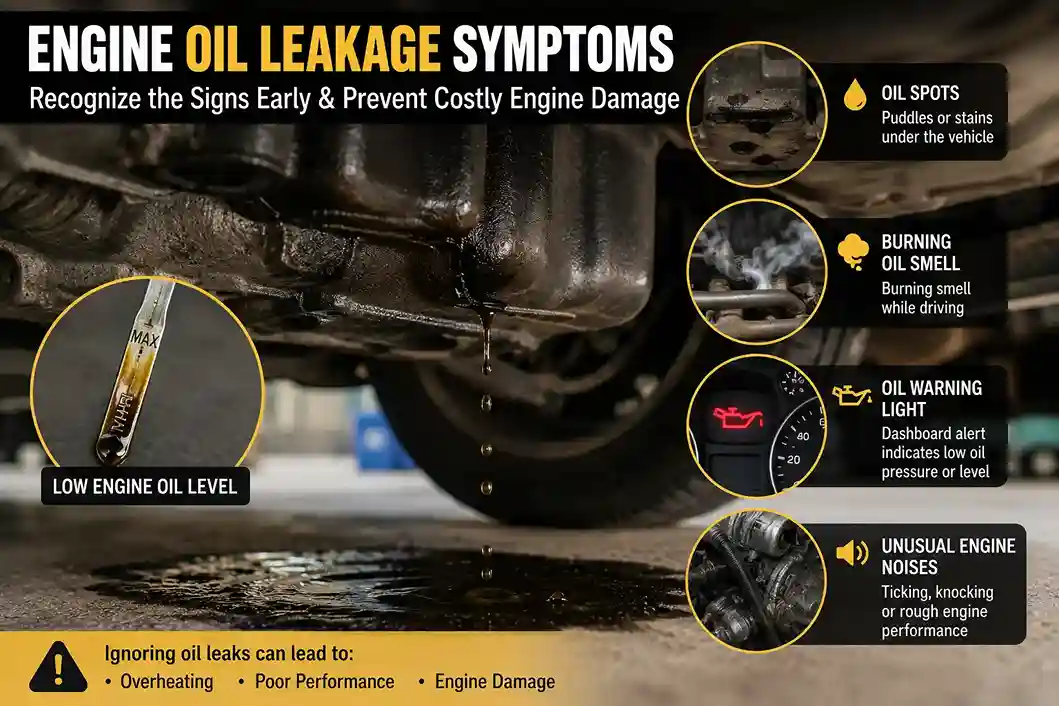
Engine Oil Leakage Symptoms are among the most important warning signs drivers should never ignore. A small oil leak may seem harmless at first, but over time it can lead to reduced engine lubrication, overheating, costly repairs, and even complete engine failure.
Many vehicle owners don’t realize they have an oil leak until they notice oil stains on the driveway, smell burning oil, or see a dashboard warning light. In some cases, the symptoms develop gradually, making them easy to overlook.
In real-world situations, a minor oil leak can remain manageable if identified early. However, continuing to drive with low oil levels can cause serious damage to engine components that rely on constant lubrication.
This guide explains the most common engine oil leakage symptoms, why oil leaks occur, how they affect your vehicle, and what steps you should take if you suspect a leak.
If you’re already monitoring your vehicle’s maintenance condition through guides such as How Often Should You Change Engine Oil in India, understanding oil leak symptoms is another important part of protecting long-term engine health.
Why Engine Oil Is So Important
Before discussing oil leaks, it’s important to understand the role engine oil plays.
Engine oil helps:
- Lubricate moving engine parts
- Reduce friction
- Control engine temperature
- Prevent wear and corrosion
- Remove contaminants
- Improve engine efficiency
According to the U.S. Department of Energy, proper engine lubrication is essential for maintaining performance and reducing wear.
When oil begins leaking from the engine, these protective functions can be compromised.
Engine Oil Leakage Symptoms: The Most Common Warning Signs
Oil Spots Under the Vehicle
One of the earliest and most obvious symptoms is finding oil spots beneath your parked vehicle.
Fresh engine oil typically appears:
- Amber or light brown when new
- Dark brown or black when used
If you consistently notice oily stains under the engine area, it’s time for a closer inspection.
In real-world situations, many drivers first discover a leak after noticing stains on their garage floor or parking space.
Burning Oil Smell
A strong burning oil odor often indicates oil is leaking onto hot engine components.
Common leak locations include:
- Valve cover gasket
- Engine seals
- Oil filter housing
When leaked oil contacts hot metal surfaces, it can produce a noticeable smell.
If the odor becomes stronger while driving, immediate inspection is recommended.
Low Engine Oil Level
Frequent drops in engine oil level may indicate leakage.
Drivers should regularly check oil levels using the dipstick.
If you are unsure how to monitor fluid levels properly, our guide on Check Car Engine Coolant Level at Home in India also discusses the importance of routine vehicle fluid inspections.
Unexpected oil loss between service intervals often signals an underlying issue.
Dashboard Oil Warning Light
Modern vehicles monitor oil pressure and oil levels.
According to the National Highway Traffic Safety Administration (NHTSA), warning lights should never be ignored because they often indicate conditions that could damage critical vehicle systems.
An oil warning light may appear when:
- Oil levels become dangerously low
- Oil pressure drops
- Lubrication problems develop
If the warning light appears, stop the vehicle as soon as it is safe to do so and investigate the cause.
Smoke From the Engine Bay
Oil leaks can sometimes produce visible smoke.
This usually happens when leaking oil reaches:
- Exhaust manifolds
- Turbochargers
- Other hot engine surfaces
Drivers may notice smoke especially after extended driving.
This symptom should always be inspected promptly.
Engine Overheating
Oil helps regulate engine temperature by reducing friction.
When oil levels become too low:
- Friction increases
- Heat buildup occurs
- Engine temperature may rise
If your vehicle is also running hotter than normal, our guide on Why Your Car Is Overheating: Common Reasons and Fixes explains additional warning signs and causes.
Reduced Engine Performance
Insufficient lubrication can affect overall engine efficiency.
Drivers may notice:
- Sluggish acceleration
- Increased engine noise
- Rough operation
Performance-related symptoms sometimes overlap with issues discussed in Why Car Loses Power While Accelerating.
Unusual Engine Noises
Oil creates a protective barrier between moving metal components.
Without adequate lubrication, parts may begin producing:
- Ticking sounds
- Knocking noises
- Metal-on-metal sounds
The National Institute for Automotive Service Excellence (ASE) notes that unusual engine noises often indicate lubrication or mechanical issues requiring attention.
What Causes Engine Oil Leaks?
Several components can develop leaks as vehicles age.
Worn Valve Cover Gasket
The valve cover gasket seals the top of the engine.
Over time:
- Heat causes deterioration
- Rubber becomes brittle
- Oil begins escaping
This is one of the most common sources of leaks.
Damaged Oil Pan Gasket
The oil pan stores engine oil beneath the engine.
The gasket can wear out due to:
- Age
- Road debris damage
- Improper installation
Worn Engine Seals
Engine seals endure constant heat and pressure.
Eventually, they may crack or shrink.
Loose or Damaged Oil Filter
Improper oil filter installation can cause leaks.
This occasionally occurs after routine oil changes.
Excessive Oil Pressure
Blocked ventilation systems may increase crankcase pressure.
This pressure can force oil through weak seals.
How Serious Is an Engine Oil Leak?
The severity depends on the size and location of the leak.
Minor Leaks
Small leaks may:
- Require occasional oil top-ups
- Develop slowly
- Present limited immediate risk
Moderate Leaks
These leaks often worsen over time and should be repaired promptly.
Major Leaks
Large leaks can rapidly lower oil levels and increase the risk of engine damage.
Driving with severe oil loss is not recommended.
Common Mistakes Drivers Make
Ignoring Small Oil Spots
Many owners assume small leaks aren’t serious.
However, minor leaks often grow larger over time.
Continuing to Drive With Warning Lights On
Dashboard oil warnings indicate potentially serious problems.
Ignoring them increases repair risks.
Our guide on Car Dashboard Warning Lights Explained can help drivers better understand critical warning indicators.
Using Incorrect Oil Grades
Manufacturers specify oil viscosity for a reason.
Incorrect oil may contribute to leakage or performance issues.
Delaying Repairs
Minor gasket replacements are often much less expensive than engine repairs caused by prolonged oil loss.
Best Practices for Preventing Oil Leaks
Follow Oil Change Intervals
Regular oil changes help maintain engine health.
Reviewing maintenance schedules discussed in How Often Should You Change Engine Oil in India can help reduce long-term problems.
Inspect the Engine Periodically
Visual inspections can identify leaks early.
Use High-Quality Engine Oil
Quality lubricants provide better protection for seals and components.
Address Warning Signs Quickly
Prompt diagnosis often prevents larger issues.
Maintain Proper Oil Levels
Checking oil regularly remains one of the simplest forms of preventive maintenance.
When Should You Visit a Mechanic?
Professional inspection is recommended if:
- Oil spots appear regularly
- Burning oil smells persist
- Warning lights remain illuminated
- Smoke develops from the engine bay
- Oil levels drop rapidly
A qualified technician can identify the leak source and recommend appropriate repairs.
Frequently Asked Questions
What are the most common engine oil leakage symptoms?
Common symptoms include oil spots under the vehicle, burning oil smells, low oil levels, engine smoke, dashboard warning lights, and unusual engine noises.
Can I drive with an engine oil leak?
Small leaks may allow limited driving, but any oil leak should be inspected promptly. Severe leaks can cause engine damage.
How do I know if oil is leaking or burning?
Oil leaks usually leave visible stains, while burning oil often produces smoke and a strong odor.
Can low engine oil cause overheating?
Yes. Reduced lubrication increases friction and heat, potentially contributing to overheating.
Are oil leaks expensive to repair?
Repair costs vary depending on the source of the leak. Minor gasket replacements are generally less expensive than repairs involving major engine components.
Conclusion
Understanding Engine Oil Leakage Symptoms can help drivers detect problems before they become serious and expensive. Oil spots, burning smells, warning lights, smoke, low oil levels, and unusual engine noises are all signs that should never be ignored.
Regular inspections, proper maintenance, and prompt repairs are the best ways to protect your engine and avoid costly damage. In many cases, catching an oil leak early can mean the difference between a simple gasket replacement and a major engine repair.
If you notice any of these engine oil leakage symptoms, take action quickly. Protecting your engine today can save significant time, money, and stress in the future.
Author: Carsinfos Editorial Team
Published: June 23rd, 2026