
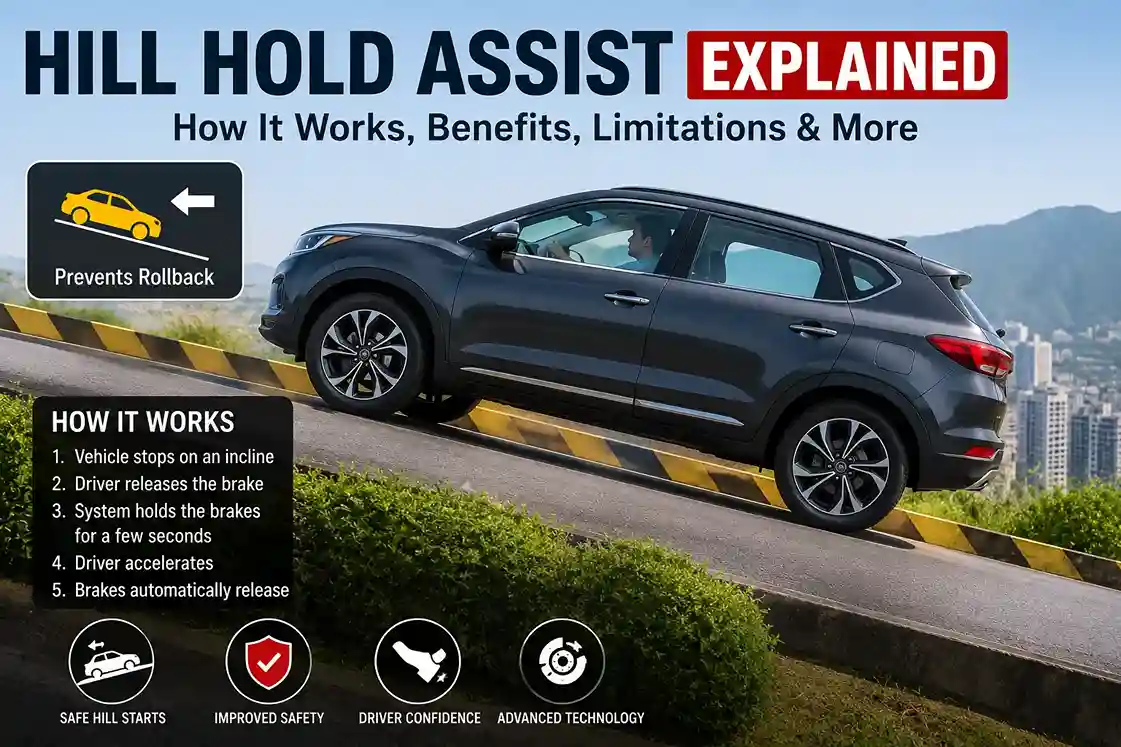
Hill Hold Assist Explained is a topic many drivers search for when exploring modern car features or trying to understand why their vehicle briefly holds itself in place on an incline. If you’ve ever stopped on a steep hill and worried about your car rolling backward while moving your foot from the brake to the accelerator, Hill Hold Assist is designed specifically to solve that problem.
This technology has become increasingly common in modern cars, SUVs, and even some entry-level vehicles. It improves driver confidence, enhances safety, and makes hill starts much easier, especially for new drivers or those driving in heavy traffic on hilly roads.
In real-world situations, Hill Hold Assist can be particularly useful when navigating steep parking ramps, mountain roads, flyovers, or stop-and-go traffic on inclines. While it may seem like a small feature, it can significantly improve everyday driving comfort.
In this guide, we’ll explain how Hill Hold Assist works, its advantages and limitations, how it differs from other driving aids, and whether it’s a feature worth considering when buying your next vehicle.
What Is Hill Hold Assist?
Hill Hold Assist (HHA), sometimes called Hill Start Assist or Hill Start Control, is a vehicle safety feature that temporarily keeps the brakes engaged when the vehicle is stopped on an incline.
When the driver releases the brake pedal to move their foot to the accelerator, the system briefly maintains braking pressure, preventing the vehicle from rolling backward.
This gives the driver enough time to accelerate smoothly without worrying about losing control.
According to the National Highway Traffic Safety Administration, driver-assistance technologies can help improve vehicle control and reduce certain types of driving risks when used appropriately.
Hill Hold Assist Explained: How Does It Work?
The Basic Principle
Hill Hold Assist works using sensors already present in many modern vehicles.
These sensors monitor:
- Vehicle angle or incline
- Brake pedal position
- Accelerator pedal input
- Wheel speed
- Stability control systems
When the system detects that the vehicle is stopped on a slope and the driver releases the brake pedal, it automatically maintains braking force for a short period, usually between 2 and 5 seconds.
This prevents the vehicle from rolling backward until the driver accelerates.
What Happens During a Hill Start?
For example:
- Your vehicle stops on an incline.
- You press and hold the brake pedal.
- The Hill Hold Assist system detects the slope.
- You release the brake pedal.
- The brakes remain engaged temporarily.
- You press the accelerator.
- The brakes automatically release.
The entire process happens within seconds and often feels seamless to the driver.
Why Was Hill Hold Assist Developed?
Before this technology became common, hill starts could be stressful, especially in manual transmission vehicles.
Drivers often had to coordinate:
- Clutch control
- Brake release
- Accelerator input
Incorrect timing could cause:
- Vehicle rollback
- Engine stalling
- Driver panic
- Increased wear on clutch components
Modern safety systems were developed to simplify this process and improve driver confidence.
Just as technologies discussed in our guide on ADAS Cars in India Explained help reduce driving stress, Hill Hold Assist addresses one of the most common challenges drivers face on inclines.
Which Vehicles Have Hill Hold Assist?
Today, Hill Hold Assist is available in many vehicle categories.
These include:
Manual Transmission Vehicles
The feature is particularly valuable in manual cars because hill starts require greater driver coordination.
Automatic Vehicles
Automatic transmission vehicles also benefit from reduced rollback during hill starts.
SUVs and Crossovers
Vehicles frequently driven in hilly regions often include Hill Hold Assist as standard equipment.
Many SUVs designed for varied terrain, including several models featured in our guide to Best SUVs Under 15 Lakh in India, now include this technology.
Benefits of Hill Hold Assist
Prevents Vehicle Rollback
This is the primary benefit.
Rollback can be dangerous in traffic, particularly when another vehicle is positioned closely behind.
Improves Driver Confidence
New drivers often struggle with hill starts.
Hill Hold Assist provides extra time to accelerate smoothly.
Reduces Clutch Wear
In manual cars, drivers frequently use clutch slipping to prevent rollback.
Hill Hold Assist reduces this need, potentially extending clutch life.
Enhances Safety
According to the Insurance Institute for Highway Safety, driver-assistance technologies can improve vehicle control in specific driving situations.
While Hill Hold Assist isn’t a crash-prevention system, it contributes to safer vehicle operation on inclines.
Makes Daily Driving Easier
In real-world situations, steep flyovers, parking structures, and hill roads become less stressful when rollback concerns are eliminated.
Does Hill Hold Assist Work on Downhill Slopes?
Generally, Hill Hold Assist is designed primarily for uphill starts.
However, some advanced systems may provide limited assistance on certain downhill gradients depending on vehicle design.
Always consult your owner’s manual for specific functionality.
Hill Hold Assist vs Hill Descent Control
These technologies are often confused.
However, they serve different purposes.
| Feature | Hill Hold Assist | Hill Descent Control |
|---|---|---|
| Prevents Rollback | Yes | No |
| Works During Starts | Yes | No |
| Controls Downhill Speed | No | Yes |
| Highway Use | Limited | No |
| Off-Road Use | Limited | Yes |
Drivers interested in understanding additional vehicle technologies may also find value in our article on Cruise Control Explained.
Is Hill Hold Assist the Same as Auto Hold?
No.
Although they seem similar, there are important differences.
Hill Hold Assist
- Activates only on inclines
- Holds the vehicle briefly
- Designed specifically for hill starts
Auto Hold
- Can work on flat roads
- Keeps brakes applied indefinitely until acceleration
- Useful in traffic jams and urban driving
Many premium vehicles offer both features.
Common Situations Where Hill Hold Assist Helps
Heavy Traffic on Flyovers
In crowded urban environments, frequent stops on inclines can become tiring.
Hill Hold Assist reduces driver stress.
Mountain Roads
Drivers traveling through hilly regions benefit significantly from rollback prevention.
Parking Garages
Multi-level parking structures often contain steep ramps.
Hill Hold Assist simplifies maneuvering.
Beginner Drivers
New drivers gain confidence more quickly when the risk of rollback is minimized.
Common Mistakes Drivers Make
Relying on Hill Hold Assist Too Much
Drivers should still learn proper hill start techniques.
Technology should supplement driving skills, not replace them.
Assuming It Holds Forever
Hill Hold Assist only maintains brake pressure temporarily.
Drivers must accelerate within the available time.
Ignoring Warning Indicators
If the system stops functioning correctly, dashboard alerts may appear.
Our guide on Car Dashboard Warning Lights Explained can help drivers understand potential warning signals.
Not Reading the Owner’s Manual
Different manufacturers implement Hill Hold Assist differently.
Understanding your specific system is important.
Can Hill Hold Assist Improve Vehicle Safety?
While Hill Hold Assist isn’t designed to prevent accidents directly, it helps drivers maintain better vehicle control during challenging situations.
The Federal Highway Administration emphasizes the importance of vehicle control and driver confidence in reducing roadway risks.
By reducing rollback incidents, Hill Hold Assist contributes to safer operation on inclines.
Does Hill Hold Assist Affect Fuel Economy?
The impact on fuel consumption is negligible.
The system operates for only a few seconds at a time and has virtually no measurable effect on fuel efficiency.
Drivers looking to maximize efficiency may find useful tips in our article on How to Improve Car Mileage in India.
Is Hill Hold Assist Worth Having?
For many drivers, absolutely.
The feature provides benefits regardless of experience level.
It’s particularly valuable if you frequently:
- Drive in hilly areas
- Commute through flyovers
- Navigate parking ramps
- Drive manual transmission vehicles
- Travel in stop-and-go traffic
Even though it may not be a primary purchasing factor, it contributes significantly to overall driving convenience.
Modern buyers often consider comfort and safety technologies alongside comparisons such as Manual vs Automatic Cars: Which One Should You Buy?.
Best Practices for Using Hill Hold Assist
To maximize effectiveness:
- Maintain proper brake system health.
- Follow recommended service intervals.
- Stay familiar with system behavior.
- Continue practicing proper hill starts.
- Pay attention to dashboard warnings.
Like any driver-assistance feature, Hill Hold Assist works best when combined with attentive driving.
Frequently Asked Questions
What does Hill Hold Assist do?
Hill Hold Assist temporarily keeps the brakes engaged when a vehicle stops on an incline, preventing rollback during hill starts.
How long does Hill Hold Assist hold the brakes?
Most systems maintain braking pressure for approximately 2 to 5 seconds.
Is Hill Hold Assist available in manual cars?
Yes. It is particularly beneficial in manual transmission vehicles where hill starts require greater coordination.
Does Hill Hold Assist work automatically?
Yes. In most vehicles, the system activates automatically when it detects an incline and appropriate driving conditions.
Can Hill Hold Assist fail?
Like any electronic system, faults are possible, although failures are relatively uncommon. Warning lights may appear if a problem is detected.
Is Hill Hold Assist useful for experienced drivers?
Yes. Even experienced drivers benefit from improved convenience and reduced stress during hill starts.
Conclusion
Understanding Hill Hold Assist Explained helps drivers appreciate one of the most practical convenience and safety features found in modern vehicles. By temporarily preventing rollback during hill starts, the system improves confidence, reduces stress, and makes driving on inclines significantly easier.
Whether you’re a new driver learning vehicle control or an experienced motorist navigating steep roads and crowded flyovers, Hill Hold Assist provides meaningful assistance in everyday driving situations. As automotive technology continues to evolve, features like Hill Hold Assist demonstrate how small innovations can make a noticeable difference in comfort, safety, and overall driving experience.
Author: Carsinfos Editorial Team
Published: June 22nd, 2026