Cruise Control Explained is one of the most searched topics among drivers looking to understand modern car technology. If you’ve ever driven on a long highway journey, you’ve probably wondered how cruise control maintains a constant speed without continuous accelerator input. This feature is designed to improve driving comfort, reduce fatigue, and help maintain consistent speeds during long trips.
Cruise control is one of the most practical comfort features available in modern vehicles. While it has existed for decades, many drivers still don’t fully understand how it works, when they should use it, or whether it actually improves fuel efficiency.
Whether you’re buying your first car or comparing vehicle features, understanding cruise control can help you become a more comfortable and confident driver. Just as many buyers research features such as ADAS technology in modern vehicles, cruise control has become an increasingly important feature in both budget and premium cars.
In this guide, we’ll explain cruise control in simple terms, discuss its benefits and limitations, explore real-world driving situations, and help you decide whether it’s a feature worth having.
Cruise Control Explained: What Does Cruise Control Actually Do?
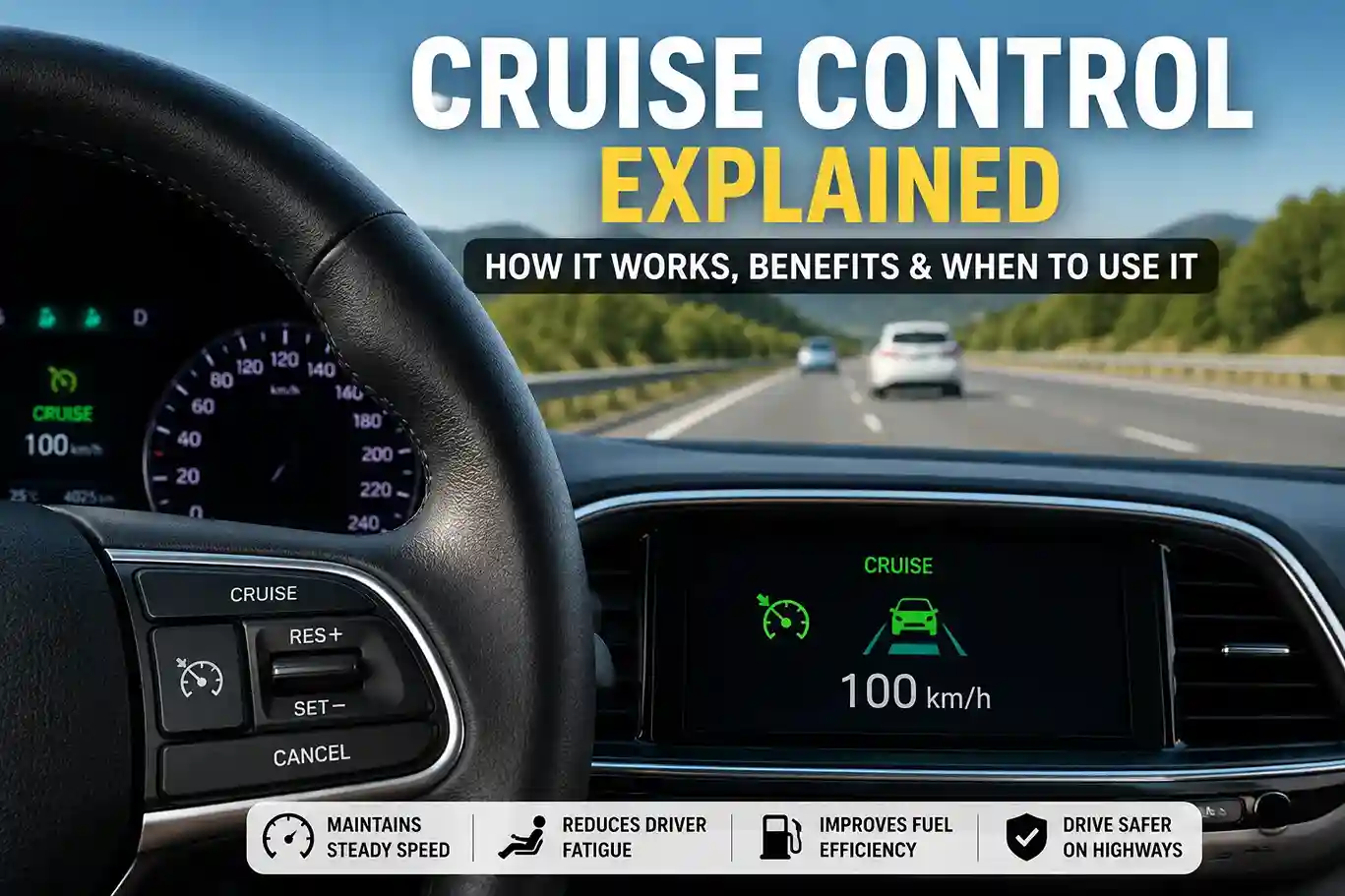
Cruise control is a system that automatically maintains a vehicle’s speed without requiring continuous pressure on the accelerator pedal.
Once activated, the system controls the throttle electronically to keep the vehicle traveling at a chosen speed.
For example, if you’re driving on an expressway at 90 km/h, you can set cruise control and remove your foot from the accelerator. The car will continue maintaining that speed until you brake, cancel the system, or adjust the speed setting.
The technology is designed primarily for long-distance highway driving where speed changes are minimal.
How Does Cruise Control Work?
Modern cruise control systems are integrated with the vehicle’s electronic control systems.
When activated:
- The driver selects a desired speed.
- Sensors monitor the vehicle’s current speed.
- The engine management system adjusts throttle input automatically.
- The system continuously corrects speed fluctuations caused by inclines or declines.
According to the National Highway Traffic Safety Administration (NHTSA), advanced driver assistance technologies help reduce driver workload when used appropriately.
It’s important to remember that traditional cruise control does not steer, brake automatically, or avoid obstacles. It simply maintains speed.
Types of Cruise Control
Not all cruise control systems work the same way.
Traditional Cruise Control
This is the most basic version.
The driver sets a speed, and the vehicle maintains it until the system is disengaged.
You’ll commonly find this feature in many mainstream cars and SUVs.
Adaptive Cruise Control (ACC)
Adaptive Cruise Control is a more advanced version.
Using radar and cameras, the vehicle automatically adjusts speed to maintain a safe distance from the vehicle ahead.
According to the Insurance Institute for Highway Safety (IIHS), adaptive cruise control can improve driving comfort during highway travel when used correctly.
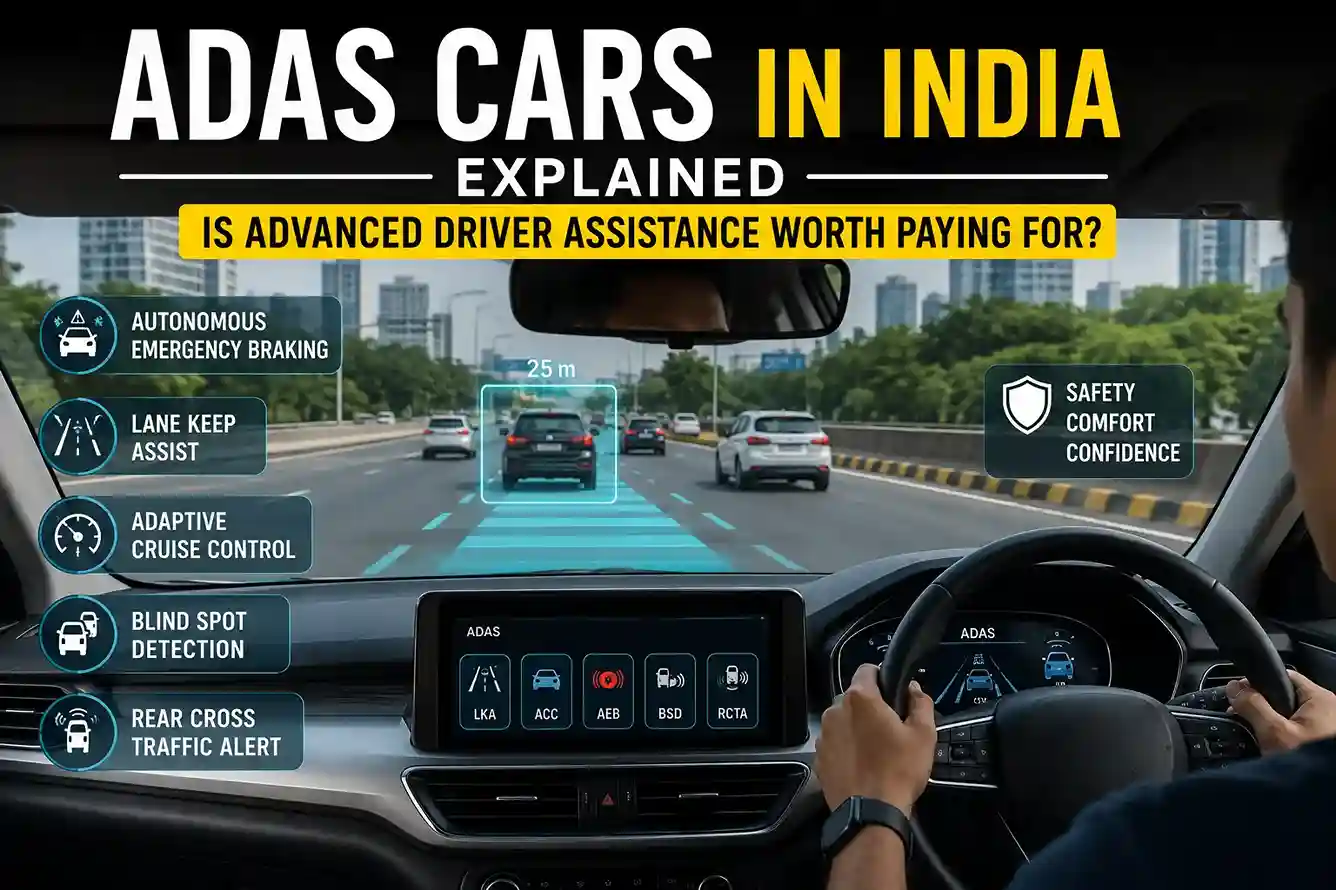
Many vehicles equipped with advanced safety systems combine adaptive cruise control with features discussed in our guide on ADAS cars in India explained.
Intelligent Cruise Control
Some premium vehicles offer systems capable of:
- Reading speed limit signs
- Slowing for curves
- Assisting during traffic jams
- Working alongside lane-centering technology
These systems remain driver-assistance features and do not replace driver attention.
Benefits of Using Cruise Control
Cruise control offers several practical advantages.
Reduced Driver Fatigue
Long highway drives can become tiring when drivers constantly maintain accelerator pressure.
Cruise control reduces physical strain, making journeys more comfortable.
In real-world situations, drivers covering several hundred kilometers often notice reduced leg fatigue when using cruise control appropriately.
More Consistent Speed
Human drivers naturally vary speed.
Cruise control helps maintain a steady pace, reducing unnecessary speed fluctuations.
Potential Fuel Savings
Steady driving often improves fuel efficiency.
Similar to recommendations discussed in our guide on How to Improve Car Mileage in India, avoiding sudden acceleration helps reduce fuel consumption.
Cruise control encourages smoother driving habits that may improve mileage on highways.
Reduced Risk of Speeding
Many drivers unintentionally exceed speed limits on open roads.
Cruise control helps maintain a chosen speed, reducing the likelihood of accidental speeding.
Does Cruise Control Save Fuel?
One of the most common questions drivers ask is whether cruise control improves fuel economy.
The answer depends on driving conditions.
On flat highways:
- Cruise control often improves efficiency.
- Speed remains consistent.
- Acceleration inputs are minimized.
On hilly roads:
- Fuel savings may be less noticeable.
- The system may apply additional throttle to maintain speed uphill.
The U.S. Department of Energy notes that maintaining a steady speed can improve fuel economy under suitable driving conditions.
For drivers comparing different powertrain options, understanding fuel efficiency remains important alongside discussions such as Petrol vs Hybrid Cars: Which Saves More Money and CNG vs Petrol Cars: Which Saves More Money.
When Should You Use Cruise Control?
Cruise control performs best in specific situations.
Long Highway Journeys
This is the ideal environment.
Highways typically feature:
- Consistent traffic flow
- Limited intersections
- Predictable driving conditions
Expressways
Modern expressways provide excellent conditions for cruise control use.
Open Roads With Minimal Traffic
Cruise control works effectively when frequent braking is unnecessary.
In these environments, the system can provide both comfort and efficiency benefits.
When You Should Avoid Cruise Control
Cruise control is not suitable for every situation.
Heavy Traffic
Frequent speed changes make cruise control impractical.
Drivers must remain prepared to brake and react quickly.
Wet Roads
Rain reduces tire grip and increases stopping distances.
The Federal Highway Administration advises extra caution during adverse weather conditions.
Maintaining full vehicle control becomes even more important when road surfaces are slippery.
Mountain Roads
Constant elevation changes and curves often require active speed management.
City Driving
Urban traffic conditions rarely allow long periods of uninterrupted speed.
Cruise control generally provides little benefit in city environments.
Cruise Control vs Adaptive Cruise Control
Many buyers confuse these two technologies.
| Feature | Cruise Control | Adaptive Cruise Control |
|---|---|---|
| Maintains Speed | Yes | Yes |
| Detects Vehicles Ahead | No | Yes |
| Automatic Braking | No | Yes (limited) |
| Distance Management | No | Yes |
| Highway Comfort | Good | Excellent |
If you’re evaluating modern vehicle technology, adaptive cruise control is often included in vehicles equipped with advanced driver-assistance systems.
Common Mistakes Drivers Make
Even experienced drivers sometimes misuse cruise control.
Using It During Heavy Rain
Reduced traction can make vehicle control more challenging.
Becoming Overconfident
Cruise control does not drive the vehicle.
Drivers must remain attentive and ready to react.
Ignoring Traffic Conditions
Changing traffic patterns may require immediate intervention.
Using It on Curvy Roads
Frequent steering and speed adjustments reduce its usefulness.
Best Practices for Safe Cruise Control Use
To get the most from cruise control:
- Use it primarily on highways.
- Stay alert and attentive.
- Keep both hands on the steering wheel.
- Maintain safe following distances.
- Be ready to disengage instantly.
- Avoid use during poor weather conditions.
In real-world situations, the safest drivers treat cruise control as a convenience feature rather than an automation system.
Is Cruise Control Worth Having?
For many drivers, absolutely.
If you frequently:
- Travel between cities
- Drive on highways
- Commute long distances
- Take road trips
cruise control can significantly improve comfort.
Even budget-friendly vehicles increasingly offer cruise control because of growing demand from consumers.
Drivers shopping for highway-friendly vehicles may also find value in our guide to the Best Cars for Long Drives in India 2026, where comfort features play an important role.
Cruise Control and Electric Vehicles
Cruise control works particularly well in electric vehicles.
EVs can precisely manage motor output, often delivering smooth speed control and efficient energy consumption.
Drivers researching electric vehicle ownership may also benefit from understanding EV Charging Cost vs Petrol Cost Per KM in India 2026, as consistent driving speeds can influence overall efficiency.
Many modern EVs combine adaptive cruise control with advanced safety technologies to create a more relaxed driving experience.
Frequently Asked Questions
What does cruise control do?
Cruise control automatically maintains a selected vehicle speed without requiring constant accelerator input.
Is cruise control safe?
Yes, when used correctly on suitable roads such as highways and expressways.
Does cruise control save fuel?
It can improve fuel efficiency by maintaining consistent speeds, particularly on flat highways.
Can cruise control be used in traffic?
Traditional cruise control is generally not recommended in heavy traffic because frequent speed adjustments are required.
What is the difference between cruise control and adaptive cruise control?
Adaptive cruise control can automatically adjust speed and maintain distance from vehicles ahead, while traditional cruise control only maintains a selected speed.
Does cruise control work in manual cars?
Yes. Many manual transmission vehicles support cruise control, although gear changes may disengage the system.
Conclusion
In summary, Cruise Control Explained is more than just a convenience feature—it helps reduce driver fatigue, maintain consistent speeds, and improve overall highway driving comfort when used correctly.
However, it is important to recognize its limitations. Cruise control is a convenience feature—not a substitute for driver attention. When used in appropriate conditions such as highways and expressways, it can enhance comfort and driving efficiency. Whether you’re considering your next car purchase or simply learning more about your vehicle’s features, understanding how cruise control works will help you use it safely and effectively.
Author: Carsinfos Editorial Team
Published: June 20th, 2026