The phrase ADAS Cars in India has become common on brochures, car review videos, and showroom conversations, but many buyers still are not fully sure what they are paying for. Advanced Driver Assistance Systems are not self-driving technology; they are assistive safety features designed to warn the driver, help reduce mistakes, and sometimes intervene in limited situations. NHTSA describes these systems as assistive technologies where the driver remains responsible and attentive, while IIHS notes that the systems also have clear limitations, especially in poor light, bad weather, or on poorly marked roads.
That is why this topic matters so much for Indian buyers. A feature list can look impressive, but the real question is whether ADAS is genuinely useful in your driving life or simply a premium badge on the spec sheet. If you are already comparing broader car-buying decisions like Manual vs Automatic Cars: Which One Should You Buy? or SUV vs Sedan: Which One Should Indian Families Choose in 2026?, ADAS is another layer in the same decision: practical value versus showroom appeal.
What ADAS actually means
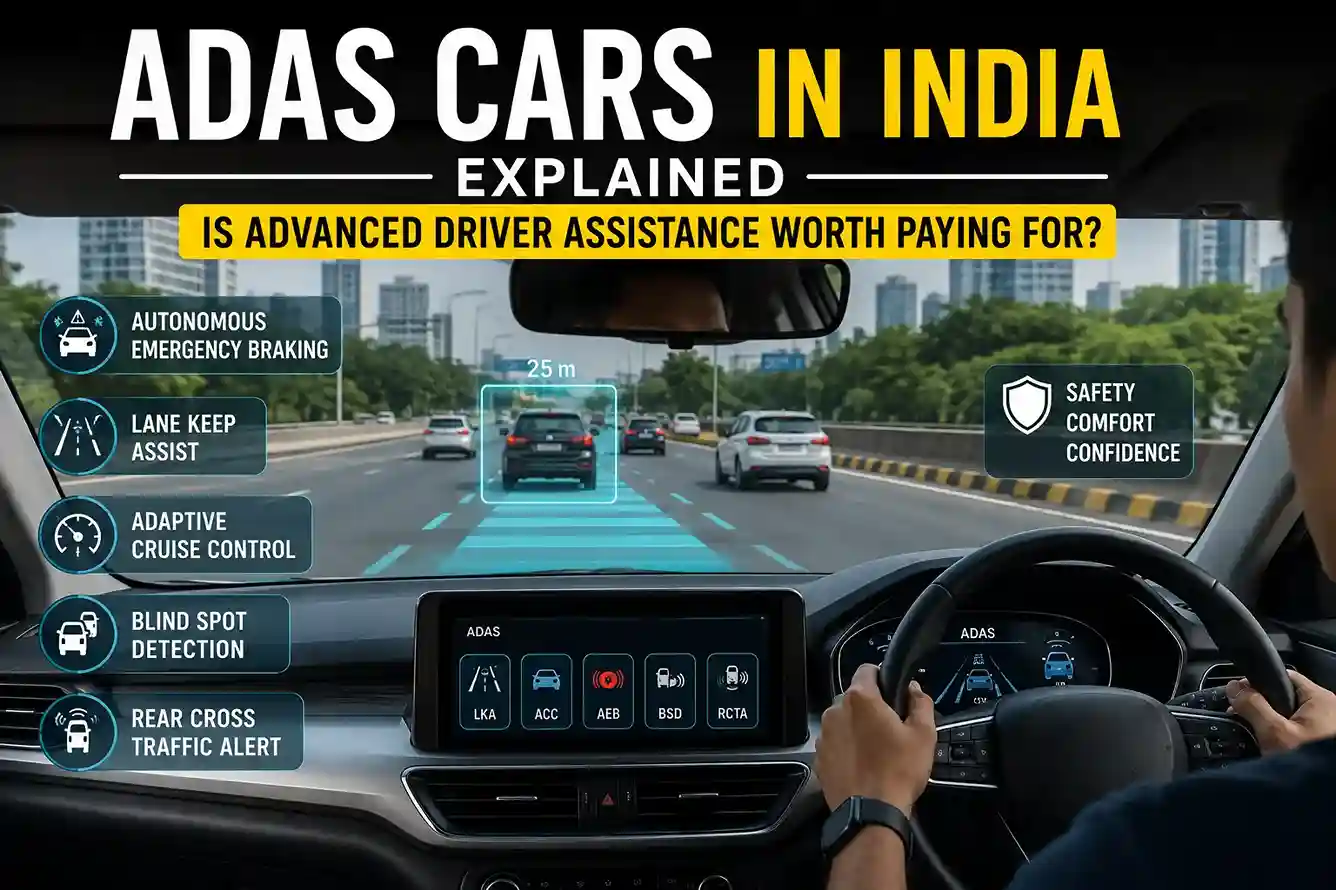
ADAS refers to a group of technologies that help with specific driving tasks. NHTSA includes examples such as forward collision warning, automatic emergency braking, lane departure warning, lane keeping assist, adaptive cruise control, and blind spot systems. SAE’s automation taxonomy is also helpful here because it shows that these are driver-assistance systems rather than full automation. In simple terms, ADAS can help, but it does not replace the driver.
In practical buying terms, that means ADAS should be judged the same way you would judge tyre quality, braking feel, or seat comfort: by how much it helps you in real life. It is easy to get distracted by fancy names, but the feature set matters more than the badge. That is especially true if you are shopping in the same price bands as Best Cars Under 15 Lakh in India or Best SUVs Under 15 Lakh in India, where some variants offer ADAS only after a significant jump in price.
ADAS Cars in India: the features that matter most
Not every ADAS feature is equally useful. For Indian roads, the most relevant ones are usually automatic emergency braking, adaptive cruise control, lane keeping assist, blind spot warning, rear cross-traffic alert, and parking aids. NHTSA’s driver-assistance guidance groups these features into assistance and warning categories, with the key point being that they are designed to reduce risk, not to take over driving.
1) Automatic Emergency Braking
Automatic emergency braking can apply the brakes or help reduce impact if the system detects a crash risk. In city traffic, that can be useful during sudden braking, two-wheelers cutting in, or a moment of distraction. But it should still be treated as a back-up layer, not a substitute for alert driving. NHTSA lists automatic emergency braking as one of the core assistive technologies in modern vehicles.
2) Adaptive Cruise Control
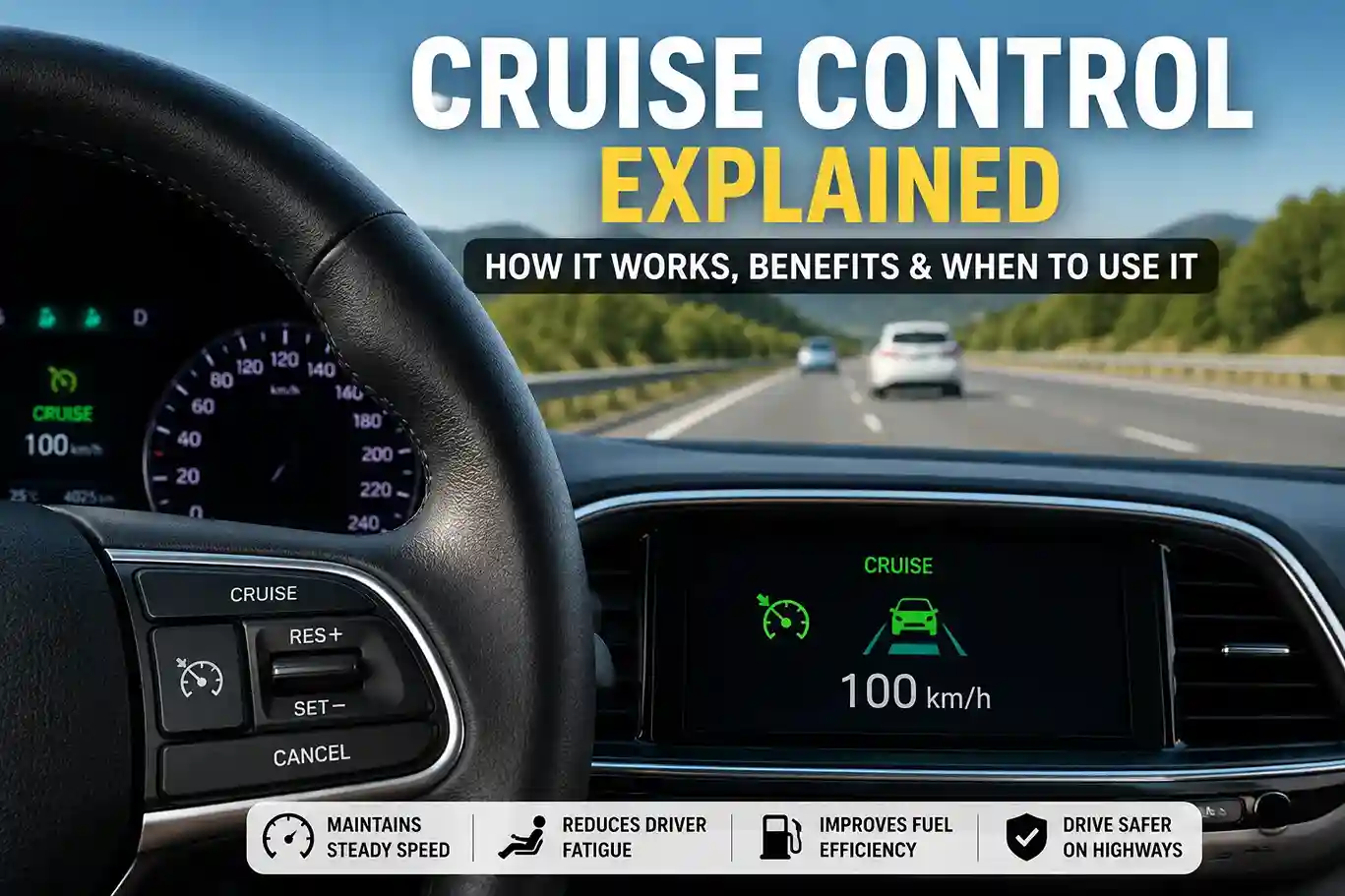
Adaptive cruise control is most useful on open highways. It can help keep a set speed and maintain distance from the car ahead, which reduces fatigue on long drives. This is one of the biggest reasons many highway-oriented buyers feel ADAS is worth the money. NHTSA classifies adaptive cruise control under Level 1 assistance, meaning the driver still monitors everything and remains responsible.
3) Lane Keeping and Lane Departure Systems
Lane keeping assist can help nudge the vehicle back into lane position, while lane departure warning alerts the driver if the car drifts. That sounds ideal on paper, but IIHS points out that these systems depend heavily on visible lane markings and can be less effective on roads that are poorly marked, dark, or affected by weather. In India, where lane discipline and road markings are not always consistent, this limitation matters a lot.
4) Blind Spot and Rear Cross-Traffic Features
Blind spot warning and rear cross-traffic alert are particularly helpful in crowded urban traffic and parking situations. They can reduce the chance of missing a vehicle or two-wheeler that sits in a hard-to-see zone. NHTSA’s newer NCAP roadmap also reflects the growing importance of blind spot warning and blind spot intervention in vehicle safety evaluation.
Is ADAS worth paying for in India?
The honest answer is: sometimes yes, sometimes no. ADAS is worth paying for when the feature set matches your real driving pattern. If you do frequent highway trips, spend long hours in traffic, or often drive a family car loaded with passengers, the fatigue reduction alone can make adaptive cruise and lane support feel valuable. If you mostly drive short city routes at low speeds and rarely use highways, the same premium may be harder to justify.
This is where buyer priorities matter. A family that is comparing Best Family Cars Under 10 Lakh in India may get more real-world value from a safer structure, better tyres, and stronger brakes than from a half-set of ADAS features. By contrast, a buyer considering Best Automatic Cars Under 10 Lakh in India or a larger SUV may find ADAS more appealing if the car is already being chosen for comfort and highway use.
In real-world situations, ADAS is most convincing when it removes small daily stress. For example, adaptive cruise control can make a long expressway run less tiring, and blind spot alerts can help in dense multi-lane traffic. The benefit is smaller when the car spends most of its life in narrow streets, rough parking areas, or low-speed stop-go traffic where the systems have fewer opportunities to shine.
The hidden limitations many buyers overlook
The biggest mistake is assuming ADAS works perfectly in every condition. IIHS states that sensor performance can decline in low light or inclement weather, and some systems work only at certain speeds. It also notes that lane-based systems can struggle where road markings are weak or the road edge is unclear. That means a buyer should never treat ADAS as a constant safety shield.
Another limitation is driver behaviour. NHTSA is very clear that even with assistive systems, the driver remains responsible for steering, braking, accelerating, and monitoring the road. That is why Level 2 systems still require full attention. If a buyer starts trusting the car too much, the feature can create overconfidence instead of safety.
There is also a calibration and maintenance angle. Cameras, radar units, and sensors need the right alignment and a clean field of view. That means a bumper repair, windshield replacement, or bad aftermarket accessory fitment can affect performance. In other words, ADAS is not a “fit and forget” feature; it is part of the car’s safety ecosystem.
What Indian buyers should check before paying extra
Before paying for ADAS, ask the showroom to demonstrate the exact features present in that variant. Some cars advertise ADAS broadly, but the actual package can vary a lot. One model may have only forward collision warning and lane departure warning, while another includes adaptive cruise, lane keeping, blind spot monitoring, and auto emergency braking. NHTSA’s feature grouping is a useful reminder that the label alone does not tell the whole story.
A good test drive should include:
- a highway-like stretch for adaptive cruise behavior,
- slow traffic to see how the system behaves in cut-ins,
- a lane-marked road to judge lane centering,
- and a parking scenario for blind spot or rear cross-traffic alerts.
If you already inspect basic ownership items such as Car Dashboard Warning Lights Explained or check routine safety items like How to Check Car Tyre Pressure at Home in India, you are already thinking in the right direction. The same careful approach should apply to ADAS, because safety technology is only useful when the hardware and calibration stay in good condition.
You should also compare the ADAS variant against the car’s crash-test and structural safety profile. ADAS can help reduce risk, but it does not replace a solid body structure and good occupant protection. For a broader safety context, it is still worth checking vehicle crash-test information from sources such as Global NCAP India results, especially when deciding whether the premium is actually adding meaningful protection.
Common mistakes buyers make
One common mistake is buying ADAS for the wrong reason. If the real motivation is simply that the brochure looks advanced, the feature may disappoint after a few weeks of ownership. Another mistake is expecting ADAS to work everywhere, in every weather condition, and on every road. IIHS’s warnings about low light, inclement weather, and poor lane markings are exactly why buyers should treat the systems as helpful tools, not magic.
A third mistake is ignoring the rest of the package. A car with ADAS but weak tyres, average brakes, or a frustrating driving position may still be less enjoyable than a car without it. That is why many practical buyers start with the basics and then compare premium extras only after they have settled the right body style, budget, and gearbox choice. Articles like SUV vs Sedan: Which One Should Indian Families Choose in 2026? and Manual vs Automatic Cars: Which One Should You Buy? help narrow those bigger decisions first.
Best practices for buying an ADAS car
The best approach is to buy ADAS only after you understand which features you will actually use. Highway drivers should prioritize adaptive cruise control and lane support. City-heavy drivers should focus more on automatic emergency braking, blind spot monitoring, and parking assistance. Families should think about whether the safety features will reduce stress for the main driver, not just sound impressive during delivery day. NHTSA’s definitions are useful here because they make clear that assistance features are designed to help with specific tasks, not to replace the driver.
Another best practice is to test the system in a calm setting rather than discovering its behavior on a busy road for the first time. Ask the dealer to explain how the system alerts the driver, what it does in low confidence situations, and how to switch features off if needed. IIHS’s research on sensor limits and road conditions is the reason this matters. If the car is going to be used on roads with faded markings or frequent mixed traffic, the driver must know exactly what the system can and cannot do.
FAQ
Is ADAS the same as self-driving?
No. NHTSA and SAE both treat ADAS as driver-assistance technology, not full automation. The driver remains responsible, especially in Level 1 and Level 2 systems.
Is ADAS useful in Indian traffic?
Yes, but selectively. Features like automatic emergency braking, blind spot warning, and rear cross-traffic alert can be helpful in dense traffic, while lane-based features may be less consistent on poorly marked roads. IIHS specifically notes those road and weather limitations.
Should I pay extra for ADAS if I mainly drive in the city?
Only if the package includes features you will truly use, such as emergency braking and blind spot support. If the price jump is large and the rest of the car is not improved, the money may be better spent on stronger core equipment.
Can ADAS replace careful driving?
No. NHTSA is explicit that the driver still controls the vehicle and must remain attentive. ADAS reduces risk; it does not remove the need for safe driving habits.
Conclusion
For Indian buyers, ADAS Cars in India are worth paying for only when the feature set matches how the car will actually be used. If you drive long highways, spend time in tiring traffic, or want extra assistance in daily commuting, ADAS can be a meaningful upgrade. If your driving is mostly short city trips, the premium may be harder to justify, especially if the car’s core safety, ride quality, or value suffers. NHTSA, IIHS, and SAE all make the same underlying point in different ways: ADAS can help, but it is still the driver’s job to stay engaged and make the final decisions.
The smartest buyers compare ADAS against the whole ownership picture, not just the showroom demo. That means looking at variant value, crash protection, road conditions, and real daily use before paying extra for advanced features. If the technology fits your routine, it can be a very worthwhile upgrade; if it does not, the better choice is usually the simpler, better-balanced car.
Author: Carsinfos Editorial Team
Published: May 21th, 2026