
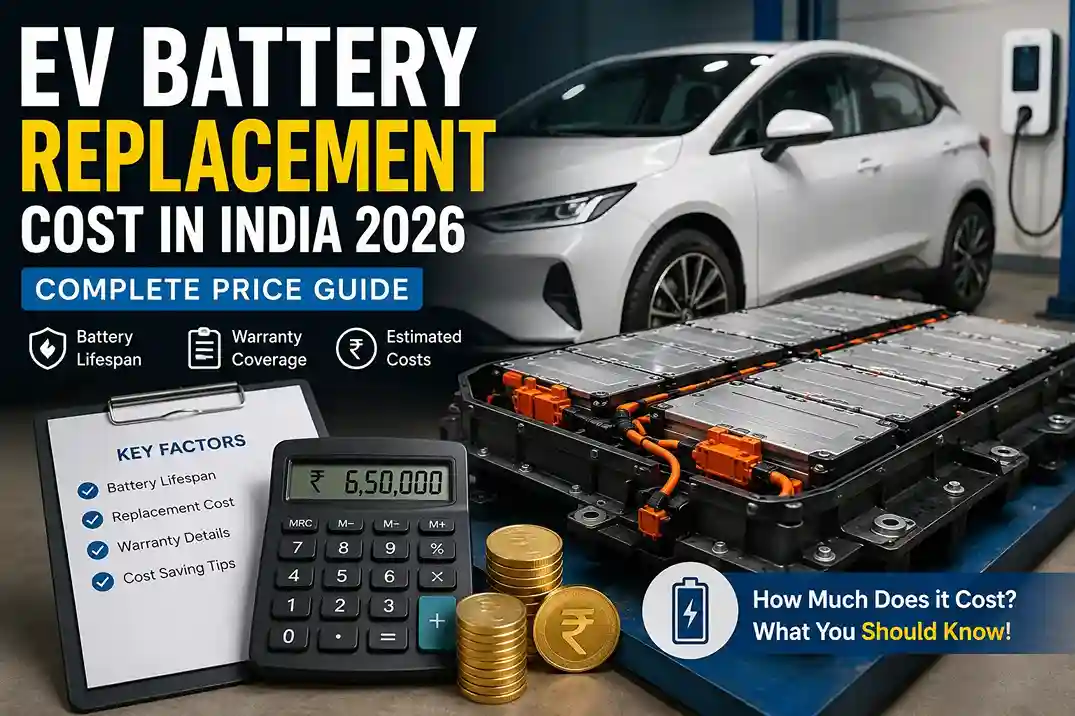
As electric vehicles become more common on Indian roads, one question continues to worry potential buyers: What is the EV battery replacement cost in India?
The battery is the most expensive component in an electric vehicle, and many buyers wonder whether replacing it could become a major financial burden in the future. While EVs generally require less maintenance than conventional cars, battery health plays a critical role in long-term ownership costs.
If you’ve already compared electric vehicles with traditional fuel-powered cars through our guide on Electric vs Petrol Cars in India 2026, understanding battery replacement costs is the next important step before making a purchase decision.
The good news is that modern EV batteries are designed to last much longer than many people assume. In fact, most owners may never need a full battery replacement during their ownership period.
In this guide, we’ll explore real-world battery replacement costs in India, factors affecting battery life, warning signs of battery degradation, and practical ways to maximize your EV battery’s lifespan.
Why EV Batteries Are So Expensive
An electric vehicle battery pack is far more complex than a typical 12V car battery.
Modern EV battery systems contain:
- Thousands of lithium-ion cells
- Battery management systems (BMS)
- Cooling and thermal management components
- Safety monitoring electronics
- Protective casing and wiring systems
According to the International Energy Agency (IEA), battery packs remain one of the most expensive parts of electric vehicles despite significant cost reductions over the past decade.
Because of this complexity, replacing an EV battery involves much more than simply swapping out a component.
EV Battery Replacement Cost in India: Estimated Range
The actual EV battery replacement cost in India depends on the vehicle model, battery capacity, manufacturer, and technology used.
Estimated Replacement Costs
| Vehicle Segment | Estimated Battery Replacement Cost |
|---|---|
| Entry-Level EVs | ₹3 lakh – ₹6 lakh |
| Mid-Range EVs | ₹6 lakh – ₹10 lakh |
| Premium EVs | ₹10 lakh – ₹20 lakh+ |
For example, vehicles with larger battery packs designed for extended range naturally cost more to replace than compact city EVs.
However, complete battery replacement is relatively uncommon. In many cases, manufacturers can repair individual modules instead of replacing the entire pack.
How Long Do EV Batteries Last?
One of the biggest misconceptions about electric vehicles is that batteries need replacement every few years.
In reality, most modern EV batteries are engineered to last significantly longer.
Many manufacturers now offer battery warranties ranging from 8 years to 10 years, covering battery performance degradation beyond specified limits.
The U.S. Department of Energy notes that EV batteries often outlast the typical ownership period of many vehicles.
In real-world situations, many electric vehicles retain over 70% of their original battery capacity even after several years of regular use.
Factors That Affect EV Battery Lifespan
Not all batteries age at the same rate.
Several factors influence long-term battery health.
Frequent Fast Charging
DC fast charging is convenient but generates additional heat.
Occasional use is perfectly fine, but relying exclusively on fast charging may accelerate battery degradation over time.
Extreme Temperatures
India’s climate can be challenging for EV batteries.
Extended exposure to:
- Extreme summer heat
- Direct sunlight
- High ambient temperatures
can increase battery stress.
Driving Habits
Aggressive acceleration and frequent high-speed driving may contribute to faster battery wear.
Charging Patterns
Keeping the battery constantly at 100% charge or regularly draining it close to zero may reduce long-term efficiency.
Signs Your EV Battery May Be Degrading
Battery degradation is usually gradual rather than sudden.
Common warning signs include:
Reduced Driving Range
A noticeable drop in range is often the first indicator.
For example, if your vehicle previously delivered 400 km per charge and now consistently delivers only 320 km under similar conditions, degradation may be occurring.
Longer Charging Times
Changes in charging behavior can indicate battery health issues.
Unexpected Battery Percentage Drops
Rapid fluctuations in displayed charge levels may signal battery management system concerns.
Reduced Performance
Lower acceleration performance or power delivery may also occur.
Similar to how drivers monitor vehicle health through indicators discussed in our guide to Car Dashboard Warning Lights Explained, EV owners should pay attention to battery-related alerts.
Can Individual Battery Modules Be Replaced?
Yes, in many modern EVs.
A battery pack typically consists of multiple modules.
If only one section experiences problems, manufacturers may replace specific modules instead of the entire battery pack.
This can significantly reduce repair costs.
However, availability varies by manufacturer and vehicle architecture.
Always consult authorized service centers before assuming a complete replacement is necessary.
Battery Warranty: Why It Matters
Battery warranty coverage can significantly reduce ownership risks.
Before purchasing an EV, carefully review:
- Warranty duration
- Coverage conditions
- Capacity retention guarantees
- Transferability to future owners
The Bureau of Energy Efficiency (BEE) recommends understanding manufacturer battery specifications and warranty terms before purchase.
A strong battery warranty often indicates manufacturer confidence in long-term battery durability.
Common Mistakes That Reduce Battery Life
Many EV owners unknowingly shorten battery lifespan through avoidable habits.
Constantly Charging to 100%
Daily charging to full capacity is not always necessary.
For regular commuting, many manufacturers recommend charging between 20% and 80%.
Leaving the Vehicle Unused for Long Periods
Extended inactivity can negatively affect battery health.
Frequent Deep Discharges
Repeatedly draining the battery close to zero can increase wear.
Ignoring Software Updates
Battery management systems often receive software improvements.
These updates can enhance charging efficiency and thermal management.
Best Practices to Extend EV Battery Life
Want to avoid an expensive battery replacement for as long as possible?
Follow these practical habits:
Park in Shade Whenever Possible
Reducing heat exposure helps preserve battery health.
Use Fast Charging Selectively
Reserve DC fast charging for long trips and emergencies.
Maintain Moderate Charge Levels
Avoid keeping the battery fully charged for extended periods.
Keep Software Updated
Manufacturers regularly release battery optimization updates.
Follow Recommended Service Schedules
Although EVs require less maintenance than conventional vehicles, periodic inspections remain important.
Just as routine maintenance can help prevent issues discussed in our guide on Why Your Car Is Overheating: Common Reasons and Fixes, preventive care benefits EV systems as well.
Is Battery Replacement Becoming Cheaper?
Industry trends suggest yes.
Global battery production continues to expand, helping reduce manufacturing costs.
According to research from BloombergNEF, battery prices have declined dramatically over the past decade and are expected to continue becoming more affordable over time.
As EV adoption grows in India, replacement costs may gradually decrease due to:
- Improved manufacturing efficiency
- Increased localization
- Greater competition among suppliers
- Advances in battery technology
This trend could make future battery replacements significantly less expensive than they are today.
Should Battery Replacement Cost Stop You From Buying an EV?
For most buyers, the answer is no.
While battery replacement is expensive, several factors reduce the practical risk:
- Long battery warranties
- Improved battery durability
- Falling battery costs
- Lower maintenance requirements
- Reduced fuel expenses
If you’re evaluating ownership costs, you may also want to compare charging expenses through our guide on EV Charging Cost vs Petrol Cost Per KM in India 2026.
When total ownership costs are considered over several years, EVs can remain financially attractive despite potential future battery replacement expenses.
Real-World Ownership Perspective
In real-world situations, most EV owners focus far more on daily charging convenience and operating costs than battery replacement.
Many electric vehicle owners sell or upgrade their vehicles before battery degradation becomes a significant concern.
Additionally, improvements in battery chemistry continue to enhance longevity with each new generation of EVs entering the market.
If you’re researching electric mobility options, understanding battery lifespan is just as important as evaluating features, range, and charging infrastructure.
Our detailed guide on Hybrid vs Electric Cars in India 2026 can help you compare long-term ownership considerations between the two technologies.
Frequently Asked Questions
How much does EV battery replacement cost in India?
Depending on the vehicle, battery replacement costs typically range from ₹3 lakh to ₹20 lakh or more.
How long do EV batteries usually last?
Most modern EV batteries are designed to last 8–15 years, depending on usage, charging habits, and environmental conditions.
Does an EV battery need replacement after warranty expires?
Not necessarily. Many batteries continue functioning effectively well beyond the warranty period.
Can only part of the battery be replaced?
In many vehicles, individual battery modules can sometimes be repaired or replaced instead of replacing the entire battery pack.
Does fast charging damage EV batteries?
Occasional fast charging is generally safe, but excessive reliance on it may contribute to faster battery degradation over time.
Conclusion
Understanding the EV battery replacement cost in India is essential for anyone considering an electric vehicle. While battery replacement remains one of the largest potential expenses associated with EV ownership, modern batteries are lasting longer than ever, warranties are improving, and replacement costs are gradually declining.
For most drivers, proper charging habits, routine maintenance, and responsible usage can significantly extend battery life. As India’s EV market continues to mature, battery technology is expected to become even more durable and affordable.
Rather than viewing battery replacement as an immediate concern, prospective buyers should focus on total ownership costs, long-term savings, and real-world driving needs. In many cases, an EV can still deliver substantial value long before battery replacement ever becomes necessary.
Author: Carsinfos Editorial Team
Published: June 19th, 2026