
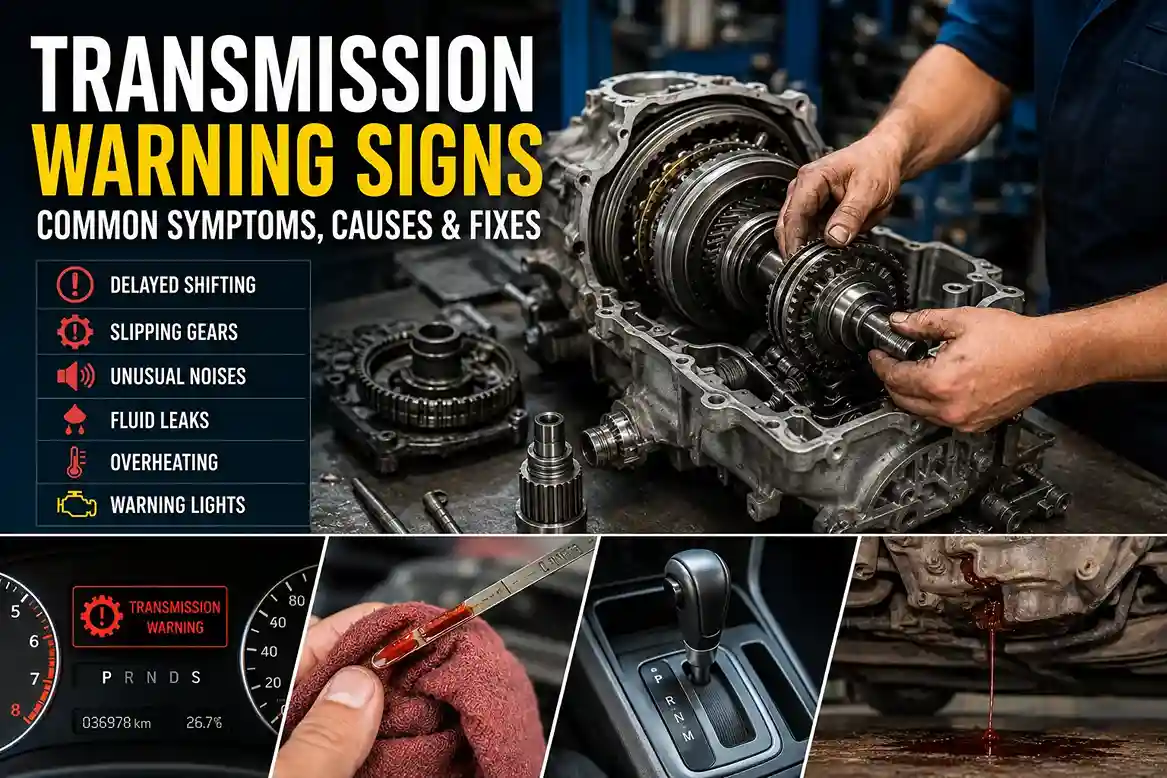
Transmission Warning Signs are among the most important indicators that your vehicle may need immediate attention. Whether you drive a manual or automatic car, the transmission is responsible for transferring power from the engine to the wheels. When it begins to malfunction, you may notice delayed gear shifts, unusual noises, slipping gears, fluid leaks, or dashboard warning lights.
Ignoring these early warning signs can lead to poor vehicle performance, reduced fuel efficiency, expensive repairs, or even complete transmission failure. Fortunately, identifying transmission problems early often allows drivers to address smaller issues before they become major mechanical failures.
In real-world situations, many drivers first notice transmission issues when the vehicle hesitates during acceleration, shifts gears roughly, or struggles to move smoothly in traffic. Paying attention to these symptoms can help prevent costly repairs.
If your vehicle has also been experiencing reduced acceleration, our guides on Why Your Car Is Losing Power While Accelerating and Car Engine Knocking Sound Causes and Fixes explain other mechanical problems that may affect overall driving performance.
This guide explains the most common Transmission Warning Signs, why they occur, how to diagnose them, and the best ways to protect your vehicle from major transmission damage.
What Is a Vehicle Transmission?
The transmission is one of the most important components of a vehicle’s drivetrain.
Its primary job is to:
- Transfer engine power to the wheels
- Select appropriate gear ratios
- Improve fuel efficiency
- Maintain smooth acceleration
- Support comfortable driving at different speeds
Modern vehicles typically use:
- Manual transmissions
- Automatic transmissions
- Continuously Variable Transmissions (CVT)
- Dual-Clutch Transmissions (DCT)
Although each design operates differently, they all require proper maintenance to function reliably.
Why Transmission Problems Occur
Over time, normal wear, inadequate maintenance, overheating, or low transmission fluid can reduce transmission performance.
Common contributing factors include:
- Low transmission fluid
- Old or contaminated fluid
- Overheating
- Worn clutch components
- Faulty sensors
- Valve body problems
- Solenoid failures
- Internal mechanical wear
Routine servicing helps reduce the likelihood of many transmission-related issues.
Common Transmission Warning Signs
1. Delayed Gear Shifting
One of the earliest transmission warning signs is hesitation when changing gears.
You may notice:
- Slow acceleration
- Delay when shifting into Drive or Reverse
- Engine revving before gear engagement
Automatic transmissions commonly exhibit this symptom when transmission fluid is low or internal components begin wearing.
2. Slipping Gears
Gear slipping occurs when the transmission unexpectedly changes gears or struggles to remain in the selected gear.
Signs include:
- Sudden RPM increases
- Loss of acceleration
- Unexpected gear changes
- Difficulty maintaining speed
Slipping gears should never be ignored because they can quickly worsen.
3. Rough or Hard Gear Changes
Healthy transmissions shift smoothly.
Harsh shifting may feel like:
- Sudden jerks
- Hard engagement
- Strong impacts between gears
Potential causes include:
- Low transmission fluid
- Faulty shift solenoids
- Transmission control module issues
4. Unusual Noises
Grinding, whining, humming, or clunking sounds while driving may indicate transmission problems.
Noise often becomes more noticeable:
- During acceleration
- While changing gears
- At low speeds
- During reversing
Prompt diagnosis helps prevent additional damage.
5. Transmission Fluid Leaks
Transmission fluid is essential for:
- Lubrication
- Cooling
- Hydraulic pressure
- Smooth gear changes
Leaks may appear as red or reddish-brown fluid beneath the vehicle.
Ignoring fluid leaks can result in severe transmission damage.
If you’ve noticed fluid beneath your vehicle, our guide on Engine Oil Leakage Symptoms also explains how to distinguish different types of automotive fluid leaks.
6. Burning Smell
A burning smell often indicates overheating transmission fluid.
Possible causes include:
- Low fluid
- Excessive towing
- Heavy traffic
- Internal transmission problems
Overheated fluid loses its protective properties and accelerates internal wear.
7. Dashboard Warning Lights
Modern vehicles monitor transmission performance electronically.
Common indicators include:
- Check Engine Light
- Transmission Warning Light
- Powertrain Warning Light
These warnings should always be investigated promptly.
8. Poor Acceleration
Transmission problems may prevent efficient power delivery.
Drivers often notice:
- Sluggish acceleration
- Higher engine RPM
- Delayed response
- Reduced fuel economy
These symptoms frequently appear alongside other transmission warning signs.
9. Vibrations During Driving
Unexpected vibration while shifting gears may indicate:
- Internal wear
- Damaged mounts
- Torque converter issues
- Transmission imbalance
Professional inspection is recommended if vibrations become persistent.
Is It Safe to Continue Driving?
The answer depends on the severity of the symptoms.
You may cautiously continue driving if:
- The symptom occurs only occasionally.
- No warning lights appear.
- Gear changes remain mostly normal.
Stop driving and seek inspection if:
- The transmission slips repeatedly.
- Burning smells appear.
- Fluid leaks become visible.
- Warning lights illuminate.
- The vehicle refuses to shift gears.
Continuing to drive with severe transmission problems can significantly increase repair costs.
According to the National Highway Traffic Safety Administration (NHTSA), drivers should respond promptly to warning indicators and abnormal vehicle behavior to reduce the risk of breakdowns and safety hazards.
External Reference:
Manual vs Automatic Transmission Warning Signs
Manual Transmission
Common warning signs include:
- Clutch slipping
- Grinding gears
- Difficulty engaging gears
- Clutch pedal vibration
- Burning clutch smell
Automatic Transmission
Automatic transmissions commonly develop:
- Delayed shifting
- Harsh shifts
- Gear slipping
- Fluid leaks
- Torque converter issues
- Electronic control faults
Understanding the type of transmission in your vehicle helps narrow down the possible causes.
Professional Transmission Diagnosis
Professional technicians typically inspect:
- Transmission fluid condition
- OBD-II fault codes
- Shift solenoids
- Valve body operation
- Hydraulic pressure
- Torque converter
- Electrical sensors
Modern diagnostic equipment helps identify transmission faults more accurately than relying on symptoms alone.
Drivers should also understand the meaning of dashboard alerts. Our guide on Car Dashboard Warning Lights Explained provides additional information about warning indicators related to engine and transmission systems.
The National Institute for Automotive Service Excellence (ASE) recommends professional diagnosis when vehicles experience persistent shifting problems, unusual noises, or warning lights.
External Reference:
Fixes for Common Transmission Problems
The appropriate repair depends on the underlying cause. Addressing transmission issues early can often prevent major mechanical damage and reduce repair costs.
Replace or Top Up Transmission Fluid
Low or degraded transmission fluid is one of the most common causes of poor shifting.
Fresh transmission fluid helps:
- Lubricate internal components
- Maintain hydraulic pressure
- Reduce operating temperatures
- Improve shift quality
Always use the transmission fluid specification recommended by your vehicle manufacturer.
Repair Transmission Fluid Leaks
Even a small leak can gradually reduce fluid levels.
Common leak locations include:
- Transmission pan gasket
- Cooler lines
- Input shaft seal
- Output shaft seal
Repairing leaks promptly helps prevent overheating and internal damage.
Replace Faulty Shift Solenoids
Automatic transmissions rely on electronically controlled solenoids to direct hydraulic pressure.
A malfunctioning solenoid may cause:
- Delayed shifting
- Harsh gear changes
- Incorrect gear selection
Replacing a faulty solenoid often restores normal transmission operation.
Service the Valve Body
The valve body controls hydraulic fluid flow throughout an automatic transmission.
Contamination or internal wear can lead to:
- Rough shifting
- Delayed engagement
- Gear slipping
Professional cleaning or repair may resolve these issues.
Repair or Replace the Torque Converter
The torque converter transfers engine power to the automatic transmission.
A failing torque converter may cause:
- Shuddering during acceleration
- Poor fuel economy
- Delayed movement
- Unusual vibrations
Professional diagnosis is recommended before replacement.
Update Transmission Control Software
Some modern vehicles experience shifting problems because of outdated transmission control software.
Manufacturers occasionally release software updates that improve shift quality and resolve known issues.
Common Mistakes Drivers Make
Many transmission failures become more expensive because early warning signs are ignored.
Ignoring Small Shifting Problems
A slight hesitation today can become a major repair tomorrow.
Drivers often delay inspections until gear changes become much worse.
Delaying Fluid Changes
Transmission fluid gradually loses its protective properties.
Following the manufacturer’s service schedule helps reduce internal wear and overheating.
Using Incorrect Transmission Fluid
Different transmissions require specific fluid formulations.
Using the wrong fluid may cause:
- Poor shifting
- Increased wear
- Overheating
- Reduced transmission life
Always verify the correct specification in your owner’s manual.
Continuing to Drive With Fluid Leaks
Low transmission fluid significantly increases the risk of overheating and internal damage.
If you notice red or reddish-brown fluid beneath your vehicle, arrange an inspection promptly.
Ignoring Warning Lights
Dashboard warnings often appear before severe mechanical failure.
Drivers should never ignore:
- Check Engine Light
- Transmission Warning Light
- Powertrain Warning Light
Our guide on Car Dashboard Warning Lights Explained explains the most important warning indicators and what they may mean.
Best Practices to Extend Transmission Life
Proper maintenance can significantly improve transmission reliability and longevity.
Follow these best practices:
- Check transmission fluid regularly.
- Replace transmission fluid according to the manufacturer’s schedule.
- Use only the recommended transmission fluid.
- Avoid aggressive acceleration when the engine is cold.
- Do not overload the vehicle beyond its rated capacity.
- Address unusual noises or shifting problems promptly.
- Schedule professional inspections if warning lights appear.
- Follow your vehicle’s maintenance schedule.
Drivers who maintain both the engine and transmission generally experience fewer mechanical problems over the long term.
Preventing Costly Transmission Repairs
Many expensive repairs can be avoided through early maintenance.
Simple preventive measures include:
- Inspecting for leaks
- Monitoring dashboard warnings
- Servicing the transmission on time
- Driving smoothly
- Avoiding excessive towing beyond the manufacturer’s limits
Routine maintenance usually costs far less than replacing an entire transmission.
If you’re maintaining overall drivetrain health, our guide on Why Your Car Is Overheating: Common Reasons & Fixes explains another issue that can indirectly affect transmission performance by increasing operating temperatures.
When Should You Visit a Mechanic?
Arrange a professional inspection if you notice:
- Repeated gear slipping
- Delayed engagement
- Grinding noises
- Burning smells
- Fluid leaks
- Warning lights
- Poor acceleration
According to the National Highway Traffic Safety Administration (NHTSA), unusual vehicle behaviour and dashboard warning indicators should be addressed promptly to reduce the risk of breakdowns and improve driving safety.
External Reference:
Frequently Asked Questions
What is the first sign of transmission trouble?
One of the earliest signs is delayed or rough gear shifting. Other common symptoms include slipping gears, unusual noises, fluid leaks, and warning lights.
Can low transmission fluid cause shifting problems?
Yes. Low transmission fluid reduces hydraulic pressure, which may lead to delayed shifts, slipping gears, overheating, and poor transmission performance.
Is it safe to drive with transmission problems?
Minor symptoms may allow short-distance driving, but persistent slipping, burning smells, warning lights, or severe shifting problems should be inspected immediately to prevent additional damage.
How often should transmission fluid be changed?
Service intervals vary by manufacturer and transmission type. Always follow the recommendations provided in your vehicle’s owner’s manual.
Can transmission problems affect fuel economy?
Yes. A malfunctioning transmission can reduce efficiency by preventing the engine from operating within its optimal speed range.
Are transmission repairs expensive?
Repair costs depend on the specific fault. Addressing problems early often requires relatively minor repairs, while ignoring warning signs may eventually lead to a complete transmission rebuild or replacement.
Conclusion
Understanding Transmission Warning Signs helps drivers recognize early symptoms before small transmission issues develop into major mechanical failures. Whether the problem involves low transmission fluid, slipping gears, delayed shifting, unusual noises, leaking seals, or electronic control faults, identifying the warning signs early allows for faster diagnosis and more affordable repairs.
Routine maintenance—including regular transmission fluid changes, prompt attention to leaks, smooth driving habits, and professional inspections when warning lights appear—plays a vital role in extending transmission life and maintaining reliable vehicle performance.
By understanding Transmission Warning Signs, following your manufacturer’s maintenance schedule, and responding quickly to abnormal shifting or warning indicators, you can improve driving safety, reduce long-term repair costs, and keep your vehicle operating smoothly for many years. For additional vehicle maintenance guidance, you may also find our article on How Often Should You Change Engine Oil in India helpful, as proper engine maintenance supports the overall health of the drivetrain.
Author: Carsinfos Editorial Team
Published: July 3rd, 2026