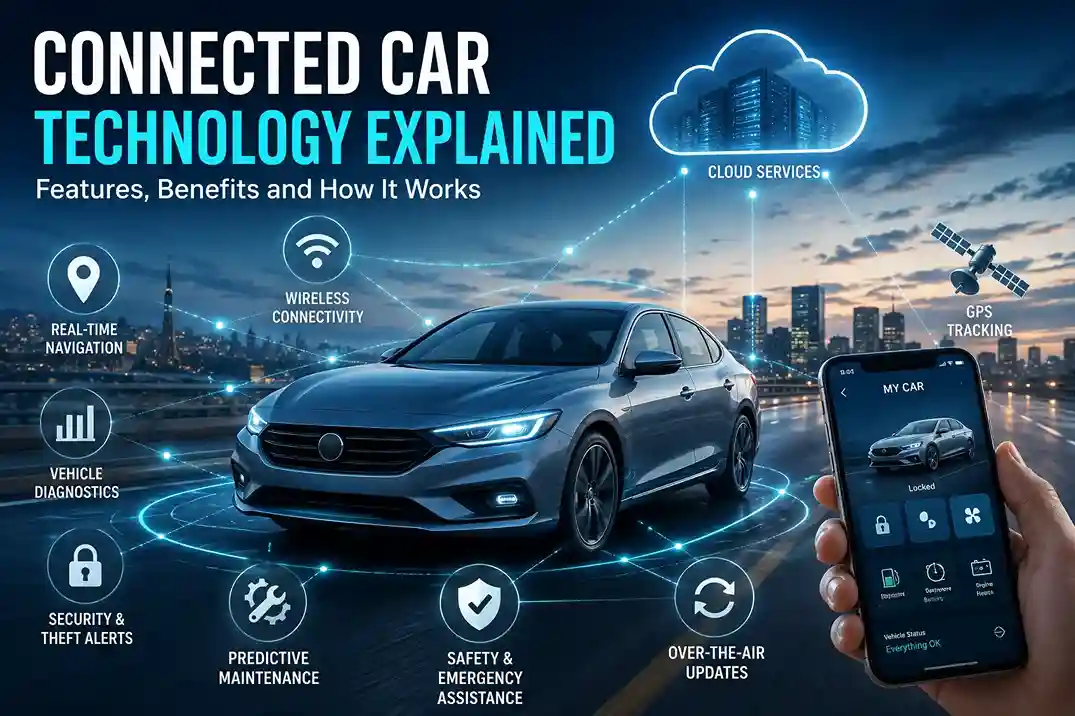
Connected Car Technology Explained is a topic that has become increasingly relevant as modern vehicles evolve into smart, internet-enabled machines. Today’s connected cars do much more than transport passengers—they can communicate with mobile apps, cloud platforms, navigation services, emergency assistance systems, and even other vehicles to improve safety, convenience, and the overall driving experience.
Whether you’re buying a new vehicle or simply curious about the latest automotive innovations, understanding connected car technology can help you make informed decisions. Features such as remote vehicle monitoring, live navigation, over-the-air software updates, predictive maintenance alerts, and emergency assistance are becoming common across many vehicle segments.
In real-world situations, connected car features allow owners to locate their parked vehicle using a smartphone, receive maintenance reminders before a breakdown occurs, or remotely lock and unlock their vehicle while away from home.
If you’re exploring modern automotive technologies, you may also find our guides on TPMS Explained and Traction Control Explained useful for understanding other intelligent vehicle safety systems.
This guide provides a detailed explanation of Connected Car Technology, how it works, its benefits, limitations, security considerations, and what drivers should know before relying on connected vehicle features.
What Is Connected Car Technology?
Connected car technology refers to systems that enable a vehicle to communicate with external networks, cloud services, mobile devices, and sometimes other vehicles or road infrastructure.
Unlike traditional vehicles, connected cars continuously exchange information using wireless communication technologies.
This connectivity allows features such as:
- Remote vehicle access
- Live traffic updates
- Emergency assistance
- Vehicle health monitoring
- Software updates
- Smartphone integration
- Real-time navigation
- Theft tracking
Modern connected vehicles combine automotive engineering with advanced software and communication technologies.
How Connected Car Technology Works
Connected cars rely on multiple technologies working together.
These commonly include:
- Cellular networks (4G or 5G)
- GPS
- Cloud computing
- Vehicle sensors
- Onboard control modules
- Mobile applications
- Wireless internet connectivity
Vehicle data is securely transmitted between the car, manufacturer servers, and authorized user applications.
For example, if the tire pressure drops, the vehicle can immediately notify the driver through both the dashboard and a connected smartphone application.
Main Components of a Connected Car
Several technologies work together to create a connected driving experience.
Telematics Control Unit (TCU)
The TCU acts as the communication hub.
It manages:
- GPS location
- Cellular communication
- Remote services
- Emergency communication
Vehicle Sensors
Connected cars collect information from numerous sensors, including:
- Tire pressure
- Fuel level
- Battery condition
- Engine temperature
- Brake system
- Door status
This data helps monitor vehicle health in real time.
Cloud Services
Vehicle information is securely stored and processed through cloud platforms.
Cloud connectivity enables:
- Remote diagnostics
- Service reminders
- Software updates
- Driving statistics
Smartphone Applications
Many manufacturers provide dedicated mobile apps that allow owners to:
- Lock or unlock doors
- Start the engine remotely (where supported)
- Check fuel or battery level
- Locate the vehicle
- Receive maintenance alerts
These features improve convenience in everyday driving.
Key Features of Connected Car Technology
Real-Time Vehicle Monitoring
Owners can monitor important vehicle information without physically entering the car.
Common information includes:
- Fuel level
- Battery status
- Tire pressure
- Remaining driving range
- Door lock status
This helps drivers stay informed about vehicle condition.
Remote Vehicle Control
Many connected cars allow remote access through mobile apps.
Depending on the manufacturer, drivers may be able to:
- Lock or unlock doors
- Flash headlights
- Sound the horn
- Locate parked vehicles
- Start climate control systems
Live Navigation
Connected navigation systems provide:
- Real-time traffic updates
- Road closures
- Alternate routes
- Estimated arrival times
Unlike traditional navigation systems, connected maps continuously update using online data.
Drivers planning long journeys may also find our guide on Fast Charging vs Slow Charging EV useful when travelling in electric vehicles.
Emergency Assistance
Many connected vehicles automatically contact emergency services following a severe collision.
Emergency systems may provide:
- Vehicle location
- Crash severity
- Occupant assistance requests
This feature can reduce emergency response time during serious accidents.
Predictive Maintenance
Connected cars continuously monitor vehicle health.
The system may notify drivers before failures occur by detecting:
- Low battery voltage
- Tire pressure loss
- Service intervals
- Fluid level warnings
Predictive maintenance helps reduce unexpected breakdowns.
Over-the-Air Software Updates
Manufacturers increasingly update vehicle software remotely.
Instead of visiting a service center, owners may receive:
- Bug fixes
- Feature improvements
- Navigation updates
- Security updates
Over-the-air updates help vehicles remain current throughout their ownership.
Benefits of Connected Car Technology
Improved Safety
Connected systems provide timely warnings that help drivers respond to potential issues before they become serious.
Examples include:
- Tire pressure alerts
- Collision notifications
- Emergency assistance
- Vehicle diagnostics
Greater Convenience
Remote vehicle access simplifies everyday ownership.
In real-world situations, drivers can confirm whether they locked the vehicle after leaving a parking area or remotely activate climate control before entering the cabin.
Better Maintenance Planning
Instead of relying only on mileage, connected vehicles monitor actual component condition.
This helps schedule maintenance more efficiently.
Drivers interested in overall vehicle maintenance may also find our article on Car Dashboard Warning Lights Explained helpful for understanding additional vehicle alerts.
Improved Driving Efficiency
Navigation systems use real-time traffic information to recommend faster routes, helping reduce travel time and fuel consumption.
Enhanced Vehicle Security
Many connected vehicles offer:
- Theft tracking
- Geofencing
- Unauthorized movement alerts
- Remote immobilization (where supported)
These features improve vehicle protection.
According to the National Highway Traffic Safety Administration (NHTSA), advanced vehicle technologies can contribute to improved road safety when used appropriately alongside responsible driving practices.
External Reference:
Are Connected Cars Secure?
Manufacturers invest heavily in cybersecurity.
Security measures commonly include:
- Data encryption
- Secure authentication
- Software verification
- Over-the-air security updates
- Network monitoring
However, like all internet-connected devices, connected vehicles require ongoing software updates and responsible user practices to maintain security.
The National Institute of Standards and Technology (NIST) publishes cybersecurity guidance that influences security practices for connected technologies, including automotive systems.
External Reference:
Privacy Considerations of Connected Cars
While connected vehicles offer significant convenience, they also collect and transmit various types of vehicle and usage data.
Depending on the manufacturer and enabled services, this information may include:
- Vehicle location
- Driving behaviour
- Diagnostic information
- Fuel or battery status
- Service history
- Remote access activity
Most manufacturers provide privacy settings that allow owners to manage data sharing preferences. Before enabling connected services, it’s worth reviewing the privacy policy and available data controls within the vehicle’s infotainment system or companion mobile app.
Limitations of Connected Car Technology
Although connected vehicles continue to improve, they still have some limitations.
Internet Connectivity Requirements
Many connected features depend on a stable cellular or internet connection.
In remote areas with weak network coverage, services such as live traffic updates, remote vehicle access, or cloud-based navigation may be temporarily unavailable.
Subscription Costs
Some manufacturers include connected services for a limited period before requiring a paid subscription.
These services may include:
- Remote vehicle control
- Live navigation
- Emergency assistance
- Vehicle tracking
- Premium infotainment features
Owners should understand which services remain free and which require ongoing subscriptions.
Software Compatibility
Older vehicles may not support the latest connected features.
Likewise, smartphone applications occasionally require updates to remain compatible with newer operating systems.
Keeping both vehicle software and mobile apps up to date helps ensure reliable performance.
Cybersecurity Risks
Although manufacturers implement multiple security measures, no connected device is entirely immune to cyber threats.
Regular software updates and strong account security help reduce potential risks.
The Cybersecurity and Infrastructure Security Agency (CISA) recommends installing software updates promptly and using strong authentication methods to improve the security of internet-connected devices.
External Reference:
Common Myths About Connected Cars
Myth 1: Connected Cars Drive Themselves
Connected cars and self-driving cars are not the same.
Connected technology focuses on communication, remote services, and information sharing, while autonomous driving systems are designed to perform certain driving tasks with limited or no driver input.
Myth 2: Connected Cars Always Require Internet Access
Many vehicle functions continue working without an internet connection.
Features such as braking, steering, airbags, and engine operation remain independent of online services.
Only internet-based connected features may become temporarily unavailable.
Myth 3: Connected Cars Are Only Luxury Vehicles
Many mainstream manufacturers now offer connected features in affordable vehicles.
Functions such as smartphone integration, vehicle diagnostics, remote locking, and emergency assistance are becoming increasingly common across different price segments.
Best Practices for Using Connected Car Features
Drivers can maximize the benefits of connected technology by following a few simple practices.
Keep Vehicle Software Updated
Manufacturers regularly release software updates that improve:
- Security
- Stability
- Feature performance
- Compatibility
Installing updates promptly helps maintain reliable operation.
Use Strong Account Security
Protect your connected vehicle account by:
- Using strong passwords
- Enabling multi-factor authentication when available
- Avoiding password reuse across different services
Review Privacy Settings
Take time to understand what information your vehicle shares.
Adjust privacy preferences based on your comfort level while ensuring essential safety services remain enabled.
Keep Your Smartphone Secure
Since many connected services rely on a companion mobile app, keeping your phone secure is equally important.
Use:
- Screen locks
- Biometric authentication
- Updated operating systems
- Official app stores only
Continue Regular Vehicle Maintenance
Connected technology helps monitor vehicle health, but it does not replace scheduled servicing.
Routine inspections remain essential for components such as:
- Brakes
- Tires
- Suspension
- Fluids
- Battery
For example, our guide on Home EV Charger Installation Cost explains how regular maintenance and proper charging practices contribute to long-term electric vehicle reliability, while EV Battery Life in India discusses factors that influence battery longevity.
Frequently Asked Questions
What is connected car technology?
Connected car technology allows vehicles to communicate with mobile devices, cloud services, navigation systems, and other digital platforms to improve safety, convenience, and maintenance.
Do connected cars require the internet?
Some features, such as live traffic updates, remote vehicle control, and cloud-based services, require an internet connection. Core vehicle functions continue operating without internet access.
Are connected cars safe?
Modern connected vehicles include multiple security measures such as encrypted communication, secure authentication, and software updates. Keeping vehicle software current and protecting user accounts further improves security.
Can connected cars receive software updates?
Yes. Many modern vehicles support over-the-air (OTA) software updates that allow manufacturers to improve features, fix software bugs, and enhance cybersecurity without requiring a dealership visit.
Can connected car technology reduce maintenance costs?
It can help identify potential issues early through predictive maintenance alerts, allowing owners to address problems before they become more serious or expensive.
Is connected car technology available in electric vehicles?
Yes. Many electric vehicles include advanced connected features such as battery monitoring, charging management, route planning, remote climate control, and software updates. If you’re considering an EV, our guide on Fast Charging vs Slow Charging EV explains how different charging methods affect convenience and battery usage.
Conclusion
Understanding Connected Car Technology Explained helps drivers appreciate how modern vehicles combine automotive engineering with digital connectivity to deliver safer, smarter, and more convenient driving experiences. From real-time vehicle monitoring and predictive maintenance to remote access, emergency assistance, and over-the-air software updates, connected technology continues to reshape the way people interact with their vehicles.
While these innovations offer significant advantages, owners should also understand their limitations, protect their privacy, maintain strong account security, and keep vehicle software up to date. Responsible use of connected features, combined with regular vehicle maintenance, helps maximize reliability and long-term ownership value.
As connected vehicle technology continues to evolve, drivers who understand Connected Car Technology Explained will be better prepared to choose the right features, maintain vehicle security, and enjoy a safer, more efficient driving experience. For additional insights into modern automotive technology, you may also find our article on TPMS Explained helpful for understanding how intelligent monitoring systems contribute to safer everyday driving.
Author: Carsinfos Editorial Team
Published: July 5th, 2026