EV Battery Life in India is one of the most common concerns among people considering an electric vehicle. While rising fuel prices and growing charging infrastructure have increased EV adoption, many buyers still wonder how long an electric car battery will last and whether battery replacement will become a major expense.
It’s a reasonable concern. Unlike conventional cars where the engine is the most critical component, the battery is the heart of an electric vehicle. Battery health directly affects driving range, charging performance, and long-term ownership costs.
The good news is that modern EV batteries are far more durable than many people assume. In fact, most electric vehicle owners are likely to use their cars for many years before battery degradation becomes a significant issue.
If you’re comparing electric vehicles with conventional options through guides such as Electric vs Petrol Cars in India 2026 or evaluating long-term ownership costs discussed in EV Battery Replacement Cost in India, understanding battery lifespan is essential for making an informed decision.
In this guide, we’ll explore how long EV batteries last in India, factors affecting battery health, common misconceptions, maintenance best practices, and what buyers should realistically expect from modern battery technology.
What Is EV Battery Life?
EV battery life refers to the period during which an electric vehicle battery can continue delivering acceptable performance and driving range.
Unlike traditional car batteries that may fail suddenly, EV batteries typically degrade gradually.
Over time:
- Maximum range decreases
- Charging efficiency may decline slightly
- Battery capacity slowly reduces
This process is normal and expected.
According to the International Energy Agency (IEA), advances in battery technology continue to improve durability and longevity across modern electric vehicles.
EV Battery Life in India: How Long Can You Expect It to Last?
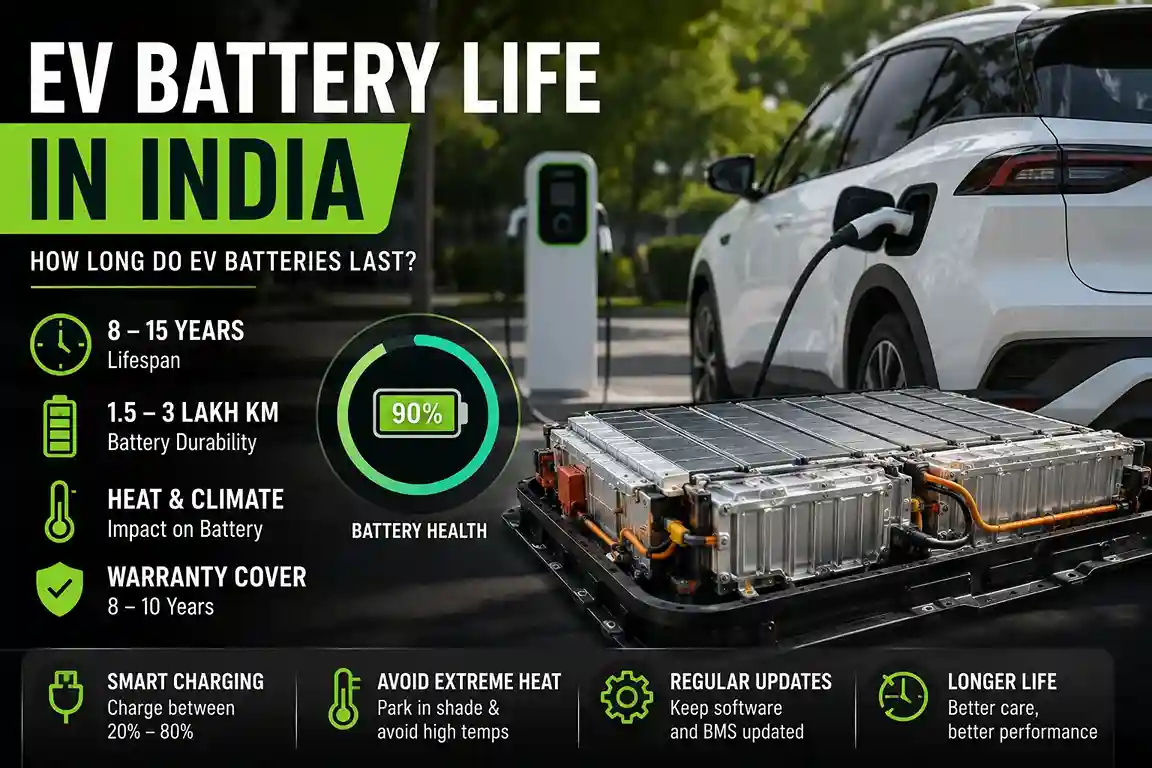
Most modern electric vehicle batteries are designed to last between:
- 8 to 15 years
- 1.5 lakh to 3 lakh kilometers or more
Many manufacturers offer battery warranties ranging from 8 years to 10 years, reflecting confidence in long-term battery performance.
In real-world situations, numerous EV owners worldwide continue using their original batteries well beyond the warranty period.
Battery degradation occurs gradually rather than suddenly.
For example:
- A battery may retain 90–95% capacity after several years.
- Capacity may slowly decrease over time.
- The vehicle remains usable even with some degradation.
Why EV Batteries Degrade Over Time
Battery degradation is a natural chemical process.
Every charging and discharging cycle contributes to gradual wear.
However, several factors influence the rate of degradation.
Charging Cycles
Each time a battery is charged and discharged, a small amount of capacity is lost.
Modern lithium-ion batteries are designed to withstand thousands of cycles before noticeable degradation occurs.
Heat Exposure
High temperatures are one of the biggest threats to battery longevity.
India’s climate can create challenging conditions for battery systems.
The U.S. Department of Energy notes that temperature management plays a critical role in battery health.
Fast Charging Frequency
DC fast charging is convenient, especially for long-distance travel.
However, excessive reliance on fast charging can increase battery stress compared with slower charging methods.
Driving Habits
Aggressive acceleration and sustained high-speed driving can generate additional heat and increase battery strain.
Drivers evaluating vehicle efficiency may also find useful insights in our guide on EV Charging Cost vs Petrol Cost Per KM in India 2026.
Does India’s Climate Affect EV Battery Life?
Yes, climate can influence battery performance and longevity.
Summer Heat
Many Indian regions experience temperatures above 40°C during summer.
Prolonged exposure to extreme heat can accelerate battery degradation.
Urban Traffic Conditions
Stop-and-go traffic generates heat and frequent charging cycles.
Parking Habits
Vehicles parked in direct sunlight for extended periods may experience higher battery temperatures.
In real-world situations, parking in covered areas whenever possible can help reduce thermal stress.
Signs of Battery Degradation
Battery degradation is usually gradual and predictable.
Common indicators include:
Reduced Driving Range
This is the most noticeable sign.
For example, a vehicle that originally delivered 400 km per charge may eventually provide 350 km under similar conditions.
Longer Charging Times
Charging behavior may change slightly as batteries age.
Reduced Efficiency
Drivers may notice small changes in energy consumption patterns.
Battery Health Notifications
Many EVs provide battery health information through onboard systems.
The National Renewable Energy Laboratory (NREL) regularly studies battery aging and performance trends in electric vehicles.
Common Myths About EV Battery Life
Myth 1: EV Batteries Need Replacement Every Few Years
This is one of the most widespread misconceptions.
Modern EV batteries are engineered for long-term use.
Many vehicles operate effectively for a decade or more without requiring battery replacement.
Myth 2: Battery Failure Happens Suddenly
Battery degradation is generally gradual and measurable.
Owners usually receive plenty of warning before capacity loss becomes significant.
Myth 3: EV Batteries Cannot Handle Indian Conditions
Manufacturers specifically design vehicles for a wide range of operating environments.
Battery thermal management systems continue improving with each generation.
How Manufacturers Protect Battery Health
Modern EVs use sophisticated battery management systems (BMS).
These systems monitor:
- Battery temperature
- Charging speed
- Cell balance
- Energy flow
- Safety conditions
The Society of Automotive Engineers (SAE International) highlights the importance of advanced battery management systems in maintaining long-term battery reliability.
Battery protection software helps minimize unnecessary wear and optimize performance.
Best Practices to Extend EV Battery Life
While degradation is unavoidable, owners can slow the process considerably.
Avoid Frequent Full Charges
Many manufacturers recommend charging between 20% and 80% for everyday use.
Limit Fast Charging When Possible
Occasional fast charging is perfectly acceptable.
However, relying on it daily may increase battery stress.
Park in Shade
Reducing heat exposure helps preserve battery health.
Keep Software Updated
Manufacturers often release battery optimization updates.
Follow Recommended Service Schedules
Although EVs require less maintenance than traditional vehicles, periodic inspections remain important.
Drivers comparing EVs and hybrids may also find value in our guide on Hybrid vs Electric Cars in India 2026.
Common Mistakes That Reduce EV Battery Life
Leaving the Battery at 100% for Long Periods
Maintaining full charge continuously can increase long-term stress.
Frequently Running the Battery to Zero
Deep discharges should be minimized whenever possible.
Ignoring Temperature Conditions
Parking in extreme heat for extended periods may accelerate degradation.
Skipping Manufacturer Updates
Software improvements often enhance battery management efficiency.
Will EV Batteries Become Better in the Future?
The outlook is highly promising.
Battery technology continues evolving rapidly.
Areas of advancement include:
- Improved battery chemistry
- Faster charging speeds
- Better thermal management
- Higher energy density
- Longer lifespan
According to industry forecasts from the International Energy Agency, continued innovation is expected to further improve EV reliability and ownership value.
Should Battery Life Stop You From Buying an EV?
For most buyers, no.
Battery life concerns are often overstated compared with actual ownership experiences.
Today’s electric vehicles offer:
- Long battery warranties
- Improved durability
- Lower maintenance requirements
- Reduced operating costs
Many drivers spend more on fuel and routine engine maintenance over the life of a conventional vehicle than they would addressing battery-related concerns in an EV.
If you’re comparing ownership experiences, our guide on Petrol vs Hybrid Cars: Which Saves More Money provides additional cost-related insights.
Real-World Ownership Perspective
In real-world situations, most EV owners focus far more on charging convenience, range, and operating costs than battery replacement concerns.
Battery degradation occurs slowly enough that many owners barely notice year-to-year changes.
For the average Indian driver covering 10,000–15,000 km annually, modern EV batteries are designed to remain practical and reliable for many years.
As battery technology improves, concerns about lifespan are becoming less significant than they were during the early years of electric vehicle adoption.
Frequently Asked Questions
How long do EV batteries last in India?
Most modern EV batteries are expected to last between 8 and 15 years, depending on usage, climate, charging habits, and maintenance.
Does fast charging reduce battery life?
Frequent fast charging may increase battery wear over time, but occasional use is generally not a problem.
Will I need to replace my EV battery?
Many owners may never need a battery replacement during their ownership period.
Does Indian heat damage EV batteries?
Extreme heat can accelerate degradation, but modern battery management systems help protect batteries from temperature-related stress.
What is considered normal battery degradation?
Some gradual reduction in battery capacity over time is normal and expected.
Conclusion
Understanding EV Battery Life in India is essential for anyone considering an electric vehicle. While battery degradation is inevitable, modern EV batteries are designed to last far longer than many consumers realize. Most electric vehicle owners can expect years of reliable performance before noticeable capacity loss becomes a concern.
By following sensible charging practices, minimizing excessive heat exposure, and maintaining the vehicle properly, drivers can maximize battery longevity and ownership value. As battery technology continues to improve, EV battery life in India is expected to become even better, making electric vehicles an increasingly practical option for everyday transportation.
Author: Carsinfos Editorial Team
Published: June 24th, 2026