
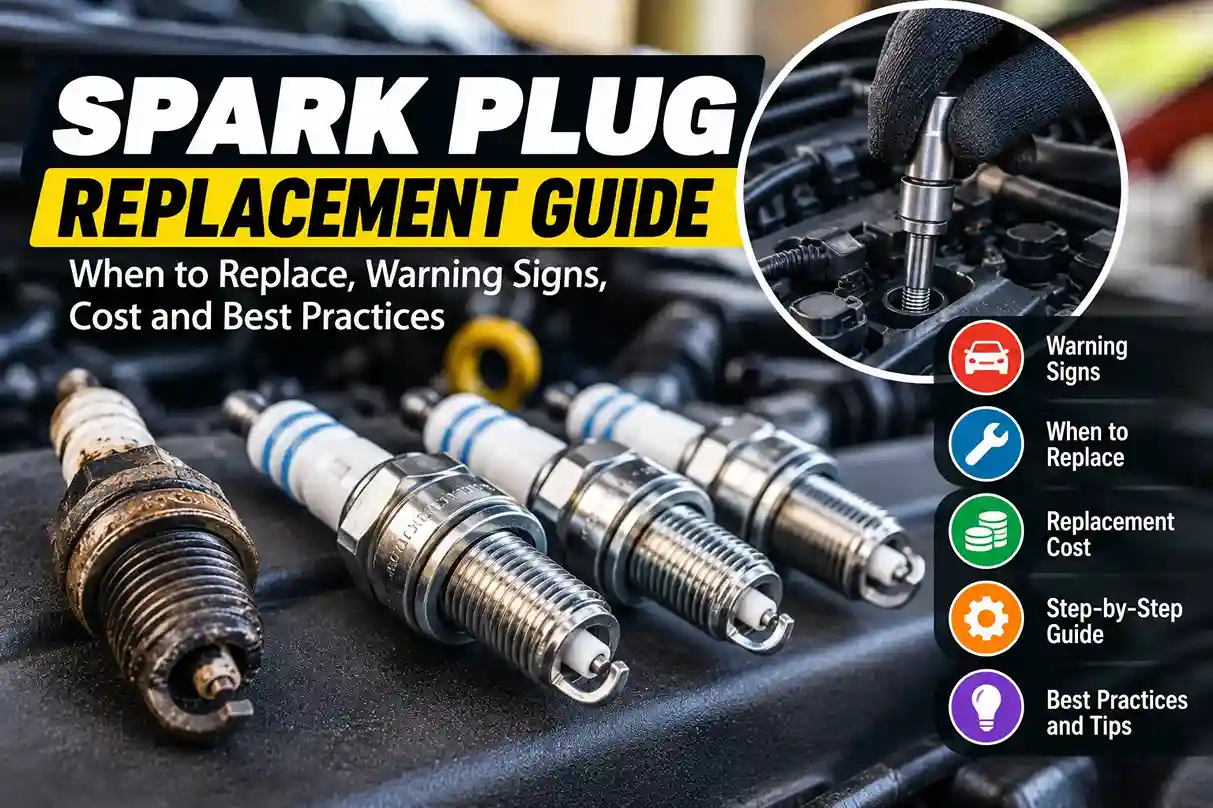
A Spark Plug Replacement Guide is useful because spark plugs are small, inexpensive engine components that have a surprisingly large effect on how a petrol car starts, idles, accelerates, and uses fuel. Yet many drivers only think about them when the engine begins to misfire or the check-engine light appears.
Spark plugs gradually wear as they repeatedly create an electrical spark inside the combustion chamber. As the electrode wears, the gap can change and ignition can become less reliable. Deposits, overheating, oil contamination, or incorrect installation can also affect performance.
The good news is that spark plug replacement is usually a straightforward maintenance job when it is done with the correct parts and specifications. The important part is knowing when replacement is actually due, how to recognize worn plugs, and how to avoid common installation mistakes.
What Does a Spark Plug Do?
A spark plug provides the electrical spark that ignites the air-fuel mixture inside a petrol engine. When the ignition system sends high voltage to the plug, the electricity jumps across the electrode gap and creates the spark needed for combustion.
That tiny event happens thousands of times while you drive. Because the plug operates in a demanding environment involving high temperature, pressure, and repeated electrical discharge, its electrodes gradually wear.
NGK explains that spark plug condition can affect starting, smooth running, engine performance, and efficiency. Its technical guidance also notes that replacement intervals depend on the engine, plug construction, and manufacturer recommendations. You can see the detailed NGK spark plug maintenance and replacement guidance for additional technical information.
A diesel vehicle is different: conventional diesel engines generally do not use spark plugs for normal combustion. They use glow plugs for cold-start assistance, so this guide is primarily about petrol/gasoline engines.
Spark Plug Replacement Guide: When Should You Replace Them?
There is no single mileage number that works for every vehicle.
The correct replacement interval depends on the engine, the spark plug material, the vehicle manufacturer’s maintenance schedule, and the way the car is used.
For example, nickel or conventional spark plugs generally have shorter service lives than iridium or platinum plugs. Some modern engines are designed to run for much longer periods before replacement is required.
Toyota’s owner information illustrates why checking the exact vehicle specification matters: its maintenance data can specify the precise plug type and gap for an individual engine, rather than using a generic specification. Its official maintenance schedule also directs owners to follow the factory-recommended maintenance plan.
So instead of asking only, “How many kilometres should spark plugs last?”, ask:
What does my vehicle’s owner manual specify?
That is the starting point.
Typical Factors That Affect Spark Plug Life
Spark plug life can be influenced by:
- Spark plug material and design
- Engine type and compression
- Driving conditions
- Short-trip or stop-and-go usage
- Engine oil entering the combustion chamber
- Carbon deposits
- Incorrect spark plug gap
- Overheating
- Ignition-system problems
In real-world situations, two otherwise similar cars can need spark plugs at different times because their engines and maintenance schedules are different.
Signs Your Spark Plugs May Need Replacement
Worn spark plugs rarely announce themselves with one unique symptom. Several engine problems can feel similar, so symptoms should be treated as clues rather than proof.
1. Difficult Starting
A worn plug may have greater difficulty producing a reliable spark, particularly when the engine is cold.
If the engine cranks normally but takes longer than usual to start, the ignition system is one area worth checking.
However, do not assume the spark plugs are responsible immediately. A weak battery, ignition coil problem, fuel-delivery issue, or sensor fault can create similar starting problems.
2. Rough Idling
If the engine feels uneven when the car is stationary, worn or fouled plugs could be contributing.
You may notice:
- Mild shaking through the steering wheel
- Uneven engine sound
- RPM fluctuations
- Occasional stumbling
A rough idle can have many causes, so diagnosis is important.
3. Engine Misfire
A failing spark plug can cause incomplete combustion in an individual cylinder. This can feel like hesitation, shaking, or a brief loss of power.
NGK specifically identifies rough idling, misfiring, reduced fuel economy, and difficulty starting as possible symptoms of bad spark plugs. Its guidance on spark plug symptoms and failure causes is useful when trying to understand the difference between normal wear and a wider engine problem.
For a broader diagnosis, see our Engine Misfire Causes guide, because a misfire can also come from ignition coils, injectors, air leaks, compression problems, and other components.
4. Reduced Acceleration
When one or more cylinders are not firing properly, acceleration may feel less smooth.
For example, you may notice that the engine feels acceptable during gentle driving but struggles when you accelerate harder or climb a hill.
5. Lower Fuel Economy
A worn or fouled spark plug can contribute to poor combustion, which may affect fuel efficiency.
But a mileage drop is not automatically a spark plug problem. Traffic, tyre pressure, air intake restrictions, fuel-system faults, driving style, and engine condition can all influence fuel consumption.
Our guide on How to Improve Car Mileage in India covers several other causes worth checking before spending money on parts.
How to Inspect Old Spark Plugs
Removing a spark plug can provide useful information about the engine.
A healthy plug will generally show controlled and consistent wear, while unusual deposits may point to another issue.
Depending on the engine, you may find:
- Light deposits from normal operation
- Heavy black carbon deposits
- Wet fuel contamination
- Oil fouling
- Excessive electrode wear
- Cracked ceramic insulation
- Signs of overheating
Bosch’s spark-plug diagnostic material shows how different plug conditions can correspond to different underlying problems, including carbon fouling, oil contamination, and severe electrode wear. Its spark plug fault diagnosis guide is useful for understanding what a removed plug may tell you.
One important point: a dirty-looking spark plug is not necessarily the root cause of the engine problem. It may be showing you that something else is wrong.
For example, an oil-fouled plug could indicate oil entering the combustion chamber. Replacing the plug may temporarily restore ignition, but the underlying oil-consumption problem remains.
How to Choose the Correct Spark Plug
Never choose a spark plug simply because it physically fits the cylinder head.
The correct plug should match the vehicle’s application, including factors such as:
- Thread diameter
- Thread reach
- Heat range
- Electrode material
- Seat design
- Manufacturer specification
- Required electrode gap
Using the wrong specification can create poor combustion, overheating, installation problems, or other engine issues.
Toyota’s parts information, for example, provides vehicle-specific spark plug specifications and directs owners to use the owner’s manual for the recommended replacement schedule. See its Genuine Toyota spark plug information for an example of why application-specific matching matters.
NGK likewise advises users to follow the manufacturer’s specifications when selecting spark plugs.
Should You Replace All Spark Plugs at Once?
For engines with multiple spark plugs, replacing the complete set at the scheduled interval is generally the practical approach.
Installing one new plug alongside several heavily worn plugs can leave the ignition system with plugs in different stages of wear.
For example, if a four-cylinder petrol engine is due for spark plug replacement, replacing the full set gives all cylinders a consistent starting point.
This does not mean every single ignition problem requires replacing all plugs immediately. Diagnosis still matters when a vehicle develops a problem between scheduled replacement intervals.
How to Replace Spark Plugs Safely
Spark plug replacement may look simple, but installation technique matters.
A basic process is:
Step 1: Allow the engine to cool
Working around a hot cylinder head can increase the risk of burns and can make removal more difficult.
Step 2: Remove dirt around the plug
Clean the area around the spark plug before removal so loose debris does not fall into the plug well or combustion area.
Step 3: Remove the ignition coil or plug wire
The exact procedure depends on the engine design. Keep connectors and components organized so everything goes back to the correct location.
Step 4: Remove the old spark plug
Use the correct spark-plug socket and extension. Avoid forcing a plug that is unusually tight.
Step 5: Check the new plug
Confirm that the part number and specification match the vehicle.
Do not automatically adjust the gap on modern precious-metal plugs unless the manufacturer specifically allows or requires it.
Step 6: Install carefully
Start the plug by hand so the threads engage correctly. Cross-threading the cylinder head can become an expensive repair.
Step 7: Tighten to the specified torque
This is one of the most commonly overlooked parts of the job.
NGK warns that both insufficient and excessive tightening can create problems. Too little torque can contribute to poor sealing and overheating, while excessive torque can damage the plug or engine components. The company’s official spark plug installation guidance explains why correct torque matters.
Step 8: Reinstall the ignition components
Reconnect the coil or plug wire securely and verify that all electrical connectors are seated correctly.
Step 9: Start and check the engine
The engine should start and idle normally without new warning lights or unusual noises.
Common Spark Plug Replacement Mistakes
Installing the wrong plug
A plug that looks almost identical may still have the wrong heat range, reach, thread specification, or electrode design.
Guessing the torque
“Hand tight plus a little more” is not a reliable torque specification.
Using excessive force
Spark plugs are not components you should aggressively tighten.
Dropping a new spark plug
A plug that has been dropped can suffer hidden ceramic damage. Bosch specifically warns against reusing visibly or potentially damaged dropped spark plugs. Its spark plug replacement mistakes guide explains why careful handling matters.
Adding grease or anti-seize without checking instructions
Certain plug and cylinder-head combinations have specific installation requirements. Adding products to threads without checking the plug manufacturer’s instructions can change the effective tightening force.
Replacing plugs without investigating unusual deposits
A new set of plugs may make the engine run better temporarily, but unusual oil, fuel, or carbon deposits may indicate another problem that still needs attention.
Can Worn Spark Plugs Damage the Engine?
A worn plug does not automatically mean immediate engine damage.
However, prolonged misfiring or incorrect ignition can create additional problems. Severe misfire can affect engine operation and emissions systems, so repeated symptoms should not simply be ignored.
A persistent warning light is another reason to investigate the problem rather than continuing to drive indefinitely.
If your dashboard is showing an engine warning, our Car Dashboard Warning Lights Explained guide can help you understand what different warnings may indicate.
Spark Plug Replacement Cost in India
The actual cost varies considerably depending on the car, spark plug type, engine configuration, brand, and labour rate.
A basic set of conventional plugs may be relatively inexpensive, while iridium or other precious-metal plugs can cost considerably more.
Labour may also be higher on engines where the plugs are difficult to access.
Rather than choosing the cheapest plug available, compare:
- Correct part number
- Manufacturer specification
- Electrode material
- Expected service interval
- Installation requirements
- Genuine vs questionable aftermarket sourcing
A cheap spark plug is not a bargain if it is the wrong specification.
Does a Spark Plug Change Improve Mileage?
Replacing worn plugs can help restore normal combustion when the existing plugs are genuinely worn or fouled.
It should not be treated as a guaranteed mileage upgrade for an otherwise healthy vehicle.
For example, if your car already has properly functioning plugs, new plugs may make little noticeable difference to fuel consumption. If the old plugs are severely worn and causing misfires, replacing them can restore smoother operation.
The same principle applies to general maintenance. Our How Often Should You Change Engine Oil in India guide explains why vehicle-specific maintenance schedules matter instead of relying on one generic rule.
Best Practices for Longer Spark Plug Life
A few simple habits can reduce ignition-system problems:
- Follow the manufacturer’s replacement interval.
- Use the exact specified spark plug.
- Avoid low-quality or counterfeit parts.
- Keep the engine properly serviced.
- Investigate oil consumption or repeated misfires.
- Make sure ignition coils and wiring are in good condition.
- Use the specified installation torque.
- Replace the complete plug set when the schedule calls for it.
A well-maintained ignition system does not require constant attention. The goal is consistent maintenance, not unnecessary replacement.
When Should You See a Professional?
Spark plug replacement is a job some experienced DIY owners can handle, but there are situations where professional diagnosis is the better choice.
Seek professional help when:
- A plug is stuck or unusually tight
- The engine has a persistent misfire
- The check engine light remains on
- A spark plug is oil-fouled
- The ceramic insulator is damaged
- A plug thread appears damaged
- The engine continues running poorly after replacement
A technician can also test ignition coils, fuel delivery, compression, and other systems if the new plugs do not solve the problem.
FAQ: Spark Plug Replacement
How often should spark plugs be replaced?
There is no universal interval. Replacement timing depends on the vehicle manufacturer’s schedule, plug construction, engine design, and driving conditions. Always check the owner’s manual first.
What are the most common signs of bad spark plugs?
Common symptoms can include rough idling, difficult starting, misfires, hesitation, reduced acceleration, and reduced fuel economy. These symptoms can also have other causes, so diagnosis may be necessary.
Should I replace all spark plugs together?
For engines with multiple plugs, replacing the complete set at the scheduled interval is generally the practical approach because it keeps plug age and wear consistent.
Do iridium spark plugs last longer?
Generally, precious-metal plugs such as iridium are designed to resist electrode wear better than conventional nickel plugs. However, the actual service interval depends on the specific vehicle and manufacturer’s recommendation.
Can I clean and reuse old spark plugs?
Cleaning may remove some deposits, but it does not restore worn electrodes or repair damaged ceramic. When plugs are at the end of their service life, replacement is normally the appropriate solution.
Can bad spark plugs cause low mileage?
Worn or fouled plugs can contribute to poor combustion and reduced fuel economy, but low mileage can have many other causes. Check the wider vehicle condition before blaming the plugs.
Should spark plug gap be adjusted?
Only when the manufacturer or spark plug supplier specifies that adjustment is appropriate. Some modern plugs are supplied with a specified gap and should not be altered.
Is spark plug replacement a DIY job?
It can be for experienced owners with the correct tools and vehicle-specific instructions. However, incorrect torque, cross-threading, or using the wrong plug can cause expensive damage, so professional installation is sensible when there is any uncertainty.
Conclusion
A Spark Plug Replacement Guide ultimately comes down to one simple principle: replace spark plugs according to the vehicle manufacturer’s specification and the actual condition of the engine, not according to a universal mileage rule.
Worn plugs can contribute to rough idling, difficult starting, misfires, hesitation, and reduced fuel economy, but those symptoms do not automatically prove that the plugs are the problem. Proper diagnosis matters, especially when warning lights or unusual deposits are involved.
Use the correct plug, follow the specified gap and torque, replace the complete set when appropriate, and investigate any recurring engine symptoms instead of simply installing new parts and moving on.
For most drivers, spark plug maintenance is inexpensive compared with the problems that can develop when ignition faults are ignored. A few minutes spent checking the maintenance schedule and using the correct parts can help keep a petrol engine running smoothly and reliably for the long term.
Author: Carsinfos Editorial Team
Published: Sep 25th, 2026