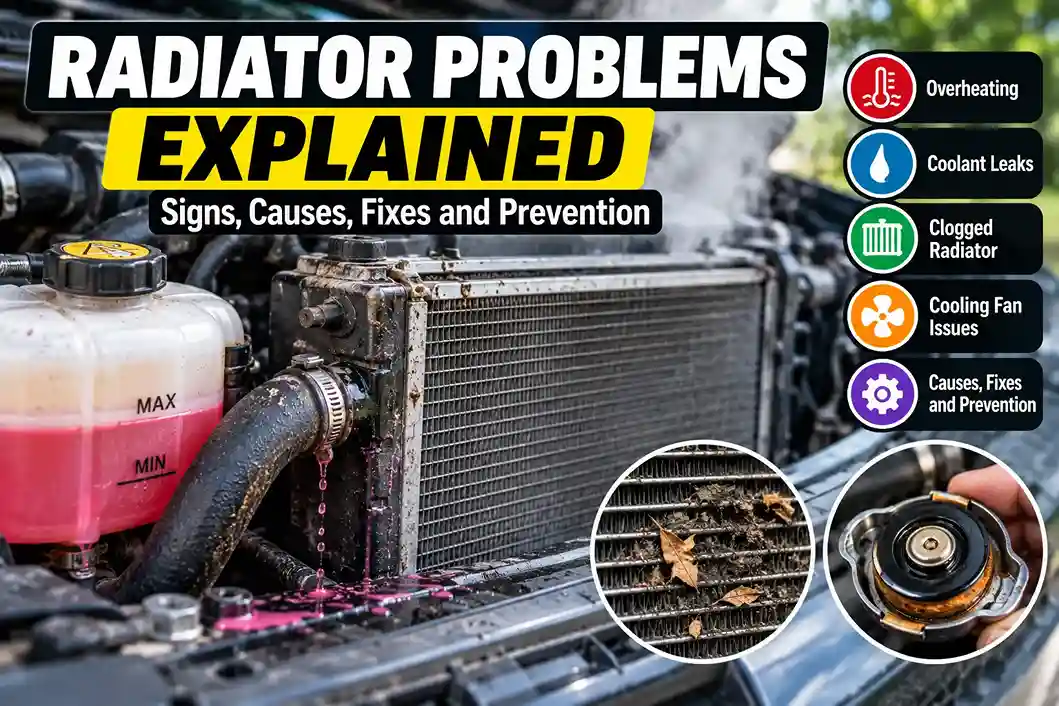
Radiator Problems Explained is one of the most useful topics for any car owner because a radiator plays a central role in keeping the engine within its normal operating temperature. When something goes wrong with the radiator or the surrounding cooling system, the first warning may be a rising temperature gauge, low coolant, steam from under the hood, or an engine that simply feels hotter than usual.
The important thing is not to wait until the engine overheats badly. A radiator problem can begin with something as simple as an external leak, blocked airflow, a damaged hose, or a faulty radiator cap. In other cases, the radiator itself may be fine while the real problem is the thermostat, cooling fan, water pump, or another part of the cooling system.
In real-world situations, correctly identifying the source of the problem can prevent unnecessary radiator replacement and, more importantly, help avoid expensive engine damage.
What Does a Car Radiator Do?
The radiator is part of the engine cooling system. Its job is to remove heat from the engine coolant before that coolant circulates back through the engine.
During normal operation, the engine generates a large amount of heat. Coolant absorbs some of that heat as it passes through the engine. The heated coolant then travels to the radiator, where heat is transferred through the radiator tubes and fins to the surrounding air.
The cooling system is more than just the radiator. It also involves the coolant, water pump, thermostat, radiator cap or pressure cap, hoses, expansion tank, and cooling fan.
The U.S. Department of Energy’s vehicle thermal-system research describes the radiator, thermostat, coolant, water pump and engine as interconnected parts of the vehicle thermal system. vehicle thermal system research from the U.S. Department of Energy
That is why replacing a radiator without identifying the actual cause can sometimes leave the overheating problem unresolved.
Radiator Problems Explained: What Are the Most Common Issues?
Radiator-related faults usually fall into a few broad categories: leaks, restricted airflow, internal blockage, corrosion, pressure problems, or physical damage.
1. Coolant leaks
A leaking radiator is one of the most obvious cooling-system problems.
Coolant may escape through:
- Cracked radiator tanks
- Damaged radiator tubes
- Corroded sections
- Loose connections
- Failed seals
- Damaged radiator hoses
- A faulty pressure cap
You may notice a colored liquid under the front of the vehicle, although coolant color varies by product and manufacturer.
A low coolant level should not simply be topped up repeatedly without finding the reason. NHTSA advises drivers to check cooling-system fluid levels and have leaks inspected, particularly before long trips. NHTSA cooling-system and fluid-level guidance
2. Clogged radiator
Over time, deposits, corrosion products or contaminated coolant can restrict coolant flow through the radiator.
There can also be an external blockage. Dust, insects, leaves and road debris can accumulate between the radiator fins and reduce airflow.
This is particularly relevant in areas with dusty roads, construction activity, or heavy traffic.
A radiator does not necessarily need replacement simply because it is dirty. An external obstruction may be cleanable, while serious internal restriction may require flushing, specialist testing, or replacement depending on the condition.
3. Damaged radiator fins
The thin fins surrounding the radiator tubes help transfer heat to the air.
If those fins become severely bent, crushed or clogged, airflow can be reduced.
Light fin damage is not necessarily catastrophic, but a radiator packed with dirt or badly damaged fins may not be able to dissipate heat effectively.
4. Corrosion
Corrosion can affect radiator tanks, tubes, fittings and other cooling-system components.
Using the wrong coolant, mixing incompatible coolant types, running old coolant for too long, or allowing contamination into the system can contribute to cooling-system problems.
AAA notes that coolant provides protection against corrosion as well as helping manage engine temperatures, which is one reason using the correct coolant and following the vehicle manufacturer’s requirements matters. AAA guide to choosing the correct engine coolant
Common Symptoms of a Bad Radiator
A radiator problem does not always begin with obvious steam.
Watch for changes in how the vehicle behaves.
Rising engine temperature
A temperature gauge that starts moving higher than its normal position deserves attention.
If the temperature climbs into the hot or red zone, do not continue driving casually while hoping it returns to normal.
Our detailed guide on Why Your Car Is Overheating explains how radiator faults, low coolant, thermostat problems, cooling fans, water pumps, and other failures can produce overheating.
Repeated coolant loss
If you have to add coolant repeatedly, something needs investigation.
Coolant does not normally disappear from a healthy sealed cooling system at a rate that requires frequent topping up. Repeated loss can indicate a leak or another cooling-system fault.
Steam from under the hood
Steam can appear when coolant escapes onto hot components or the engine becomes excessively hot.
Treat this as a warning rather than simply opening the hood immediately. Hot coolant and steam can cause serious burns.
Coolant smell
A sweet or unusual smell around the engine compartment may indicate coolant escaping from a hose, radiator, reservoir or another cooling-system component.
The smell alone does not identify the exact leak location, but it is useful evidence.
Wet areas around the radiator
After the engine is completely cool, you may notice dampness, dried coolant residue or staining around the radiator or nearby connections.
A proper inspection is still needed because coolant can travel away from the original leak point.
Can a Radiator Cause Engine Overheating?
Yes, but it is important to understand that not every overheating problem is caused by the radiator itself.
The radiator may be functioning correctly while another component causes the engine temperature to rise.
Common possibilities include:
- Low coolant
- Radiator blockage
- Cooling-fan failure
- Thermostat failure
- Water-pump problems
- Damaged hoses
- Pressure-cap failure
- Air trapped in the cooling system
- Head-gasket problems
- Insufficient airflow
AAA lists low coolant, thermostat failure, damaged radiators, broken cooling fans, water-pump problems and other cooling-system faults among common causes of overheating. AAA’s car overheating guide
That is why the correct diagnosis matters more than simply replacing the radiator.
Radiator vs Thermostat vs Cooling Fan: What Is Actually Failing?
These three problems can produce similar symptoms but require very different repairs.
Radiator problem
Typical clues can include visible leaks, damaged fins, corrosion, restricted coolant flow or poor temperature control despite otherwise functioning components.
Thermostat problem
A thermostat controls coolant flow according to engine temperature. If it remains closed or does not operate correctly, coolant circulation can be restricted and overheating can occur.
Cooling fan problem
The cooling fan is particularly important when the vehicle is stationary or moving slowly because there may not be enough natural airflow through the radiator.
For example, a car might remain at a normal temperature on an open highway but start overheating while sitting in traffic. That pattern can point toward an airflow or fan-related problem rather than automatically meaning the radiator is blocked.
What Happens When a Radiator Is Low on Coolant?
Low coolant reduces the amount of heat-transfer fluid available to carry heat away from the engine.
The situation becomes more serious when the coolant loss is caused by a leak. Continuing to add coolant without repairing the leak treats the symptom, not the cause.
NHTSA’s cooling-system guidance specifically warns drivers not to open a hot cooling-system pressure cap because hot coolant or steam can cause serious burns. It recommends allowing the system to cool before inspection. NHTSA overheating and cooling-system safety guidance
Never treat the radiator cap like a normal fluid filler cap while the engine is hot.
What Should You Do If Your Car Starts Overheating?
If the temperature warning appears or the gauge reaches the hot zone, take the situation seriously.
Move to a safe location and stop the vehicle as soon as it is practical to do so. Switch off the engine and allow it to cool.
Do not immediately remove the radiator or pressure cap.
Once the system is fully cool, a visual inspection can look for obvious coolant leaks or an unusually low expansion-tank level. If coolant is leaking heavily, the temperature rises again quickly, or the engine shows other serious symptoms, the vehicle should be professionally inspected or towed.
Our Car Dashboard Warning Lights Explained guide also explains why a coolant-temperature warning should not be ignored simply because the vehicle still seems driveable.
Can You Drive With a Bad Radiator?
It depends on the severity of the problem, but continuing to drive an overheating vehicle is not a sensible gamble.
A very small external leak may initially produce only minor coolant loss, but the situation can change rapidly once the system is under pressure and the vehicle is operating under heavy load.
If the engine temperature is rising, steam is visible, coolant is leaking significantly, or the temperature warning remains active, stop driving and arrange professional assistance.
An inexpensive tow is generally preferable to turning a cooling-system repair into major engine work.
Does Radiator Coolant Need to Be Changed?
The answer depends on the coolant type and the vehicle manufacturer’s maintenance schedule.
Coolant is not simply “colored water.” Different formulations contain additives designed to provide corrosion protection and other properties. Mixing incompatible products can create problems.
Do not select coolant purely by color. Check the owner’s manual or manufacturer specification and use the recommended product.
NHTSA guidance also recommends following the manufacturer’s coolant specifications and checking the cooling system for leaks. NHTSA vehicle cooling-system maintenance guidance
If the coolant appears rusty, contaminated, or contains visible deposits, the system deserves inspection rather than another simple top-up.
Radiator Flush: When Is It Necessary?
A coolant flush may be appropriate when the coolant is contaminated, severely degraded, or when the manufacturer specifies a flush as part of scheduled maintenance.
However, “flush” should not automatically mean aggressive chemical treatment every time the vehicle enters a workshop.
The technician should identify why the system needs attention.
For example, if overheating is caused by a failed cooling fan, flushing the radiator will not fix the fan. Likewise, if coolant is disappearing because of a cracked hose, a flush does not repair the leak.
The goal should always be to fix the underlying problem.
Common Radiator Maintenance Mistakes
Opening the radiator cap while the engine is hot
This is one of the most dangerous mistakes.
Pressurized hot coolant can escape suddenly and cause severe burns.
Topping up coolant repeatedly without checking for leaks
If the level keeps falling, investigate the cooling system.
Using plain water as a permanent replacement
Water may be useful as an emergency measure in some situations, but the cooling system should be returned to the manufacturer’s specified coolant mixture as soon as practical.
Choosing coolant only by color
Color is not a universal compatibility standard. Follow the manufacturer’s specification instead.
Replacing the radiator before diagnosing the system
The actual problem may be a thermostat, fan, water pump, hose, pressure cap, or another component.
Ignoring small temperature changes
A gauge that normally stays stable but begins running noticeably hotter should not be ignored.
Best Practices to Prevent Radiator Problems
A few regular checks can catch problems early.
Check the coolant level when the engine is cold and the vehicle is parked on a level surface. Look for obvious leaks around hoses, the radiator area and expansion tank.
Keep the radiator and condenser area reasonably free of leaves, insects, mud and accumulated dirt. Do not use aggressive pressure that could bend delicate fins.
Follow the coolant replacement schedule specified for your vehicle.
Keep track of your engine oil level as well. While oil is not part of the radiator system, adequate lubrication also helps control engine heat. Our guide on How Often Should You Change Engine Oil in India explains why maintenance intervals should be adapted to the manufacturer’s schedule and actual driving conditions.
For drivers who frequently deal with hot weather, heavy traffic or monsoon conditions, preventive checks become even more valuable. Our Monsoon Car Care Tips guide covers several seasonal checks that can help identify vehicle problems before a long or difficult journey.
How Much Does Radiator Repair Cost?
Radiator repair costs vary significantly depending on the vehicle, the radiator design, the source of the fault, labour charges, coolant requirements, and whether the component can be repaired or needs replacement.
A simple hose or clamp problem can cost much less than a complete radiator replacement.
Before approving a major repair, ask the workshop:
- What exactly failed?
- Is the radiator leaking or is another component responsible?
- Was a pressure test performed?
- Is the radiator repairable?
- Does it need replacement?
- What coolant specification will be used?
- Will the system need bleeding or refilling after the repair?
A clear diagnosis makes the repair estimate much easier to evaluate.
FAQ: Radiator Problems
What are the most common signs of a bad radiator?
Common signs include coolant leaks, repeated coolant loss, overheating, steam, visible radiator damage, corrosion, and poor cooling performance. These symptoms can also be caused by other cooling-system components.
Can I drive with a leaking radiator?
Driving with a significant radiator leak is risky because coolant loss can cause overheating. If the temperature begins rising or coolant is leaking heavily, stop driving and arrange professional assistance.
How often should a radiator be replaced?
There is no universal replacement interval. A radiator is generally replaced when it develops a significant leak, severe corrosion, internal restriction, structural damage, or another fault that cannot be economically repaired.
Can a dirty radiator cause overheating?
Yes. Heavy external dirt, blocked fins, or internal restrictions can reduce heat transfer. However, overheating can also come from the thermostat, cooling fan, water pump, low coolant, or other faults.
Can I use water instead of coolant?
Water can sometimes serve as an emergency or temporary measure, but it should not automatically be treated as a permanent substitute for the manufacturer’s specified coolant. The correct coolant provides properties beyond simple heat transfer, including corrosion protection.
Why does my car overheat only in traffic?
That pattern can point toward insufficient airflow at low speed, such as a cooling-fan problem, although other faults are possible. A radiator that is partially restricted can also contribute.
Is radiator flushing necessary at every service?
No. Flushing should be based on the manufacturer’s maintenance requirements or the actual condition of the cooling system. Routine flushing without a reason is not automatically necessary.
Can low engine oil cause overheating?
Low engine oil is not a radiator fault, but insufficient lubrication can increase friction and contribute to engine heat. That is one reason cooling-system maintenance should not be viewed in isolation.
Conclusion
Radiator Problems Explained is ultimately about understanding the cooling system as a complete system rather than treating the radiator as an isolated part.
A leaking radiator, restricted airflow, damaged fins, corrosion, low coolant, or internal blockage can all contribute to temperature problems. But overheating can also be caused by the thermostat, cooling fan, water pump, hoses, pressure cap, or other components.
The safest approach is to pay attention to warning signs early, check coolant levels with the engine cold, use the correct coolant specification, and never open a pressurized cooling system while it is hot.
Most importantly, do not continue driving an overheating vehicle in the hope that the temperature will return to normal. Finding and fixing the cause early can turn a manageable cooling-system repair into a far smaller expense than dealing with major engine damage later.
Author: Carsinfos Editorial Team
Published: Sep 26th, 2026