
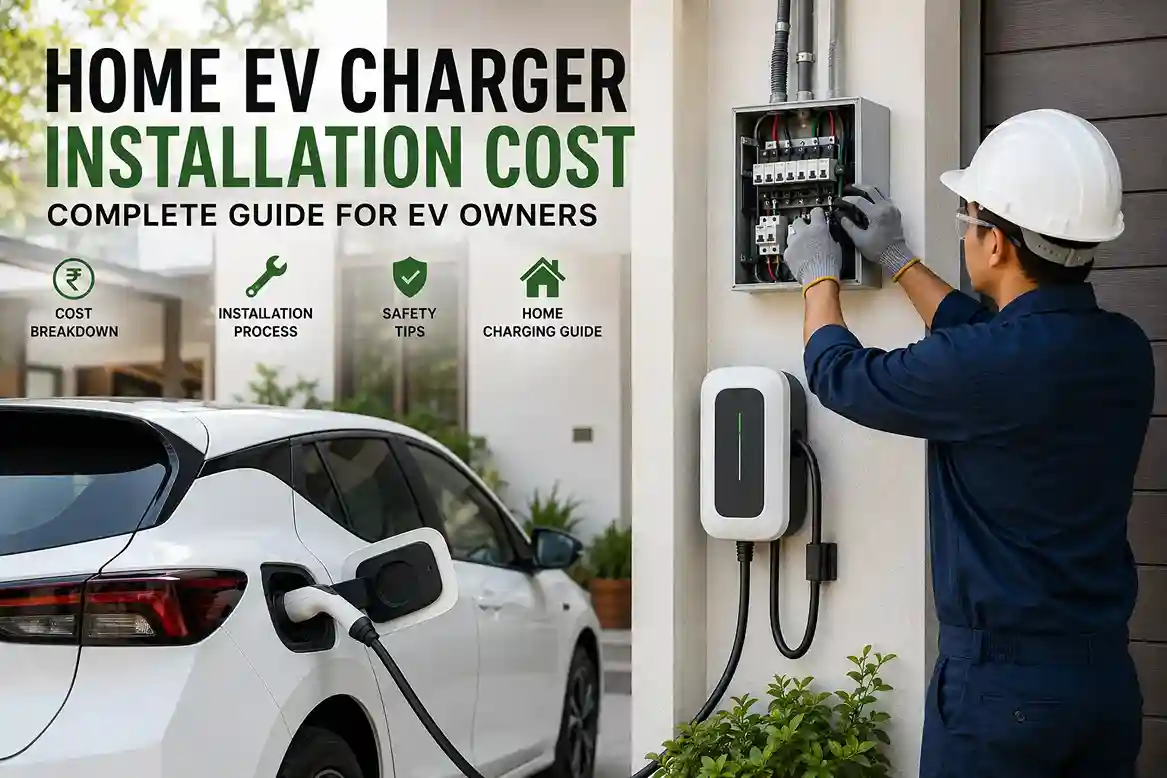
Home EV Charger Installation Cost is one of the first questions new electric vehicle (EV) buyers ask after deciding to switch from a petrol or diesel car. While most EV manufacturers provide a basic home charging solution, installation costs can vary depending on your home’s electrical setup, charger type, wiring requirements, and installation location.
Installing a dedicated home EV charger offers greater convenience, faster charging, and improved safety compared to using a standard household socket. However, understanding the total installation cost before purchasing an EV can help you avoid unexpected expenses.
In real-world situations, a homeowner with an existing dedicated parking space and nearby electrical panel may spend much less on installation than someone living in an apartment with complex wiring requirements.
If you’re comparing overall EV ownership expenses, you may also find our guides on EV Charging Cost vs Petrol Cost Per KM in India 2026 and Fast Charging vs Slow Charging EV useful for understanding charging costs and everyday charging options.
This guide explains Home EV Charger Installation Cost, the factors that influence pricing, charger options, installation requirements, and practical tips for choosing the right setup.
What Is a Home EV Charger?
A home EV charger is a dedicated charging device installed at your residence that safely supplies electricity to your electric vehicle.
Unlike a standard wall socket, a dedicated charger is designed to deliver consistent power while incorporating safety features such as:
- Overcurrent protection
- Earth leakage protection
- Temperature monitoring
- Automatic charging control
Most EV owners prefer home charging because it allows them to recharge overnight and begin each day with a fully or partially charged battery.
Types of Home EV Chargers
Choosing the right charger affects both charging speed and installation cost.
Portable Charger
Many EV manufacturers include a portable charger that plugs into a compatible household outlet.
Advantages
- No dedicated charger purchase
- Easy to carry
- Lower initial cost
Limitations
- Slower charging
- Depends on household wiring quality
- Not ideal for frequent charging
Wall-Mounted AC Charger
A wall-mounted AC charger is the most common solution for residential charging.
Typical power ratings include:
- 3.3 kW
- 7.2 kW
- 11 kW (where supported)
- 22 kW (for select vehicles)
These chargers usually require professional installation and a dedicated electrical circuit.
Home EV Charger Installation Cost in India
The total installation cost depends on several factors rather than a single fixed price.
Typical expenses may include:
- Charger cost
- Electrical wiring
- Circuit breaker
- Safety devices
- Installation labour
- Electrical panel upgrades (if required)
- Cable routing
- Earthing improvements
In many cases, manufacturers provide basic installation as part of the vehicle purchase, while additional work may incur extra charges.
Factors That Affect Home EV Charger Installation Cost
Distance Between Charger and Electrical Panel
Longer cable runs increase:
- Wiring costs
- Labour
- Installation complexity
For example, a charger installed close to the electrical distribution board is usually less expensive than one located several floors away in basement parking.
Existing Electrical Infrastructure
Older homes may require:
- Higher-capacity wiring
- New circuit breakers
- Electrical panel upgrades
- Improved earthing
These upgrades increase installation costs but also improve electrical safety.
Charger Capacity
Higher-capacity chargers generally require:
- Larger cables
- Higher-capacity breakers
- Increased electrical load
- Additional installation work
Choosing the right charger depends on your vehicle’s charging capability and daily driving needs.
Parking Location
Installation complexity varies depending on whether you have:
- Independent house
- Apartment parking
- Basement parking
- Shared parking
- Covered garage
Apartment installations may require additional approvals from housing societies or property management.
Electrical Safety Requirements
Professional installers evaluate:
- Earthing quality
- Load capacity
- Circuit protection
- Cable routing
- Moisture protection
Following electrical safety standards helps reduce the risk of overheating and electrical faults.
The Central Electricity Authority (CEA) publishes electrical safety regulations and technical standards applicable to electrical installations in India.
External Reference:
Benefits of Installing a Home EV Charger
Convenient Overnight Charging
Many owners simply plug in the vehicle after returning home.
By morning, the battery is ready for daily commuting.
This convenience eliminates frequent visits to public charging stations.
Lower Charging Costs
Home charging often costs less than public fast charging.
Drivers interested in comparing running costs can also read our guide on EV Battery Life in India to understand how charging habits affect long-term battery performance.
Better Battery Management
Regular AC home charging generally produces less heat than frequent DC fast charging.
Many manufacturers recommend home charging as the primary charging method for everyday use.
Improved Charging Safety
Dedicated home chargers include built-in protection systems that improve charging reliability compared to using ordinary household sockets.
Increased Property Value
As EV adoption grows, homes with installed EV charging infrastructure may become more attractive to future buyers or tenants.
Should You Install a Higher-Power Charger?
The answer depends on:
- Daily driving distance
- Battery size
- Vehicle charging capability
- Available electrical capacity
For example, someone driving 40 km daily may find a standard AC charger perfectly adequate, while owners with larger battery packs may benefit from higher charging power if supported by both the vehicle and home electrical system.
Can Apartments Install Home EV Chargers?
Yes, although the process may involve additional planning.
Apartment owners may need to consider:
- Society approval
- Dedicated parking
- Shared electrical infrastructure
- Cable routing
- Metering arrangements
Before beginning installation, consult both your housing association and the charger supplier to understand local requirements.
The Bureau of Energy Efficiency (BEE) provides information and initiatives related to electric mobility and energy-efficient transportation.
External Reference:
Is Professional Installation Necessary?
Yes.
A qualified electrician or manufacturer-authorized installer should always perform the installation.
Professional installation helps ensure:
- Correct wiring
- Proper earthing
- Circuit protection
- Safe charger operation
- Compliance with applicable electrical standards
Improper installation can create safety risks and may affect warranty coverage.
Planning Your Installation
Before purchasing a charger, evaluate:
- Available electrical load
- Parking location
- Charging frequency
- Vehicle charging capability
- Future EV upgrades
Our guide on EV Battery Replacement Cost in India also provides useful information about long-term EV ownership planning and battery-related expenses.
Hidden Costs to Consider
When planning a home EV charger installation, many buyers focus only on the charger price. However, several additional expenses may arise depending on your home’s electrical setup.
Electrical Panel Upgrades
If your existing electrical panel cannot support the additional load of an EV charger, an upgrade may be required.
This may include:
- Higher-capacity circuit breakers
- Additional distribution board space
- Upgraded incoming wiring
- New protection devices
Older homes are more likely to require these upgrades.
Longer Cable Runs
If your parking area is far from the electrical distribution board, installation costs may increase because of:
- Additional wiring
- Cable conduits
- Wall drilling
- Protective trunking
- Labour charges
In apartment complexes, cable routing can become one of the largest installation expenses.
Earthing Improvements
Proper earthing is essential for electrical safety.
If the existing earthing system does not meet the charger’s requirements, improvements may be necessary before installation.
Civil Work
Some installations require minor construction work, including:
- Wall mounting
- Drilling
- Protective covers
- Waterproof enclosures
- Cable management
Although these costs are usually modest, they should still be included in your budget.
Common Installation Mistakes
Avoiding these mistakes can improve safety, charging performance, and long-term reliability.
Choosing the Wrong Charger Capacity
Buying the highest-capacity charger isn’t always the best decision.
If your vehicle only supports lower AC charging speeds, installing a higher-capacity charger may provide little practical benefit.
Always match the charger to your vehicle’s charging capability.
Using Poor-Quality Electrical Components
Low-quality wiring, circuit breakers, or connectors can lead to overheating and unreliable charging.
Choose certified electrical equipment installed by qualified professionals.
Ignoring Future Charging Needs
If you expect to purchase another EV in the future, consider whether your electrical infrastructure can support additional charging capacity.
Planning ahead may reduce future installation costs.
Installing Without Professional Assessment
A qualified installer should evaluate:
- Available electrical load
- Earthing quality
- Parking location
- Cable routing
- Circuit protection
Skipping this assessment may lead to safety issues or additional expenses later.
Ignoring Manufacturer Guidelines
Every EV manufacturer specifies compatible charging equipment and installation requirements.
Following these recommendations helps ensure safe operation and may also protect warranty coverage.
Best Practices Before Installing a Home EV Charger
Before scheduling installation:
- Review your vehicle’s charging specifications.
- Confirm your home’s available electrical capacity.
- Select a charger from a reputable manufacturer.
- Use manufacturer-authorized installers whenever possible.
- Ensure proper weather protection for outdoor installations.
- Keep charging cables organized and protected from damage.
- Schedule periodic inspections of charging equipment.
Drivers who regularly charge at home should also review our guide on Fast Charging vs Slow Charging EV to understand when each charging method is most appropriate.
Is a Home EV Charger Worth It?
For most EV owners, the answer is yes.
Home charging offers several advantages:
- Greater convenience
- Lower charging costs compared to frequent public fast charging
- Overnight charging
- Improved charging reliability
- Better long-term battery management
In real-world situations, many owners find that charging at home becomes part of their normal routine, much like charging a smartphone overnight.
Although installation requires an initial investment, the convenience often outweighs the upfront cost over years of ownership.
Safety Tips for Home EV Charging
Safe charging practices are just as important as choosing the right charger.
Always:
- Inspect charging cables regularly.
- Keep connectors clean and dry.
- Avoid using damaged charging equipment.
- Never use unsuitable extension cords unless specifically approved by the charger manufacturer.
- Follow the charger’s operating instructions.
- Have electrical systems inspected if you notice overheating, unusual smells, or repeated breaker trips.
The Ministry of Power, Government of India provides policies and guidance related to EV charging infrastructure and power systems.
External Reference:
Frequently Asked Questions
Can I charge my EV using a normal household socket?
Many EVs include a portable charger that works with a compatible household socket. However, a dedicated home EV charger generally offers greater safety, faster charging, and better long-term reliability.
How long does home charger installation take?
Simple installations may be completed within a few hours, while more complex projects requiring electrical upgrades or long cable runs may take longer.
Is professional installation necessary?
Yes. Professional installation helps ensure correct wiring, proper earthing, electrical protection, and compliance with applicable safety standards.
Can I install an EV charger in an apartment?
Yes, provided your parking arrangement, electrical infrastructure, and housing society regulations permit installation. Requirements vary between residential complexes.
Will a home EV charger increase my electricity bill?
Charging an EV increases electricity consumption, but the overall running cost often remains significantly lower than fueling a comparable petrol or diesel vehicle. Actual costs depend on electricity tariffs, charging frequency, and driving distance.
Should I install a smart EV charger?
Smart chargers can offer useful features such as scheduled charging, energy monitoring, remote control through mobile apps, and software updates. Whether these features are worthwhile depends on your charging habits and budget.
Conclusion
Understanding Home EV Charger Installation Cost helps prospective EV owners plan for one of the most important aspects of electric vehicle ownership. While installation expenses vary depending on the charger type, electrical infrastructure, parking location, and installation complexity, investing in a properly installed home charging solution offers long-term convenience, improved charging safety, and reliable day-to-day operation.
Choosing the right charger, using certified electrical components, and working with qualified installers can help minimize future maintenance issues while ensuring efficient charging performance. For many households, home charging quickly becomes the most convenient and cost-effective way to keep an electric vehicle ready for everyday use.
By understanding Home EV Charger Installation Cost, evaluating your home’s electrical requirements, and following best installation practices, you can make an informed investment that supports safe, efficient, and hassle-free EV ownership for years to come. If you’re still comparing electric vehicle ownership costs, our article on Electric vs Petrol Cars in India 2026 provides additional insights into long-term running expenses and practical considerations.
Author: Carsinfos Editorial Team
Published: July 1st, 2026