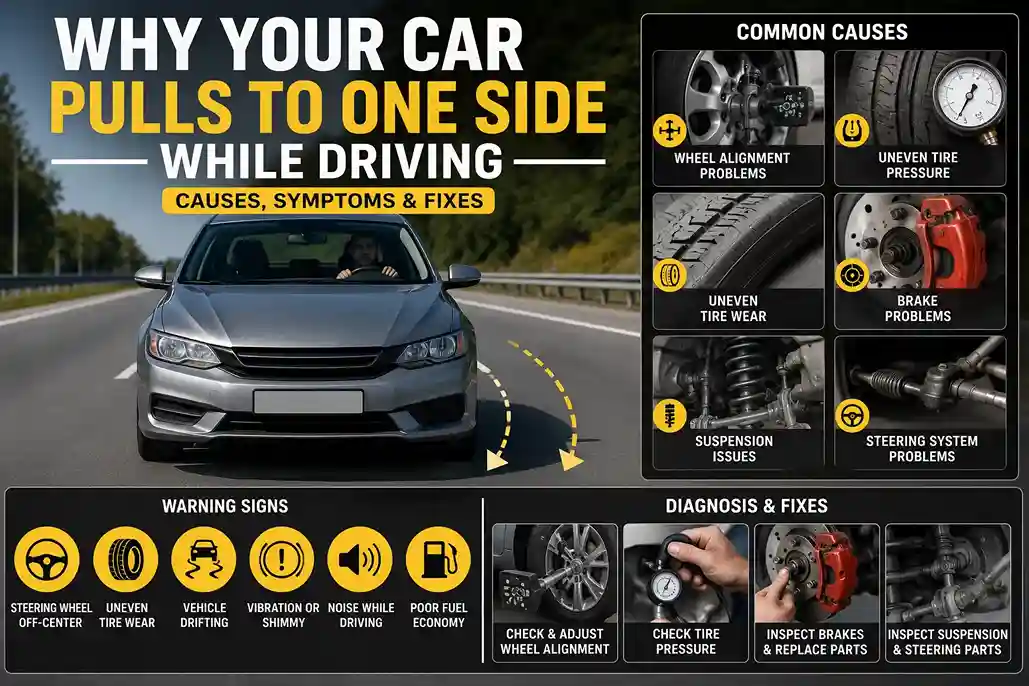
Why Your Car Pulls to One Side While Driving is a question many drivers ask after noticing that their vehicle drifts left or right even when the steering wheel is held straight. While the problem may seem minor at first, it can indicate issues with wheel alignment, tire pressure, braking components, suspension parts, or steering system wear. Ignoring these symptoms can reduce driving comfort, accelerate tire wear, decrease fuel efficiency, and, in some cases, compromise vehicle safety.
In real-world situations, you might notice the vehicle gradually drifting into another lane on a straight road or requiring constant steering corrections to stay centered. Although road conditions can sometimes cause slight pulling, persistent pulling under normal driving conditions should always be investigated.
If you’re already maintaining your vehicle, you may also find our guides on Brake Pedal Feels Soft and Transmission Warning Signs helpful for identifying other mechanical issues before they become serious.
This guide explains Why Your Car Pulls to One Side While Driving, the most common causes, warning signs, diagnostic methods, repair solutions, and preventive maintenance practices that help keep your vehicle driving straight and safely.
Why Does a Car Pull to One Side?
A vehicle pulls to one side when the forces acting on the wheels become uneven.
This imbalance may result from:
- Incorrect wheel alignment
- Uneven tire pressure
- Tire damage
- Brake problems
- Suspension wear
- Steering component issues
The direction of the pull often provides clues about the underlying problem, although professional diagnosis is usually required for confirmation.
Common Causes of a Car Pulling to One Side
1. Incorrect Wheel Alignment
Poor wheel alignment is the most common reason a vehicle drifts left or right.
Wheel alignment determines the angles at which the wheels contact the road.
Misalignment may occur because of:
- Hitting potholes
- Striking curbs
- Suspension wear
- Accident damage
Common symptoms
- Vehicle pulls left or right
- Crooked steering wheel
- Uneven tire wear
- Reduced fuel efficiency
Regular alignment checks help prevent premature tire wear and improve handling.
2. Uneven Tire Pressure
Even a small difference in tire pressure can cause noticeable pulling.
A tire with lower pressure creates more rolling resistance, causing the vehicle to drift toward that side.
Drivers should check tire pressure monthly using the manufacturer’s recommended specifications.
If you’re learning about tire safety, our article on TPMS Explained explains how Tire Pressure Monitoring Systems help detect low tire pressure before it becomes a larger problem.
3. Uneven Tire Wear
Tires that wear unevenly may produce different levels of grip.
Possible causes include:
- Misalignment
- Improper tire rotation
- Suspension problems
- Incorrect inflation
Replacing severely worn tires and correcting the underlying cause usually restores proper handling.
4. Brake Problems
A sticking brake caliper can cause one wheel to remain partially engaged.
This creates additional resistance, causing the vehicle to pull toward the affected side.
Common symptoms include:
- Pulling while braking
- Burning smell
- Excessive brake dust
- Reduced fuel economy
Prompt brake inspection is recommended if these symptoms appear.
5. Suspension Component Wear
Suspension parts gradually wear over time.
Common worn components include:
- Ball joints
- Control arm bushings
- Struts
- Shock absorbers
- Tie rods
As these components deteriorate, wheel alignment and steering stability may be affected.
6. Steering System Problems
Loose or damaged steering components can make the vehicle difficult to control.
Possible causes include:
- Worn tie rod ends
- Steering rack wear
- Loose steering linkage
Professional inspection is required whenever steering problems are suspected.
7. Tire Damage or Manufacturing Defects
Internal tire damage may not always be visible from the outside.
A damaged tire can create uneven rolling characteristics, causing the vehicle to pull even when alignment appears correct.
Rotating tires during diagnosis often helps identify tire-related issues.
Warning Signs That Shouldn’t Be Ignored
Vehicle pulling is often accompanied by other symptoms.
Watch for:
- Steering wheel off-center
- Uneven tire wear
- Steering vibration
- Vehicle wandering
- Noise while turning
- Increased steering effort
- Reduced braking stability
- Poor handling
Addressing these warning signs early often prevents more expensive repairs.
Is It Safe to Continue Driving?
The answer depends on the severity and cause.
Usually safe for a short distance if:
- Pulling is very slight.
- Tire pressures are correct.
- No unusual noises are present.
- Steering feels normal.
However, the problem should still be inspected as soon as possible.
Stop driving and seek inspection if:
- Pulling becomes severe.
- Steering feels loose.
- Brakes pull sharply to one side.
- Tire damage is visible.
- Warning lights appear.
- Suspension noises develop.
Continuing to drive with steering or suspension faults can increase accident risk.
According to the National Highway Traffic Safety Administration (NHTSA), proper tire maintenance, steering system condition, and wheel alignment all contribute to safer vehicle handling and reduced crash risk.
External Reference:
How Mechanics Diagnose the Problem
Professional technicians use several inspection methods to identify the exact cause.
These commonly include:
- Wheel alignment measurement
- Tire pressure inspection
- Tire wear analysis
- Suspension inspection
- Steering component inspection
- Brake system inspection
- Test driving
If the vehicle also experiences steering vibration, our guide on Steering Wheel Shakes While Driving explains how wheel balance, suspension issues, and tire problems can contribute to similar handling symptoms.
The National Institute for Automotive Service Excellence (ASE) recommends regular inspections of steering, suspension, brakes, and tires whenever abnormal vehicle handling is observed to ensure safe driving and proper diagnosis.
External Reference:
How to Fix a Car Pulls to One Side While Driving
The appropriate repair depends on the underlying cause. A professional inspection is the best way to identify the exact issue, but the following are the most common repair solutions.
Perform a Wheel Alignment
If wheel alignment is out of specification, a four-wheel alignment usually restores proper steering and handling.
Benefits include:
- Straight-line driving
- Even tire wear
- Better fuel efficiency
- Improved steering response
Many manufacturers recommend checking wheel alignment annually or after hitting a large pothole or curb.
Correct Tire Pressure
Inflate all tires to the pressure recommended by the vehicle manufacturer.
Remember to:
- Check tire pressure when the tires are cold.
- Inspect the spare tire periodically.
- Recheck pressure after significant temperature changes.
Maintaining proper inflation improves safety, handling, and tire life.
Replace Worn or Damaged Tires
If tire wear is uneven or a tire has internal damage, replacement may be necessary.
In real-world situations, replacing only the affected tire may not always be sufficient. Depending on tread depth differences, replacing tires in pairs or as a complete set may provide better stability and handling.
Repair Brake Components
A sticking brake caliper or seized brake hardware should be repaired promptly.
Repairs may include:
- Caliper replacement
- Brake pad replacement
- Rotor resurfacing or replacement
- Brake fluid service
If braking performance has also changed, our guide on Brake Pedal Feels Soft explains additional symptoms that may indicate hydraulic brake system problems.
Replace Worn Suspension Parts
Damaged suspension components should be replaced before performing wheel alignment.
Common replacements include:
- Ball joints
- Tie rod ends
- Control arm bushings
- Struts
- Shock absorbers
Replacing worn suspension parts restores proper wheel positioning and improves vehicle stability.
Repair Steering Components
Loose or worn steering parts affect directional control.
Repairs may involve:
- Steering rack replacement
- Tie rod replacement
- Steering linkage repair
- Power steering system inspection
Proper steering repairs help ensure predictable vehicle handling.
Common Mistakes Drivers Make
Ignoring a vehicle that pulls to one side often leads to more expensive repairs.
Assuming It’s Only the Road
Some roads have a slight crown for water drainage, which can cause a mild drift.
However, if your vehicle consistently pulls on different roads, the issue should not be ignored.
Delaying Wheel Alignment
Many drivers continue driving with poor alignment until tires wear prematurely.
Correcting alignment early is significantly less expensive than replacing worn tires.
Ignoring Tire Pressure
Driving with underinflated tires affects:
- Vehicle handling
- Tire life
- Fuel economy
- Braking performance
Checking tire pressure regularly takes only a few minutes and helps prevent unnecessary problems.
Postponing Suspension Repairs
Small suspension issues gradually become larger and more expensive.
For example, a worn ball joint can eventually affect alignment, steering, and tire wear simultaneously.
Best Practices to Prevent Vehicle Pulling
Routine maintenance greatly reduces the likelihood of steering and handling problems.
Recommended practices include:
- Check tire pressure at least once a month.
- Rotate tires according to the manufacturer’s schedule.
- Inspect tires for uneven wear.
- Have wheel alignment checked periodically.
- Replace worn suspension components promptly.
- Avoid striking potholes and curbs whenever possible.
- Respond quickly to steering or braking changes.
If you’re maintaining overall vehicle safety, our articles on Electronic Stability Control Explained and Car Dashboard Warning Lights Explained provide additional information about modern safety systems and warning indicators.
When Should You Visit a Mechanic?
Professional inspection is recommended immediately if you notice:
- Persistent pulling
- Uneven tire wear
- Steering wheel vibration
- Steering wheel off-center
- Vehicle wandering
- Pulling during braking
- Suspension noises
- Reduced steering control
Early diagnosis often prevents more extensive suspension, steering, and tire damage.
According to the U.S. Department of Energy, maintaining correct tire pressure, wheel alignment, and overall vehicle condition improves fuel efficiency, handling, and long-term vehicle reliability.
External Reference:
Frequently Asked Questions
Why does my car pull to one side only while braking?
This often indicates a sticking brake caliper, uneven brake pad wear, contaminated brake components, or another braking system issue that should be inspected promptly.
Can low tire pressure make my car pull?
Yes. A tire with significantly lower pressure creates additional rolling resistance, causing the vehicle to drift toward that side.
Does wheel alignment fix pulling?
If poor alignment is the cause, a professional wheel alignment usually corrects the problem. However, worn tires or damaged suspension components may also need repair.
Is it dangerous if my car pulls slightly?
Even a slight pull should be investigated if it occurs consistently. It may indicate early tire, suspension, steering, or braking problems that can worsen over time.
How often should wheel alignment be checked?
Many experts recommend checking alignment every 10,000–15,000 km (6,000–9,000 miles), annually, or whenever new tires are installed, suspension components are replaced, or the vehicle experiences a significant impact with a pothole or curb.
Can worn suspension parts cause pulling?
Yes. Worn ball joints, tie rods, bushings, struts, or control arms can affect wheel positioning and cause the vehicle to drift left or right.
Conclusion
Understanding Why Your Car Pulls to One Side While Driving helps drivers recognize an important warning sign that should never be ignored. While the problem may be caused by something as simple as incorrect tire pressure, it can also indicate wheel alignment issues, worn suspension components, steering system faults, brake problems, or damaged tires.
Regular inspections, proper tire maintenance, timely wheel alignments, and prompt repairs help maintain predictable handling, extend tire life, and improve overall driving safety. Paying attention to changes in steering behavior allows minor issues to be corrected before they develop into expensive repairs.
By understanding Why Your Car Pulls to One Side While Driving, following your vehicle’s maintenance schedule, and addressing handling issues early, you can enjoy safer, smoother, and more reliable driving while protecting both your vehicle and its occupants.
Author: Carsinfos Editorial Team
Published: July 9th, 2026