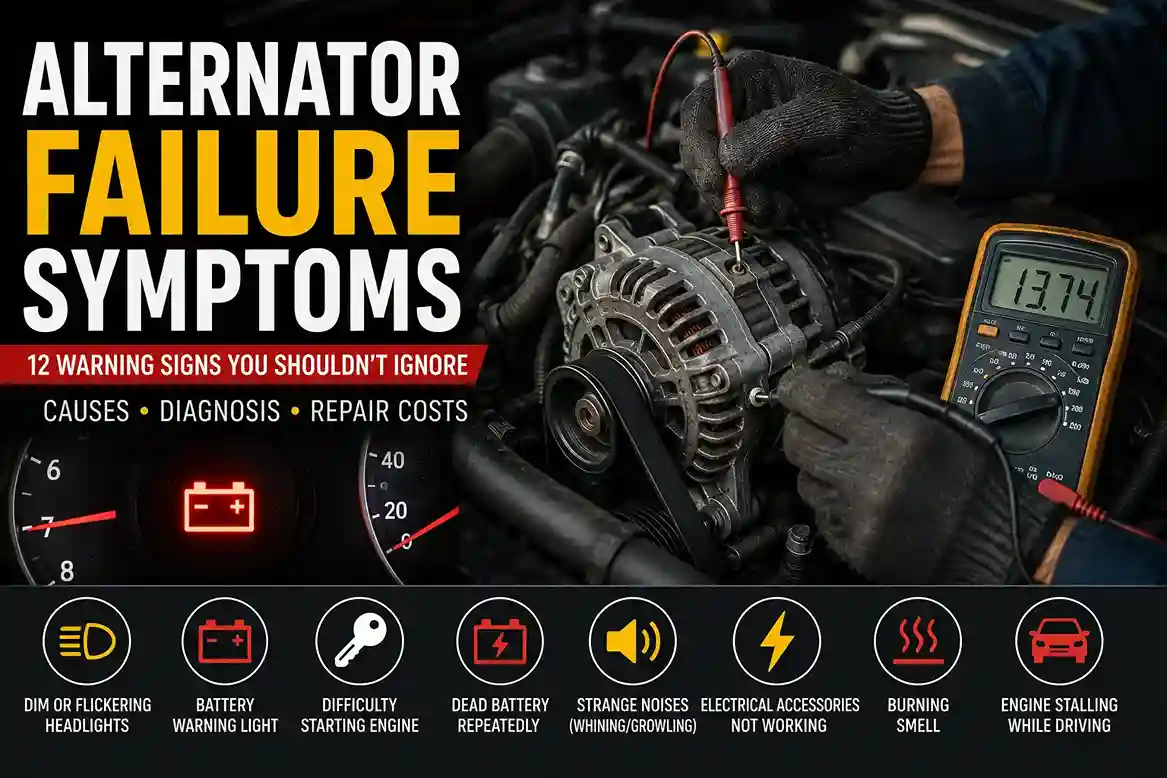
Alternator Failure Symptoms are often easy to overlook in the beginning, but ignoring them can leave you stranded without warning. Since the alternator supplies electrical power while the engine is running and recharges the battery, a failing unit can affect everything from your headlights to your ignition system.
Many drivers assume a dead battery is the cause when their vehicle refuses to start. However, in many cases the real culprit is a failing alternator that has gradually stopped charging the battery.
If your car has already shown signs such as dim headlights or starting problems, you may also find our guide on Signs Your Car Battery Is Weak useful, as battery and alternator issues often produce similar symptoms.
This guide explains the most common alternator failure symptoms, what causes alternators to fail, how to diagnose charging system problems, estimated repair costs in India, and practical maintenance tips to help you avoid unexpected breakdowns.
Quick Answer
Alternator failure symptoms include dim or flickering headlights, a battery warning light, difficulty starting the engine, weak electrical accessories, unusual whining noises, burning smells, and repeated battery drain. Since the alternator powers your vehicle’s electrical system while charging the battery, a failing alternator should be diagnosed and repaired as soon as possible to avoid a complete breakdown.
Table of Contents
- What Does an Alternator Do?
- Common Alternator Failure Symptoms
- Alternator vs Battery Problems
- Common Causes of Alternator Failure
- Early Warning Signs
- Can You Drive With a Bad Alternator?
- Diagnosis
- Repair Costs
- Maintenance Tips
- FAQs
What Does an Alternator Do?
The alternator is responsible for producing electricity whenever the engine is running.
Its primary functions include:
- Charging the battery
- Powering headlights
- Running the infotainment system
- Supplying power to air conditioning controls
- Operating fuel injection and engine management systems
- Supporting safety systems such as ABS and Electronic Stability Control
Without a properly functioning alternator, your vehicle relies solely on battery power. Once the battery becomes discharged, the engine will eventually stall and may not restart.
Modern vehicles equipped with advanced electronics, such as Electronic Stability Control (ESC) and Traction Control, are especially dependent on a healthy charging system.
12 Common Alternator Failure Symptoms
1. Battery Warning Light
The battery-shaped warning light is often the first indication that the charging system isn’t operating correctly.
Although many drivers assume it means the battery has failed, the warning light frequently points to an alternator or charging system problem.
Never ignore this warning if it remains illuminated after starting the engine.
2. Dim or Flickering Headlights
A failing alternator may not produce enough voltage to keep the headlights consistently bright.
Typical signs include:
- Headlights becoming dim while idling
- Flickering lights at traffic signals
- Brightness changing when accelerating
If you frequently drive at night, this can become a significant safety concern.
3. Difficulty Starting the Engine
When the alternator stops charging the battery, the battery gradually loses its stored energy.
Initially, the engine may crank more slowly.
Eventually, the vehicle may not start at all.
If your battery appears healthy but your car still struggles to start, our article Car Not Starting But Battery Is Fine explains other possible causes.
4. Dead Battery Repeatedly
If you’ve replaced the battery recently but it continues to go flat after a few days, the alternator may not be recharging it properly.
Replacing the battery alone won’t solve the problem if the charging system is faulty.
5. Electrical Accessories Stop Working Properly
As alternator output decreases, electrical components receive less power.
You may notice:
- Slow power windows
- Weak blower motor
- Infotainment system restarting
- USB charging problems
- Dashboard display flickering
These issues often appear before complete alternator failure.
6. Strange Whining or Grinding Noises
Alternators contain bearings that wear over time.
Common noises include:
- High-pitched whining
- Grinding
- Squealing
Sometimes the serpentine belt rather than the alternator itself is responsible.
7. Burning Smell
A failing alternator can overheat.
Damaged wiring or slipping belts may produce a burning rubber or electrical smell.
If you detect burning odors together with charging issues, have the vehicle inspected immediately.
8. Engine Stalling While Driving
Modern engines rely heavily on electrical power.
When battery voltage drops too low, the ignition and fuel injection systems may stop functioning correctly.
The engine can suddenly stall—even while driving.
9. Weak Air Conditioning Performance
A low charging voltage can affect:
- AC blower speed
- Climate control electronics
- Cabin cooling efficiency
If poor cooling occurs alongside charging problems, compare the symptoms with our guide on Car AC Not Cooling: Common Reasons & Easy Fixes.
10. Dashboard Electronics Malfunction
Modern vehicles contain dozens of electronic control modules.
A failing alternator may cause:
- Random warning lights
- Display flickering
- Navigation resets
- Radio interruptions
11. Engine Hesitation
Low system voltage can affect ignition timing and fuel delivery.
Drivers may notice:
- Hesitation during acceleration
- Reduced engine performance
- Rough idling
If your vehicle also struggles while accelerating, our article Why Your Car Loses Power While Accelerating explains additional causes worth checking.
12. Complete Loss of Electrical Power
This is the final stage.
Eventually you’ll experience:
- Engine stops running
- Headlights turn off
- Dashboard goes dark
- Power steering assistance may reduce (depending on vehicle)
- Vehicle cannot restart
At this point roadside assistance or towing is usually necessary.
Alternator vs Battery Symptoms
Many owners confuse alternator problems with battery failure.
| Symptom | Bad Battery | Bad Alternator |
|---|---|---|
| Car won’t start | ✅ Very Common | ✅ Possible |
| Battery warning light | Sometimes | ✅ Very Common |
| Headlights flicker while driving | Rare | ✅ Common |
| Engine stalls while driving | Rare | ✅ Common |
| Battery repeatedly dies | Sometimes | ✅ Very Common |
| Electrical accessories fail while driving | Rare | ✅ Common |
A professional charging-system test is the most reliable way to determine whether the battery, alternator, or another electrical component is responsible.
Common Causes of Alternator Failure
Several issues can shorten an alternator’s lifespan.
The most common causes include:
- Worn brushes
- Failed voltage regulator
- Damaged bearings
- Broken diode
- Loose or worn serpentine belt
- Water intrusion
- Oil contamination
- High engine temperatures
- Corroded battery terminals
- Poor electrical connections
Routine inspections during scheduled servicing can often identify these problems before they lead to a breakdown.
Early Warning Signs You Shouldn’t Ignore
Pay attention if you notice:
- Battery light appearing occasionally
- Lights dimming at idle
- Electrical accessories slowing down
- Battery needing frequent charging
- Whining noises from the engine bay
Addressing these symptoms early can often prevent more expensive repairs and reduce the risk of being stranded.
Can You Drive With a Bad Alternator?
Technically, yes—but only for a very short distance and only if absolutely necessary. A failing alternator means your vehicle is running on battery power alone. Once the battery is discharged, the engine will stop and may not restart.
Safe to Drive?
| Condition | Can You Drive? | Recommendation |
|---|---|---|
| Battery warning light only | ⚠️ Limited | Drive directly to a workshop |
| Dim headlights | ⚠️ Short distance | Diagnose as soon as possible |
| Electrical accessories failing | ❌ Not recommended | Arrange inspection immediately |
| Engine stalling | ❌ No | Stop driving and tow the vehicle |
| Burning smell or smoke | ❌ Never | Switch off the engine immediately |
If your alternator fails completely during a night drive or on a highway, you may lose headlights, dashboard instruments, and eventually engine power, creating a serious safety risk.
How to Diagnose Alternator Problems
Professional mechanics usually follow a structured diagnostic process.
Step 1: Check Battery Voltage
Using a multimeter:
- Engine OFF: 12.4–12.8 volts is generally considered a healthy battery.
- Engine RUNNING: approximately 13.5–14.8 volts indicates the alternator is charging correctly.
If the voltage remains close to the battery’s resting voltage while the engine is running, the alternator or charging circuit may be faulty.
Step 2: Inspect the Serpentine Belt
Check for:
- Cracks
- Fraying
- Slipping
- Loose belt tension
A damaged drive belt can prevent the alternator from generating sufficient electrical power.
Step 3: Scan for Fault Codes
Many modern vehicles store charging-system faults that can be retrieved using an OBD-II scanner.
Step 4: Inspect Battery Terminals
Loose or corroded battery terminals may produce symptoms similar to alternator failure.
Clean any corrosion and ensure all electrical connections are secure.
Step 5: Load Test the Charging System
A technician may test the charging system while electrical loads such as headlights, air conditioning, and the rear defogger are switched on.
This helps determine whether the alternator can maintain adequate voltage under real operating conditions.
Alternator Repair & Replacement Costs in India
Costs vary depending on the vehicle brand, alternator capacity, genuine versus aftermarket parts, and labour charges.
| Repair | Estimated Cost (₹) |
|---|---|
| Drive Belt Replacement | 1,000–3,500 |
| Alternator Bearing Replacement | 1,500–4,000 |
| Voltage Regulator Replacement | 2,000–5,000 |
| Alternator Repair | 3,000–8,000 |
| Aftermarket Alternator Replacement | 5,000–12,000 |
| Genuine OEM Alternator Replacement | 8,000–25,000+ |
Note: Luxury vehicles and premium SUVs may have significantly higher replacement costs.
DIY vs Mechanic
| Task | DIY | Mechanic |
|---|---|---|
| Inspect battery terminals | ✅ | Optional |
| Check drive belt | ✅ | Optional |
| Measure battery voltage | ✅ | Optional |
| Replace alternator | ⚠️ Experienced DIY only | ✅ Recommended |
| Charging system diagnosis | ⚠️ Basic checks only | ✅ Best choice |
| ECU and electrical testing | ❌ | ✅ Required |
If you’re not comfortable working with automotive electrical systems, professional diagnosis is usually the safest option.
Preventive Maintenance
Regular maintenance can significantly extend alternator life.
Monthly
- Inspect battery terminals for corrosion.
- Check dashboard warning lights.
- Listen for unusual noises from the engine bay.
Our guide on How Long Do Car Batteries Last in India? explains how battery health affects the charging system.
Every Service
- Inspect the serpentine belt.
- Check charging voltage.
- Inspect wiring and connectors.
- Test battery condition.
Every 40,000–60,000 km
Depending on the manufacturer’s maintenance schedule:
- Inspect alternator bearings.
- Replace worn belts if necessary.
- Check belt tensioners.
Common Mistakes Car Owners Make
Avoid these mistakes:
- Ignoring the battery warning light.
- Replacing only the battery without testing the alternator.
- Continuing to drive after electrical accessories begin failing.
- Using poor-quality replacement alternators.
- Neglecting routine belt inspections.
- Ignoring unusual whining or grinding noises.
Early diagnosis is usually less expensive than waiting for a complete charging-system failure.
Expert Advice
If your vehicle repeatedly experiences battery-related issues, have the entire charging system tested instead of replacing parts one by one.
For example, installing a new battery won’t solve the problem if the alternator isn’t charging correctly. Likewise, replacing the alternator won’t help if a worn serpentine belt is preventing it from operating efficiently.
Routine maintenance—including timely servicing and checking for dashboard warning lights—helps reduce the likelihood of unexpected electrical failures.
External References
For additional information on charging systems and vehicle maintenance:
- National Highway Traffic Safety Administration (NHTSA) provides vehicle safety and maintenance guidance.
- Bosch Automotive Aftermarket offers technical information on charging systems and electrical components.
- Denso Automotive Service Parts explains alternator and starter system technologies.
- NGK NTK provides educational resources on automotive ignition and engine management systems.
Frequently Asked Questions
How long does an alternator usually last?
Most alternators last 80,000 to 150,000 km, although lifespan varies depending on driving conditions, climate, and maintenance.
What is the first sign of alternator failure?
The battery warning light, dim headlights, or electrical accessories behaving unusually are often among the earliest warning signs.
Can a bad alternator damage a new battery?
Yes. If the alternator cannot recharge the battery correctly or produces unstable voltage, even a new battery may discharge prematurely or experience reduced lifespan.
Can I jump-start a car with a bad alternator?
Yes, but only temporarily. A jump start may get the engine running, but the vehicle will eventually stop once the battery loses its remaining charge.
For safe procedures, read How to Jump Start a Car Battery Safely.
Does a bad alternator affect fuel economy?
Not directly. However, poor charging performance can affect engine management systems and electrical components, which may indirectly impact overall efficiency.
Can alternator problems trigger the Check Engine Light?
Yes. Some vehicles illuminate the Check Engine Light or battery warning light when charging-system voltage falls outside the normal operating range.
What causes alternators to fail prematurely?
Heat, worn bearings, faulty voltage regulators, water intrusion, contaminated electrical connections, and worn drive belts are among the most common causes.
Is alternator replacement better than repair?
It depends on the fault. Minor issues such as bearings or voltage regulators may be repairable, but severely damaged or high-mileage alternators are often better replaced with a quality OEM or reputable aftermarket unit.
Key Takeaways
- Alternator failure symptoms often begin gradually with dim lights or a battery warning light.
- A failing alternator can eventually leave your vehicle unable to start or continue running.
- Proper diagnosis helps distinguish alternator faults from battery problems.
- Early repairs are usually less expensive than waiting for complete failure.
- Regular inspections of the battery, drive belt, and charging system help prevent unexpected breakdowns.
- If warning signs appear, have the charging system tested as soon as practical.
Conclusion
Recognizing alternator failure symptoms early can help you avoid inconvenient breakdowns and expensive repairs. Warning signs such as dim headlights, repeated battery drain, unusual noises, or a battery warning light should never be ignored, as they often indicate that the charging system is no longer functioning correctly.
Whether the issue is a worn voltage regulator, damaged bearings, or a failing alternator, prompt diagnosis and repair will help protect your battery and other electrical components. Combined with routine inspections and timely maintenance, this approach can keep your vehicle’s charging system reliable and reduce the risk of unexpected failures on the road.
Author: Carsinfos Editorial Team
Published: July 16th, 2026