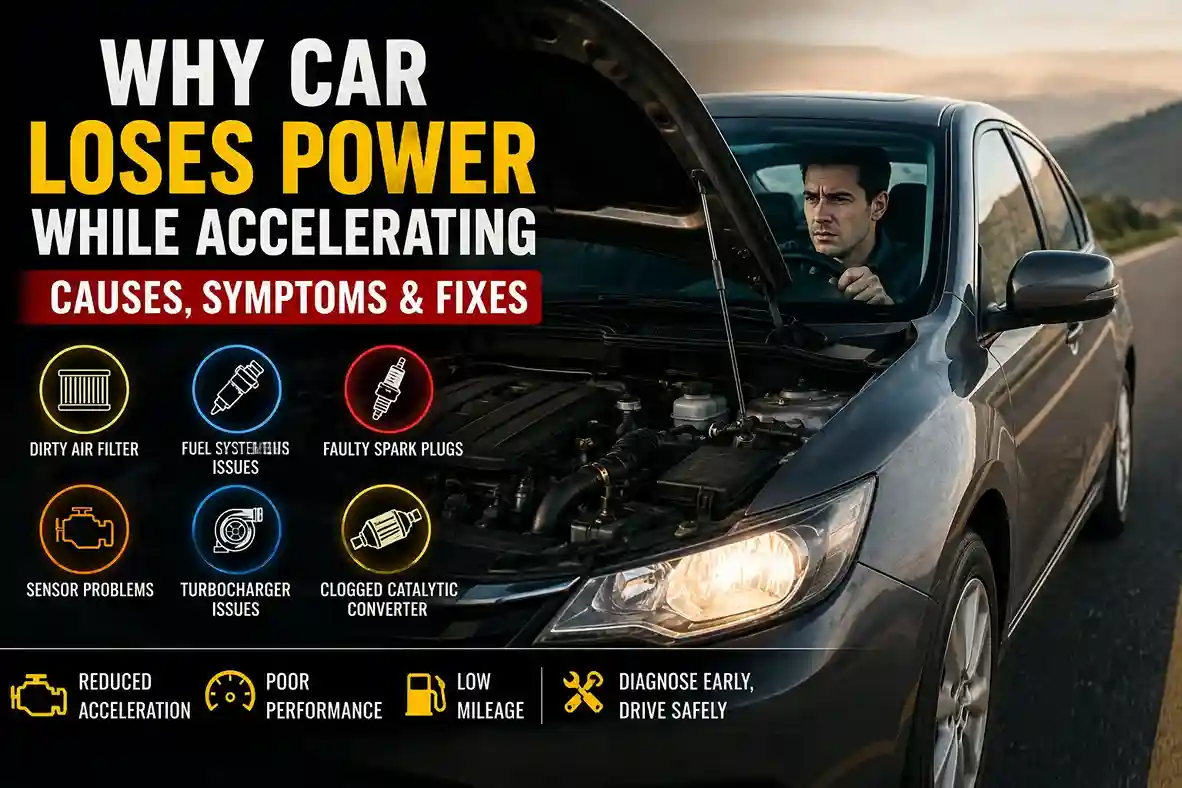
Why car loses power while accelerating is a common concern among vehicle owners, especially when a car that normally performs well suddenly feels sluggish, struggles to gain speed, or hesitates when the accelerator is pressed. Whether you’re overtaking on a highway, climbing a hill, or simply merging into traffic, a loss of power can affect both driving confidence and safety.
In many cases, the problem develops gradually. Drivers may first notice slower acceleration, reduced fuel efficiency, or occasional hesitation before more obvious symptoms appear. While some causes are relatively simple and inexpensive to fix, others may indicate more serious engine, fuel, or transmission issues.
If you’ve recently noticed a drop in performance, understanding the possible reasons can help you identify the problem early and avoid more expensive repairs later. Similar to symptoms discussed in our guide on Why Your Car Mileage Is Decreasing Suddenly, power loss often points to underlying mechanical or electronic issues that deserve attention.
This guide explains the most common reasons a car loses power while accelerating, warning signs to watch for, practical solutions, and preventative maintenance tips that can help keep your vehicle performing at its best.
What Does Loss of Power During Acceleration Mean?
Power loss occurs when the engine cannot generate or deliver the expected amount of power to the wheels.
You might experience:
- Slow acceleration
- Delayed throttle response
- Difficulty reaching higher speeds
- Poor performance on inclines
- Engine hesitation
- Jerking during acceleration
In real-world situations, drivers often notice the issue while overtaking another vehicle or driving uphill, where additional engine power is required.
Why Car Loses Power While Accelerating: Most Common Causes
Several systems must work together properly for smooth acceleration. When one component fails, performance can suffer significantly.
Dirty or Clogged Air Filter
An engine needs a constant supply of clean air for combustion.
Over time, air filters accumulate dust, dirt, and debris that restrict airflow.
When airflow decreases:
- Combustion becomes less efficient
- Engine performance drops
- Fuel economy may worsen
The U.S. Environmental Protection Agency (EPA) notes that proper engine maintenance helps optimize vehicle performance and emissions.
Fortunately, replacing an air filter is usually inexpensive and straightforward.
Fuel System Problems
Fuel delivery issues are among the most common reasons for poor acceleration.
Clogged Fuel Filter
The fuel filter removes contaminants before fuel reaches the engine.
A partially blocked filter may:
- Restrict fuel flow
- Cause hesitation
- Reduce engine power
Weak Fuel Pump
The fuel pump must supply adequate fuel pressure.
If it begins to fail, the engine may not receive enough fuel during acceleration.
Dirty Fuel Injectors
Fuel injectors spray fuel into the combustion chamber.
When deposits build up, fuel delivery becomes uneven.
For example, a driver may notice smooth idling but significant hesitation when accelerating.
Faulty Spark Plugs
Spark plugs ignite the air-fuel mixture inside the engine.
Worn spark plugs can cause:
- Misfires
- Rough acceleration
- Reduced power
- Poor fuel economy
Regular maintenance can help prevent these issues.
Drivers interested in maximizing fuel efficiency may also find useful tips in our guide on How to Improve Car Mileage in India.
Mass Air Flow (MAF) Sensor Issues
The Mass Air Flow sensor measures the amount of air entering the engine.
This information helps determine the correct fuel mixture.
When the sensor becomes dirty or fails:
- Engine performance may suffer
- Acceleration can become sluggish
- Fuel consumption may increase
The National Institute for Automotive Service Excellence highlights the importance of sensor accuracy for modern engine performance.
Clogged Catalytic Converter
The catalytic converter helps reduce harmful emissions.
Over time, internal blockages can restrict exhaust flow.
Common symptoms include:
- Poor acceleration
- Reduced engine power
- Excessive heat
- Check engine light activation
If your vehicle also shows signs of overheating, consider reviewing our guide on Why Your Car Is Overheating: Common Reasons and Fixes.
Turbocharger Problems (Turbocharged Vehicles)
Many modern cars use turbochargers to increase power and efficiency.
When turbo components fail, drivers may experience:
- Noticeable power loss
- Slow acceleration
- Reduced boost pressure
- Whistling noises
Owners of turbocharged vehicles may benefit from understanding the differences covered in our article on Turbo Petrol vs Naturally Aspirated Engine India.
Transmission Issues
Sometimes the engine itself is functioning properly, but the transmission cannot effectively transfer power.
Transmission Slipping
Transmission slipping often causes:
- High engine RPM
- Poor acceleration
- Delayed gear engagement
Low Transmission Fluid
Insufficient transmission fluid can affect gear changes and overall performance.
Automatic transmission owners should pay close attention to maintenance schedules.
Throttle Body Problems
The throttle body regulates airflow into the engine.
Carbon deposits can accumulate over time and restrict movement.
Symptoms include:
- Slow throttle response
- Rough idle
- Hesitation during acceleration
Regular cleaning may restore normal operation.
Check Engine Light and Sensor Failures
Modern vehicles rely heavily on electronic sensors.
Common sensor-related causes include:
- Oxygen sensor failure
- Throttle position sensor issues
- Crankshaft position sensor problems
- Camshaft position sensor faults
The National Highway Traffic Safety Administration (NHTSA) recommends addressing warning lights promptly to avoid worsening vehicle issues.
If dashboard warnings accompany power loss, reviewing our article on Car Dashboard Warning Lights Explained can help identify potential concerns.
Low Engine Compression
Engine compression is essential for producing power.
Low compression may result from:
- Worn piston rings
- Valve problems
- Head gasket issues
This is generally one of the more serious causes of power loss and often requires professional diagnosis.
Dirty or Failing Fuel
Poor-quality fuel can affect combustion performance.
Contaminated fuel may cause:
- Engine hesitation
- Reduced acceleration
- Rough running
In some cases, draining the fuel system and refilling with high-quality fuel resolves the issue.
Common Warning Signs Before Major Power Loss
Drivers often overlook early indicators.
Watch for:
- Delayed throttle response
- Reduced fuel economy
- Rough idling
- Engine vibration
- Difficulty climbing hills
- Frequent gear hunting
- Check engine light illumination
If your vehicle also vibrates during acceleration, our guide on Why Your Car Is Vibrating While Driving: Causes and Fixes may provide additional insights.
Common Mistakes Drivers Make
When experiencing power loss, some owners unintentionally make the problem worse.
Ignoring Warning Lights
Many drivers continue driving despite dashboard alerts.
This can allow minor issues to become expensive repairs.
Delaying Maintenance
Skipping oil changes, air filter replacements, and tune-ups often contributes to performance problems.
Assuming Premium Fuel Will Fix Everything
Fuel quality matters, but many performance issues stem from mechanical or electronic failures rather than fuel grade.
Replacing Parts Without Diagnosis
Randomly replacing components can become costly and ineffective.
Proper diagnosis is always the smarter approach.
Best Practices to Prevent Power Loss
Preventative maintenance significantly reduces the likelihood of acceleration problems.
Follow Service Intervals
Routine servicing helps identify potential issues early.
Replace Filters on Schedule
Both air and fuel filters play important roles in engine performance.
Use Quality Fuel
Reliable fuel sources reduce contamination risks.
Address Check Engine Lights Quickly
Early diagnosis often prevents larger repairs.
Monitor Vehicle Performance
Pay attention to changes in acceleration, fuel economy, and engine behavior.
In real-world situations, drivers who respond quickly to small performance changes often avoid major repair bills later.
When Should You Visit a Mechanic?
Seek professional inspection if:
- The vehicle struggles to accelerate consistently
- The check engine light remains on
- Engine misfires occur
- Fuel economy suddenly drops
- Unusual noises accompany acceleration
A professional diagnostic scan can often pinpoint electronic faults much faster than trial-and-error troubleshooting.
Frequently Asked Questions
Why does my car hesitate when I accelerate?
Hesitation during acceleration is often caused by fuel delivery issues, dirty air filters, faulty sensors, or worn spark plugs.
Can a dirty air filter cause power loss?
Yes. A clogged air filter restricts airflow, reducing combustion efficiency and engine performance.
Is it safe to drive a car that loses power while accelerating?
It depends on the cause. Minor issues may allow continued operation, but sudden power loss can create safety risks, especially during highway driving.
Can bad fuel cause poor acceleration?
Yes. Contaminated or low-quality fuel can negatively affect combustion and engine responsiveness.
Will a check engine light appear if my car loses power?
Often, yes. Many underlying causes trigger fault codes that illuminate the check engine light.
Conclusion
Understanding why car loses power while accelerating can help drivers identify problems early and avoid costly repairs. From clogged air filters and fuel delivery issues to sensor failures and transmission problems, numerous factors can affect vehicle performance.
The key is paying attention to warning signs such as hesitation, reduced fuel economy, rough acceleration, or dashboard alerts. Regular maintenance, timely inspections, and proper diagnostics remain the most effective ways to keep your vehicle running smoothly.
If your car has recently become sluggish or struggles to accelerate normally, don’t ignore the symptoms. Addressing the root cause early can restore performance, improve reliability, and help ensure a safer driving experience.
Author: Carsinfos Editorial Team
Published: June 21st, 2026