
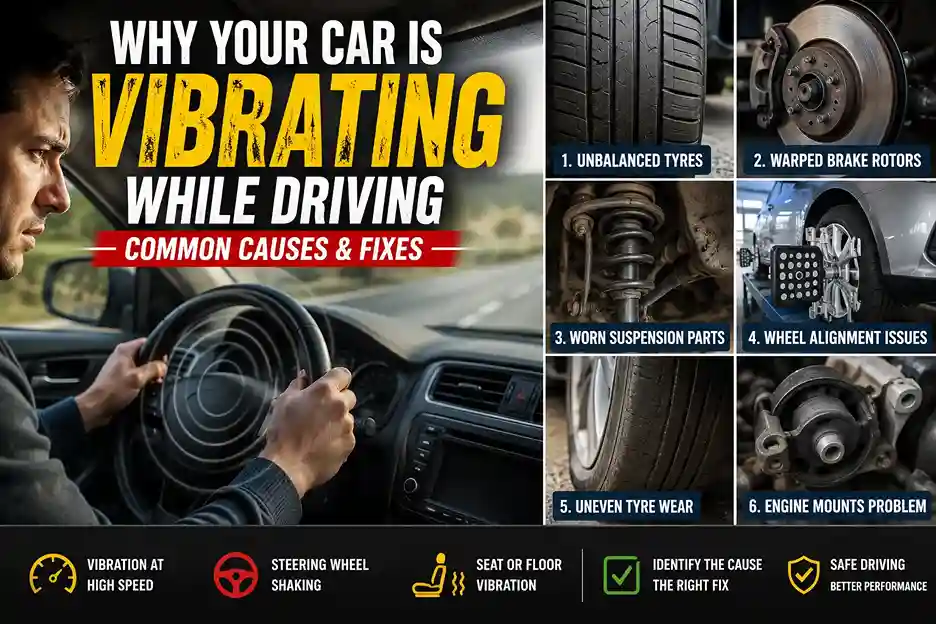
If your car is vibrating while driving, the quickest way to narrow it down is to notice when the vibration happens. A shake at highway speed usually points somewhere different from a vibration during braking, acceleration, or idle. In many cases, the first suspects are tyres, wheel balance, alignment, or suspension rather than something dramatic. NHTSA says tyre balancing helps prevent shake and vibration, and it also notes that alignment helps a vehicle travel straight without veering. Michelin and Bridgestone make the same core point: alignment and balancing solve different problems, and a car can still vibrate if only one of them is addressed.
If you already keep up with How to Check Car Tyre Pressure at Home in India, Wheel Alignment vs Wheel Balancing: What’s the Difference?, and When Should You Replace Car Tyres in India?, you are already doing the right kind of detective work. Small clues usually solve vibration problems faster than guesswork.
Why Your Car Is Vibrating While Driving
The pattern matters. A vibration in the steering wheel often behaves differently from one felt through the seat or floor. NHTSA’s tyre safety material notes that wheel and tyre issues can create shake or vibration, while a separate maintenance bulletin says vibration may be felt in the seat or steering wheel depending on the source. That is why mechanics ask when the vibration happens before they start replacing parts.
In real-world situations, a driver may notice a vibration only at 80–100 km/h, only when braking downhill, or only after hitting a pothole. Those patterns are useful. They point toward different systems, and that saves time during diagnosis.
The Most Common Causes
1) Tyres out of balance
This is one of the most common reasons for vibration at speed. Michelin says an out-of-balance wheel can bounce or wobble, which increases vibration and wear. Bridgestone also says that if vibration appears, tyres should be rebalanced, especially after a new tyre installation or service work. NHTSA says new tyres should always be balanced when installed.
A good first fix is simple: have the wheels balanced by a shop with proper equipment. If the vibration disappears after balancing, the cause was likely weight imbalance rather than something more serious.
2) Low tyre pressure, uneven wear, or tyre damage
Tyre pressure matters more than many drivers realize. Bridgestone recommends checking tyre pressure monthly and before long trips, and it also advises monthly inspection for treadwear, visible damage, and unusual wear patterns. A tyre with low pressure, uneven wear, or a bulge can create vibration, noise, or a rougher ride.
That is why How to Check Car Tyre Pressure at Home in India is one of the best companion reads to this article. If the tyres are underinflated or badly worn, balancing alone will not fully solve the problem. In some cases, When Should You Replace Car Tyres in India? becomes the more important next step.
3) Wheel alignment is off
Alignment problems usually show up as pulling, crooked steering, or uneven tread wear, but they can also contribute to vibration-like instability, especially if the suspension has been stressed. Michelin explains that alignment controls where the tyre points, while balancing controls how it rotates; if the alignment is wrong, the car may pull to one side or wear unevenly even if the wheel is balanced. Bridgestone says alignment should be checked if the vehicle pulls, tyres wear unevenly, or steering feels off.
If the car started feeling odd after a pothole, curb hit, or rough-road impact, alignment is worth checking soon. That is also where How to Check Car Suspension Problems: Warning Signs & Fixes becomes relevant, because suspension wear and alignment problems often travel together.
4) Suspension wear or damage
Bad suspension can make the car feel unsettled, floaty, or noisy, and it can worsen tyre wear and alignment issues. Michelin says that if rebalancing does not solve the vibration, alignment and suspension components should be checked next. In practice, worn shocks, struts, bushings, or joints can let the car move more than it should.
A suspension issue is more likely if the car feels worse over bumps, leans too much in turns, or has an unusual bounce after a pothole. That is why vibration should never be judged in isolation; the whole ride behavior matters.
5) Brake-related vibration
If the vibration appears mainly when braking, the brakes deserve attention first. Worn brake pads, warped rotors, or uneven brake wear can make the steering wheel pulse or the pedal feel rough. While that is a different symptom from a tyre imbalance, drivers often confuse the two because both can produce shaking. That is why How to Check Car Brake Pads at Home in India is a practical next read when the shake only shows up under braking. Consumer Reports also notes that wheel and tyre problems can create vibration, but braking-specific symptoms should not be ignored because they affect stopping confidence.
6) A wheel weight came loose or the wheel was not installed correctly
Consumer Reports notes that wheels can shed balancing weights, which then causes wobble and vibration. AAA also notes that improper tightening can contribute to brake vibration. If the vibration started soon after tyre service, wheel rotation, or a repair visit, ask the shop to recheck the wheel installation, balance weights, and fastener torque.
This is one reason a vibration that starts immediately after service should be inspected promptly rather than ignored. Often, the problem is simpler than it feels.
7) Engine or drivetrain issues when the car vibrates even without moving
If the car vibrates while idling or at a stop, the problem may be outside the wheel-and-tyre system. AAA’s automotive glossary describes rough idle as the engine vibrating or shaking while running, and Toyota maintenance material also references engine vibration as something technicians may inspect and adjust. That does not mean every idle shake is serious, but it does mean the problem may need a broader diagnosis.
If you also see a warning light, pair this with Car Dashboard Warning Lights Explained. A warning light plus vibration is a stronger sign that the car should be checked soon rather than later.
What You Can Check at Home
You do not need a workshop just to gather useful clues. Start with the basics.
Look at the tyres in daylight. Check for low pressure, bulges, cuts, sidewall damage, uneven tread wear, or anything embedded in the rubber. Bridgestone recommends monthly tyre inspection, and NHTSA says manual checks matter because balancing and alignment only work well when the tyres themselves are in decent condition.
Then notice where the vibration is strongest.
If it is mainly in the steering wheel, front wheel balance, front tyres, or front suspension are stronger suspects.
If it is mainly in the seat or floor, the rear tyres, rear wheels, or drivetrain become more likely. NHTSA’s vibration-diagnosis bulletin notes that vibration can be felt in different parts of the vehicle depending on the source.
Next, ask yourself when it happens.
Only at high speed? That often points to balancing or tyre issues.
Only while braking? Think brakes.
After a pothole or curb hit? Think alignment or suspension.
At idle or stopped? Think engine or mounts.
That kind of observation often shortens the repair process more than any guess could.
Fixes That Usually Work
Rebalance the wheels
If the vibration changes with road speed and the tyres are otherwise in good condition, balancing is often the first fix to try. Michelin says the solution can be as simple as rebalancing, and Bridgestone says to rebalance when vibration appears or after new tyre installation.
Correct alignment
If the car pulls to one side, the steering wheel is off-centre, or tyre wear is uneven, alignment should be checked. Michelin and Bridgestone both explain that alignment directly affects straight-line tracking and wear pattern.
Inspect suspension parts
If balancing does not solve it, the next step is usually suspension inspection. Worn shocks, struts, and related parts can make the car feel unstable and can also make other symptoms harder to interpret. That is why a related guide like How to Check Car Suspension Problems: Warning Signs & Fixes fits naturally into the diagnostic path.
Repair or replace damaged tyres
If a tyre is badly worn, cupped, or damaged, balancing will only help temporarily or not at all. Bridgestone says to inspect treadwear and damage regularly, and NHTSA says tyre inspection is part of routine safety maintenance. A tyre replacement may be the real fix.
Check brakes if the vibration happens under braking
If the shake only appears when you slow down, the brakes need to be inspected before you spend money on wheel work. A brake issue will not usually go away with balancing. That is where How to Check Car Brake Pads at Home in India becomes a useful companion guide.
Common Mistakes Drivers Make
One common mistake is assuming every vibration means wheel alignment. It does not. NHTSA, Michelin, and Bridgestone all separate balancing from alignment for a reason. A car can be perfectly aligned and still vibrate if the wheel is out of balance.
Another mistake is waiting until the tyres are badly worn. At that point, the problem may have already affected ride quality and safety. Bridgestone and NHTSA both emphasize regular inspection, because tyre condition is part of the diagnosis, not just the result.
A third mistake is ignoring vibration after recent service. If the problem began right after tyre rotation, balancing, or brake work, something in that service path should be rechecked. Consumer Reports specifically notes that balance weights can come loose and cause wobble.
A fourth mistake is treating a slight shake as “normal.” A little buzz can be the first sign of a tyre, wheel, brake, or suspension issue that becomes more expensive later. A cleaner maintenance routine often helps you catch those changes earlier, which is why habits like How to Improve Car Mileage in India and simple tyre checks matter more than they seem at first.
When You Should Not Keep Driving
If the vibration is severe, gets worse quickly, or comes with obvious tyre damage, steering pull, brake pulsing, or warning lights, the car should be checked as soon as possible. NHTSA’s tyre guidance stresses that balancing and alignment are important for safety and tyre life, not just comfort.
That is especially true if the shake feels like it is coming from one corner, if the steering wheel jerks, or if the car feels unstable at highway speed. In those situations, continuing to drive is usually not worth the risk.
FAQ
Why does my car vibrate only at highway speed?
That pattern often points to wheel balance, tyre wear, or a damaged wheel. Michelin and Bridgestone both describe out-of-balance wheels as a common source of speed-related vibration.
Why does my car vibrate when braking?
Brake pad wear or rotor issues are common causes of vibration that appears mainly during braking. In that case, the brake system should be checked first.
Can bad tyre pressure cause vibration?
Yes. Incorrect tyre pressure can worsen ride quality and make other tyre problems more noticeable. Bridgestone recommends monthly pressure checks, and NHTSA says tyre checks should be part of routine maintenance.
What if the car vibrates while idling or stopped?
That can point to an engine-related issue rather than a wheel problem. AAA’s glossary describes rough idle as engine shaking while running, so a workshop diagnosis is a sensible next step.
How often should tyres be inspected?
Bridgestone recommends monthly tyre inspection and pressure checks, and NHTSA also advises regular manual inspection for wear and damage.
Conclusion
When your car is vibrating while driving, the right response is not to guess blindly. Start with the pattern, then work outward: tyre pressure, tyre condition, balance, alignment, suspension, brakes, and only then broader drivetrain or engine causes if the shake happens even while stopped. NHTSA, Michelin, Bridgestone, and Consumer Reports all point to the same practical truth: vibration is usually a symptom of a fixable maintenance issue, and early checks save time, money, and stress.
For most drivers, the best next step is simple: inspect the tyres, note when the shake appears, and get balancing or alignment checked if the symptoms match. If the vibration is tied to braking or suspension feel, use How to Check Car Brake Pads at Home in India and How to Check Car Suspension Problems: Warning Signs & Fixes as your next reference points.
Author: Carsinfos Editorial Team
Published: June 2nd, 2026