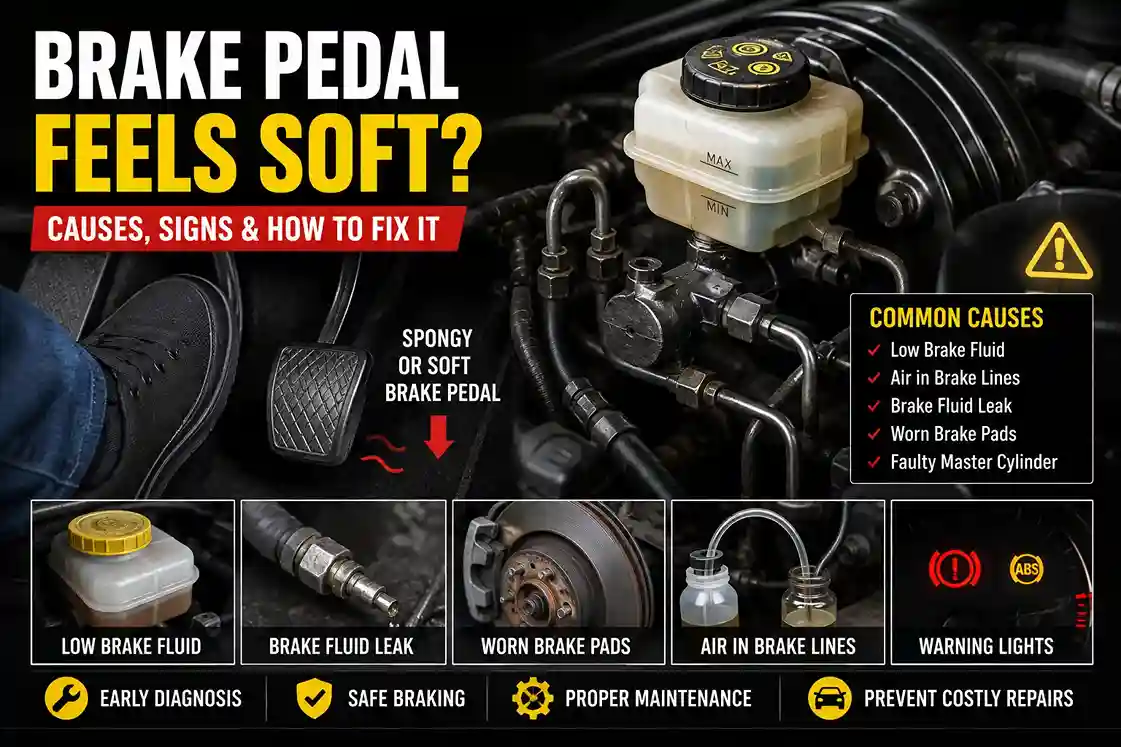
Brake Pedal Feels Soft is one of the most serious warning signs a driver can experience because it often indicates a problem within the braking system. A properly functioning brake pedal should feel firm and responsive. If the pedal suddenly feels spongy, sinks toward the floor, or requires extra effort to stop the vehicle, the issue should never be ignored.
A soft brake pedal can reduce braking performance, increase stopping distance, and compromise vehicle safety. In many cases, the problem is caused by air in the brake lines, low brake fluid, worn components, or hydraulic system leaks. Identifying the cause early can help prevent costly repairs and, more importantly, reduce the risk of brake failure.
In real-world situations, drivers may first notice a soft brake pedal while driving in heavy traffic, descending a steep hill, or making an emergency stop. Even if the brakes still function, a change in pedal feel is a clear indication that the braking system needs attention.
If you’ve recently noticed warning lights on your dashboard, our guides on Car Dashboard Warning Lights Explained and Transmission Warning Signs can help you identify other important vehicle issues that should not be overlooked.
This guide explains why the Brake Pedal Feels Soft, the most common causes, warning signs, diagnosis methods, and practical repair solutions.
What Does a Soft Brake Pedal Mean?
A soft brake pedal means that the hydraulic braking system is not building pressure as effectively as it should.
Instead of feeling firm, the pedal may:
- Travel farther than normal
- Feel spongy
- Slowly sink while pressed
- Require multiple pumps before becoming firm
These symptoms indicate that hydraulic pressure is being lost somewhere within the braking system.
How the Brake System Works
Modern hydraulic braking systems operate using brake fluid to transfer force from the brake pedal to the brake calipers or wheel cylinders.
When you press the brake pedal:
- The brake master cylinder creates hydraulic pressure.
- Brake fluid transfers this pressure through brake lines.
- Brake calipers or wheel cylinders apply the brake pads or shoes.
- Friction slows the wheels and stops the vehicle.
If air enters the system or hydraulic pressure is lost, braking performance decreases.
Common Causes of a Soft Brake Pedal
1. Air in the Brake Lines
One of the most common reasons a Brake Pedal Feels Soft is trapped air inside the hydraulic brake system.
Unlike brake fluid, air compresses easily.
This prevents the brake system from generating consistent hydraulic pressure.
Common symptoms
- Spongy brake pedal
- Increased stopping distance
- Pedal improves after pumping
Brake bleeding is usually required to remove trapped air.
2. Low Brake Fluid
Brake fluid naturally decreases over time as brake pads wear, but a significant drop may indicate a leak.
Low brake fluid reduces hydraulic pressure and can make the brake pedal feel soft.
Possible causes
- Brake fluid leaks
- Worn brake pads
- Damaged seals
- Poor maintenance
Always inspect the brake fluid reservoir if you notice changes in pedal feel.
3. Brake Fluid Leak
Hydraulic leaks prevent the brake system from maintaining pressure.
Leaks may occur in:
- Brake hoses
- Steel brake lines
- Brake calipers
- Wheel cylinders
- Master cylinder
Fluid leaks require immediate attention because they directly affect braking performance.
4. Worn Brake Pads or Shoes
Although worn pads do not always create a soft pedal, excessive wear may increase pedal travel.
Common warning signs include:
- Squealing noises
- Grinding sounds
- Longer stopping distances
Replacing worn brake components restores braking efficiency.
5. Failing Brake Master Cylinder
The brake master cylinder generates hydraulic pressure.
Internal seal failure may allow fluid to bypass inside the cylinder.
Symptoms include
- Brake pedal slowly sinking
- Soft pedal
- Poor braking performance
- No visible external leaks
Master cylinder replacement is often necessary.
6. Flexible Brake Hose Damage
Old rubber brake hoses may expand under pressure.
Instead of transferring full hydraulic pressure to the brakes, part of the pressure is absorbed by the expanding hose.
This creates a softer pedal feel.
7. Overheated Brake Fluid
Brake fluid absorbs moisture over time.
Excess moisture lowers its boiling point.
Under heavy braking, the fluid may partially boil, producing vapor bubbles that reduce hydraulic pressure.
This condition is more common during:
- Mountain driving
- Heavy towing
- Repeated emergency braking
8. ABS Hydraulic Unit Problems
Vehicles equipped with Anti-lock Braking Systems (ABS) contain hydraulic control units.
Although less common, faults within the ABS module may affect pedal feel.
Professional diagnosis is recommended.
Warning Signs That Often Accompany a Soft Brake Pedal
A soft brake pedal rarely occurs alone.
Other symptoms may include:
- Longer stopping distance
- Brake warning light
- ABS warning light
- Brake fluid leak
- Vehicle pulling during braking
- Brake vibration
- Burning smell after braking
Recognizing these warning signs early helps prevent more serious brake failures.
Is It Safe to Continue Driving?
A Brake Pedal Feels Soft should always be treated as a safety concern.
You may cautiously drive only if:
- The issue appears minor.
- Braking performance remains nearly normal.
- You are driving a short distance to a repair facility.
Stop driving immediately if:
- The brake pedal sinks to the floor.
- Braking distance increases significantly.
- Brake warning lights illuminate.
- Brake fluid is leaking.
- Brakes fail to respond consistently.
Driving with compromised brakes significantly increases the risk of an accident.
According to the National Highway Traffic Safety Administration (NHTSA), braking system defects are among the critical vehicle safety issues that require immediate attention. Regular brake inspections and prompt repairs help reduce the risk of crashes.
External Reference:
How Mechanics Diagnose a Soft Brake Pedal
Professional technicians typically perform several checks to identify the root cause.
Diagnostic procedures may include:
- Inspecting brake fluid level and condition
- Checking for hydraulic leaks
- Testing brake pedal pressure
- Examining brake hoses and steel lines
- Inspecting the master cylinder
- Checking brake pads and rotors
- Performing ABS system diagnostics
Modern diagnostic tools help identify ABS and hydraulic faults that may not be visible during a visual inspection.
If you’ve also experienced unusual braking noises, our guide on Brake Noise When Stopping: Causes & Fixes explains common brake-related sounds and their possible causes.
The National Institute for Automotive Service Excellence (ASE) recommends professional inspection whenever braking performance changes noticeably or brake warning lights appear.
External Reference:
How to Fix a Soft Brake Pedal
The correct repair depends on the underlying cause. Addressing brake problems promptly helps restore braking performance and improves overall driving safety.
Bleed the Brake System
If air has entered the brake lines, the system must be bled to remove trapped air bubbles.
Brake bleeding restores proper hydraulic pressure and usually returns the brake pedal to its normal firm feel.
This procedure should be carried out using the correct brake fluid specified by the vehicle manufacturer.
Repair Brake Fluid Leaks
Hydraulic leaks must always be repaired before adding new brake fluid.
Common leak locations include:
- Brake calipers
- Wheel cylinders
- Brake hoses
- Steel brake lines
- Master cylinder seals
Simply topping up the brake fluid without repairing the leak is only a temporary measure and does not solve the underlying problem.
Replace Worn Brake Pads and Rotors
Excessively worn brake pads reduce braking efficiency and may increase pedal travel.
During replacement, technicians also inspect:
- Brake rotors
- Brake calipers
- Slide pins
- Hardware components
Replacing worn parts restores braking performance and improves stopping confidence.
Replace a Faulty Master Cylinder
If the master cylinder’s internal seals fail, hydraulic pressure cannot be maintained properly.
Symptoms often include:
- Brake pedal slowly sinking
- Poor braking response
- Soft pedal without visible leaks
Replacing the master cylinder is typically the recommended repair.
Replace Damaged Brake Hoses
Old or swollen rubber brake hoses may expand when pressure is applied.
Installing new brake hoses restores consistent hydraulic pressure throughout the braking system.
Flush Old Brake Fluid
Brake fluid absorbs moisture over time.
A complete brake fluid flush removes contaminated fluid and helps prevent:
- Corrosion
- Internal component wear
- Brake fade
- Reduced hydraulic performance
Most manufacturers recommend replacing brake fluid at regular service intervals, even if the braking system appears to function normally.
Common Mistakes Drivers Make
Many brake system failures become more serious because early warning signs are ignored.
Continuing to Drive With a Soft Brake Pedal
Some drivers assume the brakes will “improve” after a few days.
In reality, braking performance often continues to deteriorate if the underlying problem is not repaired.
Ignoring Brake Warning Lights
Brake or ABS warning lights should never be ignored.
These indicators often appear before braking performance becomes critically affected.
Mixing Different Brake Fluids
Brake systems are designed to use specific brake fluid types.
Using the wrong fluid may damage seals and reduce braking performance.
Always follow the vehicle manufacturer’s recommendations.
Delaying Brake Fluid Replacement
Brake fluid gradually absorbs moisture from the atmosphere.
Old fluid can reduce braking performance and increase the likelihood of brake fade during heavy braking.
Routine fluid replacement helps maintain reliable braking.
Ignoring Fluid Leaks
Even small hydraulic leaks can quickly develop into major braking problems.
Any visible brake fluid leak should be repaired immediately.
Best Practices for Brake System Maintenance
Good maintenance habits help ensure consistent braking performance.
Recommended practices include:
- Check brake fluid level regularly.
- Inspect brake pads during routine servicing.
- Replace brake fluid according to the manufacturer’s schedule.
- Repair leaks immediately.
- Replace damaged brake hoses promptly.
- Respond quickly to dashboard warning lights.
- Have the braking system inspected if pedal feel changes.
Drivers who follow preventive maintenance schedules generally experience fewer brake-related problems and lower repair costs.
If you’re performing routine vehicle maintenance, our guide on Engine Oil Leakage Symptoms explains how identifying fluid leaks early can help prevent additional mechanical problems.
When Should You Visit a Mechanic?
Arrange a professional inspection immediately if you notice:
- Soft or spongy brake pedal
- Brake pedal sinking toward the floor
- Brake warning light
- ABS warning light
- Fluid leaks
- Longer stopping distances
- Grinding or squealing noises
- Vehicle pulling during braking
Prompt diagnosis often prevents more expensive brake system repairs.
According to the U.S. Department of Transportation, maintaining braking systems in good condition is essential for safe vehicle operation and reducing the risk of road accidents.
External Reference:
Frequently Asked Questions
Why does my brake pedal feel soft?
The most common causes include air in the brake lines, low brake fluid, hydraulic leaks, worn brake components, or a failing master cylinder.
Is it safe to drive with a soft brake pedal?
No. A soft brake pedal indicates reduced braking performance. If the pedal sinks significantly or braking distance increases, the vehicle should not be driven until it has been inspected and repaired.
Can low brake fluid cause a soft brake pedal?
Yes. Low brake fluid reduces hydraulic pressure, making the brake pedal feel soft or spongy.
How often should brake fluid be replaced?
Service intervals vary by manufacturer, but many vehicles require brake fluid replacement every two to three years or according to the maintenance schedule in the owner’s manual.
Can air in the brake lines be removed?
Yes. Brake bleeding removes trapped air and restores proper hydraulic pressure when performed correctly.
Will replacing brake pads fix a soft brake pedal?
Not always. While worn brake pads may contribute to increased pedal travel, a soft pedal is often caused by hydraulic issues such as air in the brake lines, low brake fluid, leaks, or master cylinder problems.
Conclusion
Understanding Brake Pedal Feels Soft symptoms helps drivers recognize one of the most important safety warnings a vehicle can provide. Whether the problem is caused by air in the brake lines, low brake fluid, hydraulic leaks, worn components, or a failing master cylinder, identifying the issue early helps restore braking performance and reduce the risk of accidents.
Routine maintenance—including regular brake fluid inspections, timely replacement of worn components, and prompt attention to warning lights—plays a vital role in keeping the braking system operating safely and efficiently.
By understanding why a Brake Pedal Feels Soft, following your manufacturer’s maintenance schedule, and responding quickly to changes in brake performance, you can improve vehicle safety, reduce long-term repair costs, and ensure reliable braking in everyday driving conditions.
For additional vehicle maintenance advice, you may also find our guide on Car Dashboard Warning Lights Explained helpful, as dashboard indicators often provide the earliest warning of brake system faults and other critical vehicle issues.
Author: Carsinfos Editorial Team
Published: July 4th, 2026