
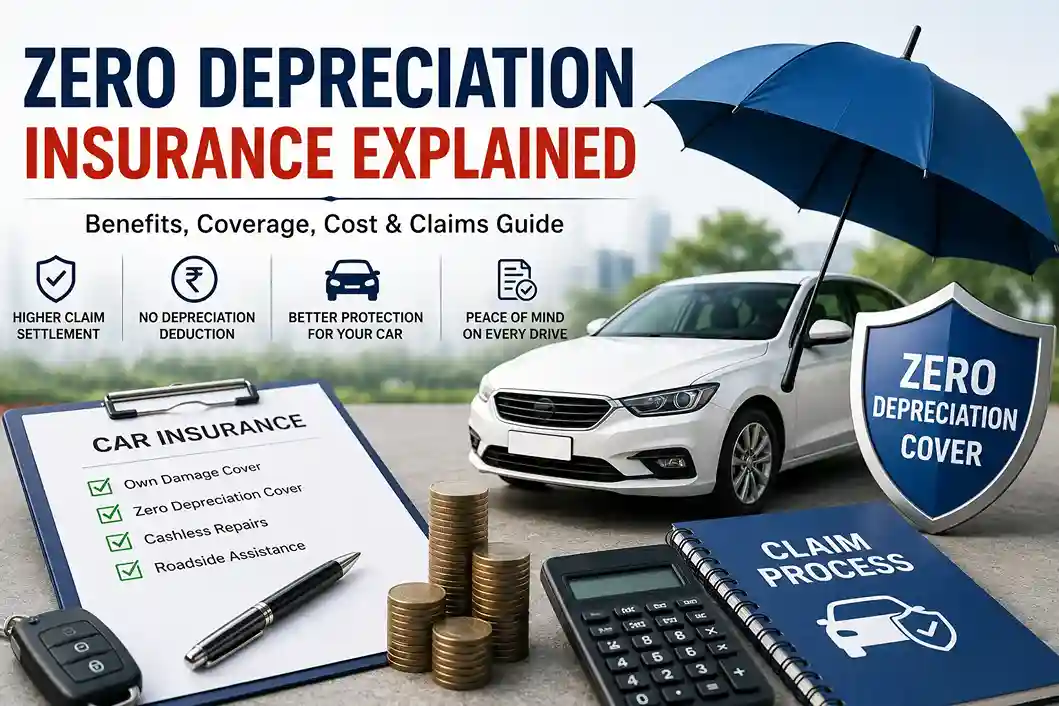
Car insurance is something most vehicle owners purchase without giving much thought to the details. However, when an accident happens and a claim is filed, many people are surprised to discover that their insurer doesn’t pay the full repair cost. This is where Zero Depreciation Insurance Explained becomes an important topic for every car owner.
A standard comprehensive insurance policy factors depreciation into claim settlements. This means the insurer deducts the value lost due to age and wear before calculating compensation. With a zero depreciation add-on, however, depreciation deductions on covered parts are significantly reduced or eliminated, helping policyholders receive a higher claim amount.
Whether you’ve recently purchased a new car or are reviewing your existing coverage, understanding how zero depreciation insurance works can help you avoid unexpected out-of-pocket expenses. If you’re already researching ownership costs through guides such as Hybrid Car Maintenance Cost or EV Maintenance Cost vs Petrol, insurance protection should also be part of your financial planning.
This guide explains zero depreciation insurance, its benefits, limitations, costs, and whether it’s worth the additional premium.
What Is Zero Depreciation Insurance?
Zero depreciation insurance, often called:
- Nil depreciation insurance
- Bumper-to-bumper insurance
- Depreciation waiver cover
is an add-on available with comprehensive car insurance policies.
Normally, insurance companies consider depreciation when settling claims. Since vehicle parts lose value over time, insurers deduct a percentage of the replacement cost before reimbursing the policyholder.
With zero depreciation coverage, the insurer largely ignores depreciation on covered parts, resulting in higher claim settlements.
For example, if a damaged bumper costs ₹20,000 to replace and depreciation deductions would normally reduce the claim payout, a zero depreciation policy may cover a much larger portion of the repair cost.
Why Depreciation Matters in Insurance Claims
Before understanding the benefits of zero depreciation coverage, it’s helpful to understand depreciation itself.
Depreciation refers to the reduction in value of vehicle components over time due to:
- Aging
- Wear and tear
- Usage
- Environmental exposure
According to the Insurance Regulatory and Development Authority of India (IRDAI), insurers use depreciation schedules to determine claim payouts for various vehicle components. You can learn more through the official IRDAI insurance guidance.
Without zero depreciation coverage, policyholders often pay a significant portion of repair expenses themselves.
How Zero Depreciation Insurance Works
Standard Insurance Claim Example
Suppose:
- Replacement cost of damaged plastic bumper: ₹20,000
- Applicable depreciation: 50%
Under a regular comprehensive policy:
- Insurance may pay: ₹10,000
- Owner pays: ₹10,000
Zero Depreciation Claim Example
With zero depreciation coverage:
- Replacement cost: ₹20,000
- Depreciation deduction: minimal or none (subject to policy terms)
Insurance may cover most or all eligible repair expenses.
This difference becomes particularly important when repairing modern vehicles equipped with expensive components.
For owners researching long-term vehicle expenses through articles like Best Tyre Brands in India, understanding insurance-related costs can be equally valuable.
Components Commonly Covered Under Zero Depreciation Insurance Explained
Coverage varies by insurer, but commonly includes:
Plastic Parts
- Bumpers
- Headlamp housings
- Interior plastic components
Rubber Components
- Seals
- Hoses
Fiber Components
- Fiber body panels
Metal Parts
Depreciation on certain metal parts may also be waived depending on policy terms.
Always review policy documents carefully because coverage conditions differ among insurers.
Major Benefits of Zero Depreciation Insurance
Higher Claim Settlement Amounts
The biggest advantage is receiving a higher claim payout.
Without depreciation deductions, repair costs become significantly more manageable.
Better Protection for New Cars
Zero depreciation coverage is especially valuable for:
- Brand-new vehicles
- Vehicles less than 5 years old
- Premium cars
New vehicles have higher parts replacement costs, making depreciation deductions more noticeable.
Reduced Out-of-Pocket Expenses
In real-world situations, even minor accidents can generate substantial repair bills.
A damaged bumper, side mirror, or headlamp assembly may cost thousands of rupees.
Zero depreciation coverage helps reduce these unexpected expenses.
Peace of Mind
Knowing that depreciation deductions won’t significantly affect claim settlements can make ownership less stressful.
This is particularly useful for drivers frequently navigating crowded urban traffic.
Who Should Consider Zero Depreciation Insurance?
New Car Owners
This add-on is generally most beneficial for newly purchased vehicles.
If you’ve recently completed a Pre-Delivery Inspection Checklist before taking delivery of a new car, protecting that investment with enhanced insurance coverage may make sense.
Luxury Car Owners
Luxury vehicle parts often carry higher replacement costs.
Even minor repairs can become expensive without adequate insurance coverage.
Urban Drivers
Drivers regularly dealing with:
- Heavy traffic
- Congested roads
- Limited parking space
may face a higher risk of minor collisions and scratches.
Inexperienced Drivers
New drivers may benefit from additional protection during their early years of vehicle ownership.
Limitations of Zero Depreciation Insurance
Although the coverage offers clear benefits, it is not unlimited.
Higher Premium Cost
Zero depreciation coverage increases insurance premiums.
The exact increase varies by:
- Vehicle age
- Insurer
- Vehicle category
- Coverage terms
Claim Limits
Many insurers impose restrictions such as:
- Maximum number of claims per year
- Vehicle age eligibility
Always verify specific policy conditions.
Normal Wear and Tear Is Not Covered
Zero depreciation insurance does not cover:
- Routine maintenance
- Mechanical failures
- Aging-related deterioration
Vehicle maintenance remains important regardless of insurance coverage.
For example, following recommendations from our Brake Fluid Change Guide can help prevent avoidable mechanical issues.
Zero Depreciation Insurance vs Standard Comprehensive Insurance
| Feature | Standard Insurance | Zero Depreciation Insurance |
|---|---|---|
| Depreciation Deduction | Yes | Minimal or None |
| Claim Settlement Amount | Lower | Higher |
| Premium Cost | Lower | Higher |
| New Car Protection | Moderate | Excellent |
| Out-of-Pocket Repairs | Higher | Lower |
The choice depends largely on your vehicle age and risk tolerance.
Is Zero Depreciation Insurance Worth the Extra Cost?
For many owners, the answer is yes.
Consider this scenario:
A minor accident damages:
- Front bumper
- Headlight assembly
- Side panel
Repair bill: ₹45,000
Without zero depreciation coverage:
- Significant depreciation deductions apply.
- Owner pays a larger share.
With zero depreciation:
- Insurance covers a greater portion of repair expenses.
In many cases, one claim may recover more value than the additional premium paid.
Common Mistakes Buyers Make
Choosing Based Only on Premium Price
The cheapest insurance policy isn’t always the best value.
Many drivers focus solely on premium costs without reviewing claim settlement terms.
Ignoring Policy Conditions
Coverage details differ among insurers.
Always read:
- Exclusions
- Claim limits
- Eligibility criteria
Assuming Every Part Is Covered
Some components may still have restrictions.
Policy wording matters.
Not Comparing Add-On Packages
Different insurers offer varying levels of protection.
Comparing policies carefully can reveal significant differences in benefits.
Best Practices When Buying Zero Depreciation Insurance
Compare Multiple Insurers
Review:
- Premium costs
- Claim settlement records
- Coverage limits
- Add-on options
You can compare insurance providers through resources available on the official Insurance Information Bureau of India.
Read Policy Documents Carefully
Many disputes arise because policyholders misunderstand coverage details.
Always review terms before purchase.
Consider Vehicle Age
Zero depreciation coverage generally offers the best value for newer vehicles.
Older vehicles may not qualify.
Evaluate Repair Costs
Modern cars contain:
- Advanced lighting systems
- Electronic sensors
- ADAS components
- Expensive body panels
Repair costs continue rising, making enhanced protection increasingly attractive.
The National Highway Traffic Safety Administration (NHTSA) highlights how advanced vehicle technologies can affect repair complexity and replacement costs.
How Zero Depreciation Insurance Helps During Accidents
In real-world situations, accident repairs often involve multiple components.
For example:
- Bumper replacement
- Headlamp replacement
- Fender repairs
- Plastic trim replacement
Without depreciation protection, claim deductions can be frustrating.
With zero depreciation coverage, reimbursement is generally more favorable.
This can significantly reduce financial stress following an accident.
Frequently Asked Questions
What is zero depreciation insurance?
It is an add-on cover that minimizes or eliminates depreciation deductions on eligible vehicle parts during insurance claim settlements.
Is zero depreciation insurance available for old cars?
Most insurers offer it primarily for newer vehicles, often up to a specific age limit.
Does zero depreciation insurance cover engine damage?
Not automatically. Engine protection usually requires a separate add-on unless specifically included.
Is zero depreciation insurance expensive?
Premiums are higher than standard comprehensive policies, but the additional cost is often relatively small compared to potential claim savings.
How many claims can I make under zero depreciation coverage?
The number of allowed claims depends on the insurer and policy terms.
Is zero depreciation insurance mandatory?
No. It is an optional add-on that can be purchased with a comprehensive policy.
Conclusion
Understanding Zero Depreciation Insurance Explained can help car owners make smarter insurance decisions and avoid unexpected repair expenses. While standard comprehensive insurance policies apply depreciation deductions to replacement parts, zero depreciation coverage helps maximize claim settlements and reduce out-of-pocket costs.
This add-on is particularly valuable for new cars, premium vehicles, urban drivers, and anyone seeking greater financial protection against repair expenses. Although it increases annual premiums, the additional cost is often justified by the higher reimbursement received during claims.
Before purchasing any policy, compare insurers, review coverage conditions carefully, and consider your vehicle’s age and repair costs. For many drivers, Zero Depreciation Insurance Explained isn’t just an insurance concept—it’s a practical tool for protecting one of their most valuable assets while reducing financial surprises after an accident.
Author: Carsinfos Editorial Team
Published: Aug 10th, 2026