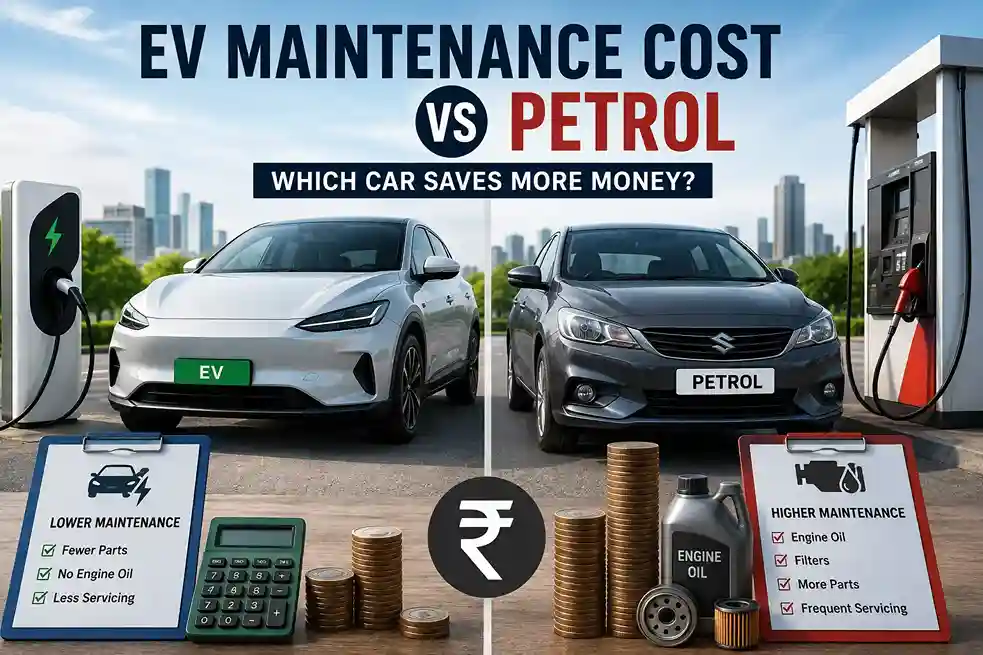
When buying a new vehicle, the purchase price is only one part of the total ownership cost. Regular servicing, repairs, replacement parts, and long-term maintenance all contribute to how much you’ll spend over the years. That’s why understanding EV Maintenance Cost vs Petrol is essential before deciding between an electric vehicle (EV) and a conventional petrol car.
Electric vehicles have fewer moving parts than petrol cars, which often results in lower routine maintenance costs. However, they also come with unique components such as high-voltage batteries that can influence long-term ownership expenses. Petrol cars, on the other hand, require more frequent servicing but have a well-established service network across India.
In real-world situations, the right choice depends on your driving habits, annual mileage, charging availability, and how long you plan to keep the vehicle.
If you’re considering purchasing a new vehicle, our Pre-Delivery Inspection Checklist explains what to inspect before accepting delivery of either an electric or petrol car.
Quick Answer
In most cases, EV maintenance costs are lower than petrol car maintenance costs because electric vehicles don’t require engine oil changes, spark plug replacements, timing belts, or many other engine-related services. However, battery replacement costs, charging infrastructure, and driving patterns should also be considered when comparing total ownership expenses.
According to the International Energy Agency (IEA), electric vehicles generally require less routine maintenance because they have fewer moving parts than internal combustion engine vehicles.
Table of Contents
- EV vs Petrol Car Maintenance Overview
- Why EVs Usually Cost Less to Maintain
- Annual Maintenance Cost Comparison
- Major Maintenance Differences
- Long-Term Ownership Costs
- Battery Replacement
- FAQs
EV vs Petrol Car Maintenance Overview
Although both vehicle types require regular inspections, their maintenance needs differ significantly.
Petrol Cars Typically Need
- Engine oil changes
- Oil filter replacement
- Air filter replacement
- Fuel filter maintenance
- Spark plug replacement
- Clutch servicing (manual cars)
- Timing belt replacement (certain models)
- Engine coolant maintenance
- Exhaust system repairs
Electric Vehicles Typically Need
- Brake inspection
- Tyre rotation
- Suspension inspection
- Cabin air filter replacement
- Coolant inspection (battery cooling systems in some models)
- Software updates
- Battery health checks
Because EVs eliminate many engine components, routine servicing is generally simpler.
Why EVs Usually Cost Less to Maintain
One of the biggest advantages of electric vehicles is their mechanical simplicity.
An electric motor contains significantly fewer moving parts than a petrol engine.
This means there are fewer components that can wear out or require scheduled replacement.
For example, an EV does not need:
- Engine oil
- Oil filters
- Spark plugs
- Fuel injectors
- Timing belts
- Clutch replacement (most EVs)
- Engine air filters
- Exhaust systems
This reduces routine service visits and lowers maintenance expenses over time.
The Ministry of Heavy Industries, Government of India also highlights reduced maintenance requirements as one of the advantages of electric mobility.
Annual Maintenance Cost Comparison
Although actual costs vary depending on the vehicle model, driving conditions, and service center, a general comparison looks like this:
| Maintenance Item | Electric Vehicle | Petrol Car |
|---|---|---|
| Engine Oil | Not Required | Regular Changes |
| Oil Filter | Not Required | Regular Replacement |
| Spark Plugs | Not Required | Periodic Replacement |
| Brake Wear | Lower | Higher |
| Transmission Service | Minimal | Regular Maintenance |
| Air Filters | Cabin Filter Only | Engine & Cabin Filters |
| Exhaust Repairs | None | Possible |
| Cooling System | Limited | More Complex |
| Software Updates | Occasionally | Rare |
| Routine Maintenance | Lower | Higher |
In general, EV owners tend to spend less on routine maintenance over the life of the vehicle, though actual savings depend on usage patterns.
Engine vs Electric Motor
The biggest maintenance difference lies in the powertrain.
Petrol Engine
Contains hundreds of moving parts including:
- Pistons
- Valves
- Camshaft
- Crankshaft
- Fuel injectors
- Timing components
Each of these components requires lubrication and may eventually need servicing or replacement.
Electric Motor
An electric motor has far fewer moving parts.
Benefits include:
- Less mechanical wear
- Lower maintenance
- Fewer fluid changes
- Higher mechanical efficiency
This simpler design is one of the main reasons routine EV servicing is often less expensive.
Oil Changes
Oil changes are one of the most common maintenance expenses for petrol vehicles.
Depending on the manufacturer’s schedule, engine oil and filters typically require replacement every few thousand kilometres or at specified time intervals.
Our guide on How Often Should You Change Engine Oil in India explains why timely oil changes are essential for engine health.
Electric vehicles eliminate this maintenance item entirely because they don’t use engine oil.
Brake Maintenance
Many people are surprised to learn that EV brake components often last longer.
This is mainly because of regenerative braking, which slows the vehicle using the electric motor and reduces wear on the brake pads and discs.
In real-world city driving, regenerative braking can significantly reduce the frequency of brake pad replacements compared to petrol vehicles.
Transmission Maintenance
Most petrol cars use multi-speed transmissions that require periodic servicing.
Electric vehicles generally use a much simpler single-speed reduction gear, resulting in fewer maintenance requirements.
Cooling Systems
Both vehicle types require cooling systems, but they serve different purposes.
Petrol Cars
Cool the:
- Engine
- Radiator
- Transmission (some vehicles)
Electric Vehicles
May cool:
- Battery pack
- Power electronics
- Electric motor
Although EV cooling systems still require periodic inspection, they are generally less complex than those in petrol vehicles.
Filters and Fluids
Petrol vehicles typically require replacement of:
- Engine oil
- Oil filters
- Fuel filters
- Air filters
- Transmission fluid
Electric vehicles usually require:
- Cabin air filter replacement
- Brake fluid inspection
- Coolant inspection (depending on the model)
- Windshield washer fluid refills
As a result, routine maintenance schedules for EVs are often shorter and involve fewer consumable parts.
If you’re also comparing running costs beyond maintenance, our E20 Petrol Is Safe or Not for Engine article explains how fuel choices can affect petrol vehicle ownership and maintenance.
Long-Term Ownership Cost Comparison
Routine servicing is only one part of the ownership equation. Over five to ten years, factors such as fuel or charging costs, replacement parts, depreciation, and major repairs all influence the total cost of owning a vehicle.
In general:
| Ownership Factor | Electric Vehicle | Petrol Car |
|---|---|---|
| Routine servicing | Lower | Higher |
| Fuel/Energy cost | Lower (charging) | Higher (petrol) |
| Engine maintenance | Minimal | Regular |
| Battery replacement | Possible after many years | Not applicable |
| Exhaust repairs | Not required | May be required |
| Oil changes | Not required | Required |
| Brake wear | Lower | Higher |
| Long-term maintenance | Generally lower | Generally higher |
For drivers covering high annual mileage, the lower running and maintenance costs of an EV may offset its higher purchase price over time. However, if you drive only occasionally or have limited access to charging, a petrol vehicle may still be a practical choice.
According to the International Energy Agency (IEA), EVs typically have lower operating and maintenance costs because they contain fewer moving parts and require less routine servicing.
Battery Replacement Costs and Lifespan
Battery replacement is one of the most discussed aspects of EV ownership.
Fortunately, modern EV batteries are designed to last for many years.
Most manufacturers provide battery warranties of 8 years or around 160,000 km (actual terms vary by manufacturer and model).
Factors that influence battery life include:
- Charging habits
- Climate
- Driving style
- Battery chemistry
- Software management
- Fast charging frequency
In real-world situations, many EV owners may never need a battery replacement during their ownership period.
If replacement becomes necessary after the warranty period, it can be one of the most expensive maintenance items. However, battery costs have gradually declined over the past decade as EV production has expanded.
Hidden Maintenance Costs to Consider
Although EVs usually require less routine maintenance, buyers should understand the potential hidden costs associated with both vehicle types.
Electric Vehicles
Possible long-term expenses include:
- Home charging installation
- Battery replacement (if required after warranty)
- Charging cable replacement
- Specialized repair facilities in some locations
Petrol Vehicles
Common long-term expenses include:
- Engine repairs
- Fuel system maintenance
- Clutch replacement (manual cars)
- Exhaust repairs
- Timing belt replacement (certain models)
- Catalytic converter replacement
Evaluating these potential costs helps provide a more balanced comparison.
EV Maintenance cost vs Petrol: Which Is Better for City Driving?
For urban commuters, EVs often have several advantages.
Electric Vehicles
- Regenerative braking reduces brake wear.
- Lower running costs for frequent stop-and-go traffic.
- Quiet driving experience.
- Instant torque for smooth acceleration.
- Zero tailpipe emissions.
Petrol Cars
- Faster refueling.
- No dependence on charging infrastructure.
- Easier long-distance flexibility.
If most of your driving involves short daily commutes with convenient charging access, an EV may offer lower maintenance and operating costs.
EV vs Petrol: Which Is Better for Highway Driving?
For regular highway travel, both options have strengths.
Electric Vehicles
- Smooth, quiet driving.
- Lower energy cost per kilometre.
- Strong acceleration.
Petrol Cars
- Quick refueling.
- Greater availability of fuel stations.
- Less concern about charging stops on long journeys.
Your choice depends on trip frequency, route planning, and charging availability along your regular routes.
Common Mistakes Buyers Make
Many first-time buyers focus only on the purchase price.
Common mistakes include:
- Ignoring total ownership cost
- Not considering charging availability
- Assuming every EV has identical maintenance requirements
- Forgetting battery warranty details
- Ignoring service network availability
- Comparing only fuel costs
- Skipping manufacturer maintenance schedules
Making an informed decision requires evaluating both short-term and long-term expenses.
Best Practices to Reduce Maintenance Costs
Whether you own an EV or a petrol car, proper maintenance helps improve reliability and reduce unexpected expenses.
For Electric Vehicles
- Follow the manufacturer’s charging recommendations.
- Avoid frequent deep battery discharge where possible.
- Install software updates when available.
- Inspect tyres regularly.
- Maintain the battery cooling system as recommended.
For Petrol Cars
- Change engine oil on schedule.
- Use the recommended fuel grade.
- Replace filters as specified.
- Monitor coolant and brake fluid levels.
- Address warning lights promptly.
Our guide on Check Engine Light Explained explains why dashboard warning lights should never be ignored.
Real-World Ownership Examples
Example 1: Daily City Commuter
A driver covering 40–60 km every day with home charging may benefit from:
- Lower charging costs
- Reduced servicing
- Less brake wear
- Fewer scheduled maintenance visits
An EV can be a cost-effective option in this scenario.
Example 2: Occasional Weekend Driver
Someone who drives only a few thousand kilometres each year may find that maintenance savings alone do not justify the higher upfront cost of an EV.
In this case, a petrol vehicle could remain a practical choice.
Example 3: Frequent Highway Traveller
Drivers who regularly undertake long-distance trips should compare:
- Charging infrastructure on their routes
- Travel time
- Fuel or charging costs
- Service availability
The right option depends on individual travel patterns rather than a one-size-fits-all answer.
Frequently Asked Questions
Is EV maintenance cheaper than petrol car maintenance?
Generally, yes. EVs usually require less routine maintenance because they do not need engine oil changes, spark plug replacements, or many engine-related services.
Do electric vehicles require regular servicing?
Yes. EVs still require inspections of brakes, tyres, suspension, battery systems, cabin filters, and other components, but their service schedules are often simpler than those of petrol vehicles.
Is battery replacement common?
No. Most modern EV batteries are designed for long service life and are backed by manufacturer warranties. Many owners will not need a battery replacement during their normal ownership period.
Which vehicle has fewer moving parts?
Electric vehicles have significantly fewer moving mechanical components than petrol cars, contributing to lower routine maintenance requirements.
Are EV brake pads replaced less often?
Yes. Regenerative braking reduces the workload on conventional brakes, which can extend the lifespan of brake pads.
Is charging always cheaper than petrol?
Charging costs vary depending on electricity tariffs and charging methods. In many situations, home charging can be more economical than using petrol, but actual savings depend on local energy prices and driving habits.
Which is better for long-term ownership?
For many high-mileage drivers with reliable charging access, an EV may offer lower maintenance and operating costs over the long term. The best choice depends on purchase price, annual mileage, charging availability, and expected ownership duration.
Should maintenance cost be the only factor when buying a car?
No. Buyers should also consider safety, practicality, charging or fuel availability, resale value, warranty coverage, and driving requirements before making a decision.
Key Takeaways
- EV Maintenance Cost vs Petrol generally favors electric vehicles for routine servicing because they have fewer moving parts and require fewer scheduled maintenance tasks.
- Petrol cars typically need regular oil changes, filter replacements, spark plugs, and additional engine-related servicing.
- EVs eliminate many of these routine expenses but still require tyre, brake, suspension, and battery system inspections.
- Battery replacement is a potential long-term cost, although modern batteries are designed for extended service life and are usually covered by long warranties.
- Your driving habits, charging access, annual mileage, and ownership period should guide your buying decision.
Conclusion
When comparing EV Maintenance Cost vs Petrol, electric vehicles generally have an advantage in routine maintenance due to their simpler mechanical design and reduced servicing requirements. They eliminate many traditional maintenance tasks such as engine oil changes, spark plug replacements, and exhaust system repairs, helping many owners lower long-term operating costs.
However, maintenance is only one part of the ownership experience. Battery warranty, charging infrastructure, annual driving distance, purchase price, and resale value all influence the overall value of an EV compared with a petrol car. By evaluating your driving needs and considering total ownership costs rather than fuel expenses alone, you can choose the vehicle that best fits your lifestyle and budget.
Author: Carsinfos Editorial Team
Published: Aug 3rd, 2026