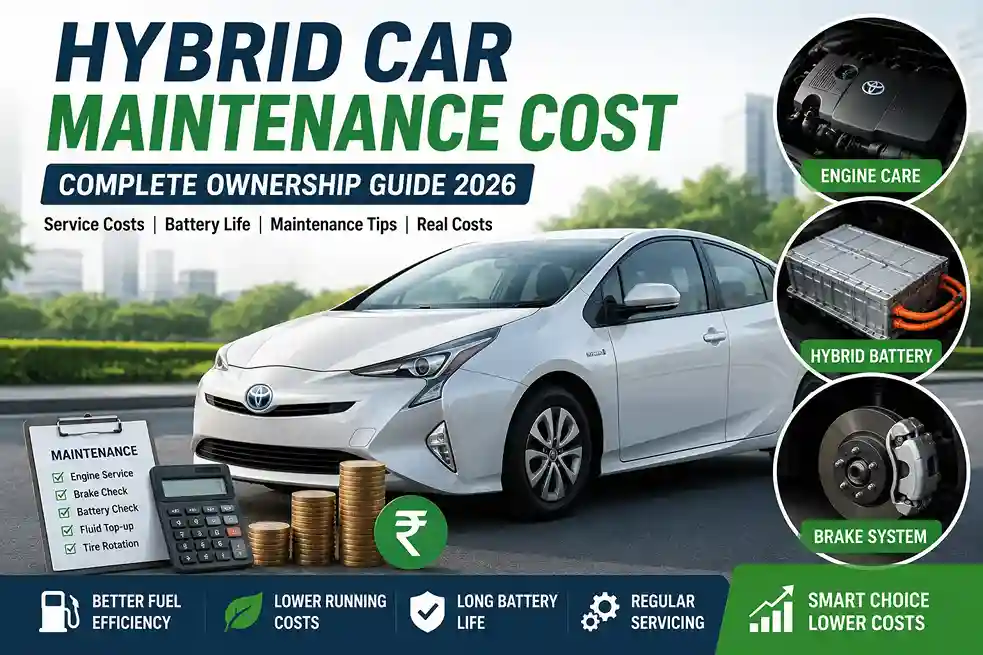
Hybrid vehicles have become increasingly popular among drivers who want better fuel efficiency without fully switching to an electric vehicle. However, one question continues to come up before purchase: what is the real hybrid car maintenance cost compared to petrol and electric vehicles?
The answer is more nuanced than many people expect. Hybrid cars combine a conventional internal combustion engine with an electric motor and battery system. This means they benefit from reduced fuel consumption while still requiring many of the maintenance procedures associated with traditional vehicles.
For drivers considering a hybrid vehicle, understanding long-term ownership costs is just as important as evaluating purchase price and fuel economy. If you’ve already explored topics such as EV Maintenance Cost vs Petrol, you’ll find that hybrids occupy an interesting middle ground between the two technologies.
In this guide, we’ll examine hybrid car maintenance costs, common service requirements, battery lifespan, real-world ownership experiences, and practical ways to keep maintenance expenses under control.
Understanding Hybrid Car Maintenance Cost
A hybrid vehicle combines:
- Petrol engine
- Electric motor
- High-voltage battery
- Regenerative braking system
- Power control electronics
Because hybrids use both petrol and electric components, maintenance requirements differ slightly from conventional vehicles.
The good news is that many hybrid owners discover maintenance costs are not significantly higher than standard petrol cars during the first several years of ownership.
According to the U.S. Department of Energy Alternative Fuels Data Center, electrified vehicles often experience reduced wear on certain components because electric motors assist propulsion and regenerative braking reduces brake system usage.
Why Many Drivers Worry About Hybrid Maintenance
The biggest concern usually revolves around battery replacement.
Many prospective buyers assume hybrid batteries fail quickly and cost a fortune to replace. In reality, modern hybrid battery systems are designed for long-term use.
Manufacturers such as Toyota, Honda, and Hyundai commonly provide lengthy warranty coverage for hybrid components.
The International Energy Agency (IEA) notes that advancements in battery technology continue to improve durability and reliability across electrified vehicle platforms.
In real-world situations, many hybrid owners drive for years without major battery-related expenses.
Typical Hybrid Car Maintenance Cost Per Year
Annual maintenance costs vary depending on:
- Vehicle brand
- Driving conditions
- Mileage
- Service center pricing
- Component wear
A typical hybrid vehicle owner may encounter:
| Maintenance Item | Typical Frequency |
|---|---|
| Engine oil change | Every 8,000–15,000 km |
| Air filter replacement | 15,000–20,000 km |
| Brake fluid inspection | As recommended |
| Coolant inspection | Periodically |
| Tire rotation | Every 8,000–10,000 km |
| Battery system inspection | During scheduled service |
Because hybrid systems often reduce engine workload, some components may experience less wear compared with conventional petrol vehicles.
For example, if you’re familiar with the importance of regular fluid maintenance discussed in our Brake Fluid Change Guide, the same principles apply to hybrid vehicles.
Hybrid Battery Maintenance and Lifespan
How Long Do Hybrid Batteries Last?
One of the most common questions about hybrid car maintenance cost concerns battery life.
Modern hybrid batteries commonly last:
- 8–15 years
- 150,000–300,000+ kilometers
Actual lifespan depends on:
- Climate conditions
- Driving habits
- Charging cycles
- Manufacturer design
Unlike fully electric vehicles, hybrid batteries generally experience shallower charge-discharge cycles, which can help extend lifespan.
Do Hybrid Batteries Require Routine Maintenance?
In most cases, hybrid batteries require very little direct maintenance.
Manufacturers typically inspect battery health during scheduled services.
Owners should:
- Keep cooling vents unobstructed
- Follow service schedules
- Address warning lights promptly
If a dashboard warning appears, understanding indicators discussed in our Check Engine Light Explained guide can help determine whether immediate diagnosis is needed.
Hybrid Brake Systems Often Last Longer
One surprising advantage of hybrid ownership involves brake wear.
Hybrid vehicles use regenerative braking.
Instead of relying entirely on brake pads, the electric motor helps slow the vehicle while recovering energy.
Benefits include:
- Reduced brake pad wear
- Reduced rotor wear
- Lower maintenance frequency
In real-world situations, some hybrid owners report significantly longer brake pad life compared with conventional petrol vehicles driven under similar conditions.
According to the National Renewable Energy Laboratory (NREL), regenerative braking can contribute to reduced mechanical brake usage in electrified vehicles.
Engine Maintenance Requirements
Despite their electric components, hybrid vehicles still contain petrol engines.
This means owners must continue performing:
- Engine oil changes
- Spark plug replacement
- Air filter replacement
- Coolant maintenance
The difference is that hybrid engines often run less frequently than traditional engines.
As a result, some components may experience reduced wear over time.
Drivers already familiar with How Often Should You Change Engine Oil in India should continue following manufacturer-recommended intervals for hybrid models.
Comparing Hybrid, Petrol, and EV Maintenance Costs
Understanding where hybrids fit requires comparing all three vehicle categories.
| Maintenance Area | Hybrid | Petrol | EV |
|---|---|---|---|
| Oil Changes | Yes | Yes | No |
| Battery Maintenance | Minimal | No | Moderate |
| Brake Wear | Lower | Higher | Lower |
| Engine Components | Yes | Yes | No |
| Fuel System | Yes | Yes | No |
| Electric Components | Yes | No | Yes |
Hybrid vehicles often provide a balanced ownership experience.
They typically require:
- Less maintenance than petrol vehicles in some areas
- More maintenance than EVs in others
This balance is why many buyers compare hybrids alongside articles like Best Tyre Brands in India and EV ownership guides before making a purchase decision.
Common Factors That Increase Hybrid Car Maintenance Cost
Not all maintenance expenses are unavoidable.
Several factors can increase ownership costs unnecessarily.
Skipping Scheduled Services
Ignoring service intervals can lead to:
- Reduced efficiency
- Premature component wear
- Expensive repairs
Ignoring Warning Lights
Many owners postpone diagnostics when warning lights appear.
Small issues can eventually become larger repairs.
Poor Driving Habits
Aggressive driving can increase wear on:
- Tires
- Suspension components
- Engine systems
Neglecting Tire Care
Incorrect tire pressure can affect:
- Fuel economy
- Tire lifespan
- Handling
Common Mistakes Hybrid Owners Make
Assuming No Maintenance Is Required
A common misconception is that hybrid vehicles require virtually no maintenance.
While they often need less maintenance than conventional vehicles, routine servicing remains essential.
Using Non-Specialized Repair Facilities
Not every workshop has experience with hybrid systems.
Choosing technicians trained in hybrid technology can help avoid diagnostic mistakes.
Delaying Battery Diagnostics
Battery performance issues are often easier and less expensive to address when identified early.
Best Practices for Reducing Hybrid Maintenance Costs
Follow the Manufacturer’s Service Schedule
Routine maintenance remains the most effective way to avoid costly repairs.
Monitor Tire Condition
Tires significantly affect efficiency and handling.
Regular inspections can help maximize lifespan.
Keep Software Updated
Many modern hybrids include software-controlled systems.
Updates can improve efficiency and performance.
Drive Smoothly
Gentle acceleration and braking reduce wear on multiple vehicle systems.
Address Small Problems Early
Minor issues often become major repairs when ignored.
Real-World Ownership Experience
Many hybrid owners report positive long-term maintenance experiences.
For example, a commuter driving 15,000–20,000 kilometers annually may find:
- Fewer brake replacements
- Improved fuel economy
- Reduced engine strain
- Lower overall operating costs
However, ownership experiences vary depending on vehicle model and maintenance habits.
A well-maintained hybrid often delivers predictable operating costs over many years.
Is Hybrid Maintenance More Expensive Than Petrol?
The answer depends on the ownership period.
During the first several years:
- Routine maintenance costs are often comparable.
- Brake expenses may be lower.
- Fuel savings can be significant.
Over longer periods:
- Potential battery replacement becomes a consideration.
- However, many owners never encounter battery replacement during typical ownership cycles.
As battery technology improves, long-term ownership costs continue evolving.
The International Energy Agency’s EV Outlook highlights ongoing improvements in electrified vehicle technology, reliability, and efficiency.
Should You Buy a Hybrid Vehicle?
A hybrid may be a good choice if you:
- Drive frequently in city traffic
- Want better fuel economy
- Prefer not to rely entirely on charging infrastructure
- Want lower emissions than a conventional petrol vehicle
It may be less suitable if:
- You primarily drive very short distances
- You have easy access to EV charging and prefer a fully electric vehicle
- Your driving patterns don’t benefit significantly from regenerative braking
Frequently Asked Questions
Are hybrid cars expensive to maintain?
Generally, hybrid maintenance costs are similar to or slightly higher than petrol vehicles, depending on model and ownership duration.
How long does a hybrid battery last?
Most modern hybrid batteries last between 8 and 15 years, with many exceeding 200,000 kilometers.
Do hybrid vehicles require oil changes?
Yes. Hybrid vehicles still use petrol engines and require regular oil changes.
Are hybrid brakes cheaper to maintain?
Often yes. Regenerative braking reduces wear on brake pads and rotors.
Is hybrid maintenance cheaper than EV maintenance?
Typically no. Fully electric vehicles generally have fewer moving parts and fewer routine maintenance requirements.
Should I worry about battery replacement?
Most owners do not experience battery failure during normal ownership periods, especially when maintenance schedules are followed.
Conclusion
Understanding hybrid car maintenance cost is essential before purchasing any electrified vehicle. While hybrids combine both petrol and electric technologies, maintenance expenses are often manageable and predictable when owners follow recommended service schedules.
In many cases, hybrid vehicles benefit from reduced brake wear, improved fuel efficiency, and lower engine strain compared with conventional petrol cars. Although battery replacement remains a long-term consideration, modern hybrid systems are designed for durability and reliability.
For drivers seeking a practical balance between traditional petrol vehicles and fully electric cars, hybrids continue to offer an attractive ownership experience. By maintaining your vehicle properly, monitoring wear items, and addressing problems early, you can keep hybrid car maintenance cost under control while enjoying the efficiency benefits that make hybrid technology increasingly popular.
Author: Carsinfos Editorial Team
Published: Aug 7th, 2026