
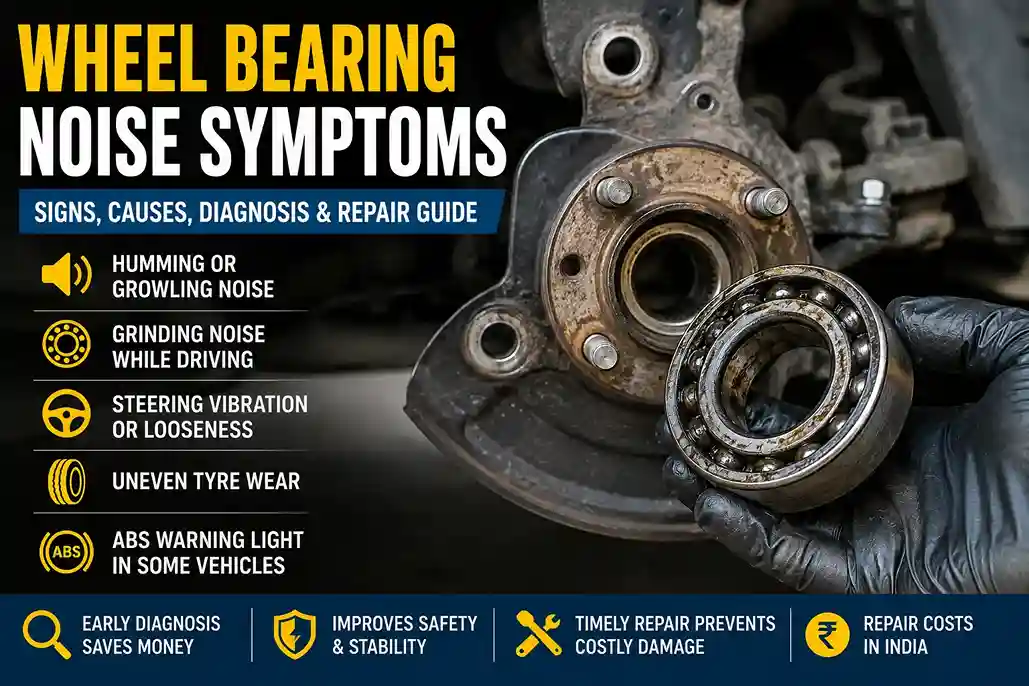
Wheel bearing noise symptoms are often one of the earliest warning signs that a critical suspension component is beginning to fail. A worn wheel bearing can produce humming, grinding, growling, or rumbling noises that usually become louder as your speed increases. Ignoring these symptoms may eventually affect steering, braking, tyre wear, and overall driving safety.
Many drivers mistake wheel bearing noise for tyre problems or road noise because the symptoms develop gradually. In real-world situations, the sound may begin as a faint hum on the highway and slowly become louder over weeks or months.
Understanding the warning signs early can help you avoid more expensive repairs and reduce the risk of further damage to your vehicle.
If you’ve recently noticed unusual vibrations while driving, you may also find our guide on Why Your Car Is Vibrating While Driving helpful, as vibration and wheel bearing problems sometimes occur together.
Quick Answer
A bad wheel bearing typically produces a humming, growling, grinding, or rumbling noise that changes with vehicle speed. Other symptoms may include steering vibration, uneven tyre wear, ABS warning lights on some vehicles, and loose wheel movement. If these signs appear, have the vehicle inspected promptly to avoid further damage and maintain safe driving.
Table of Contents
- What Is a Wheel Bearing?
- Common Wheel Bearing Noise Symptoms
- What Causes Wheel Bearings to Fail?
- Wheel Bearing Noise vs Tyre Noise
- How Dangerous Is a Bad Wheel Bearing?
- Diagnosis
- Repair Costs
- FAQs
What Is a Wheel Bearing?
A wheel bearing is a precision-engineered set of steel balls or tapered rollers enclosed inside a metal housing called the hub assembly.
Its job is simple but extremely important:
- Supports the vehicle’s weight
- Allows the wheel to rotate smoothly
- Reduces friction
- Helps maintain steering stability
- Supports safe braking performance
Every time your vehicle moves, the wheel bearings rotate thousands of times. Over many years, normal wear, water contamination, impact damage, or lack of lubrication can eventually cause them to fail.
Common Wheel Bearing Noise Symptoms
1. Humming Noise That Gets Louder with Speed
This is usually the first symptom drivers notice.
The sound often starts as a quiet humming at moderate speeds before becoming more noticeable above 50–60 km/h.
Unlike engine noise, it generally changes with vehicle speed rather than engine RPM.
For example, if you shift into neutral while coasting and the humming remains, the source is more likely to be a wheel bearing than the engine.
2. Grinding Noise While Driving
As the bearing wears further, lubrication breaks down and the internal metal components begin rubbing against each other.
This can produce:
- Grinding
- Scraping
- Metallic noises
Grinding usually indicates the bearing has deteriorated significantly and should be inspected immediately.
3. Growling or Rumbling Sound
Many drivers describe a worn wheel bearing as sounding similar to aggressive off-road tyres.
The growling noise often becomes louder during highway driving.
In real-world situations, the sound may seem to come from one corner of the vehicle but can sometimes echo through the suspension, making it difficult to identify the exact wheel without inspection.
4. Noise Changes While Turning
One of the strongest indicators of a failing wheel bearing is a change in noise during turns.
For example:
- Turning left may increase the load on the right-side bearing.
- Turning right may increase the load on the left-side bearing.
If the humming becomes noticeably louder while turning in one direction, the bearing on the opposite side may be worn.
5. Steering Wheel Vibration
A damaged wheel bearing can create slight play inside the hub assembly.
This movement may lead to:
- Steering wheel vibration
- Reduced steering precision
- Less stable handling at higher speeds
If you’re also experiencing vibrations during acceleration or braking, our article on Why Your Car Loses Power While Accelerating may help identify other related issues.
6. Uneven Tyre Wear
When a wheel bearing develops excessive play, the wheel may no longer rotate perfectly straight.
This can contribute to:
- Uneven tread wear
- Feathering
- Irregular tyre wear patterns
If left unresolved, you may end up replacing tyres earlier than expected.
7. Loose Steering Feel
As bearing wear increases, the wheel hub may develop noticeable movement.
Drivers sometimes describe this as:
- Loose steering
- Wandering on highways
- Reduced steering confidence
Although other suspension components can also cause these symptoms, wheel bearings should always be inspected if they occur alongside unusual noises.
8. ABS Warning Light
On many modern vehicles, the wheel speed sensor is integrated with the wheel bearing or hub assembly.
If the bearing develops excessive movement or sensor damage, the ABS warning light may illuminate.
If that happens, check our guide on Car Dashboard Warning Lights Explained to understand what the warning means before scheduling an inspection.
9. Clicking or Clunking from the Wheel Area
While clicking noises are more commonly associated with CV joints, a severely worn wheel bearing or damaged hub assembly can sometimes produce clunking sounds when driving over bumps or changing direction.
Because several suspension components can create similar noises, a proper inspection is important before replacing parts.
What Causes Wheel Bearings to Fail?
Wheel bearings are designed to last for many years, but several factors can shorten their lifespan.
Normal Wear
Like brake pads and tyres, wheel bearings gradually wear out through regular use.
Poor Road Conditions
Driving frequently over:
- Large potholes
- Speed breakers at high speed
- Rough roads
- Construction zones
can place additional stress on the bearing assembly.
Water Contamination
If water enters the sealed bearing housing, lubrication can deteriorate and corrosion may begin inside the bearing.
Accident or Impact Damage
A hard impact with a curb or deep pothole can damage the bearing or wheel hub even if no visible damage is immediately apparent.
Incorrect Installation
Improper bearing installation or excessive tightening can significantly reduce bearing life.
Professional installation using the correct tools is recommended.
Wheel Bearing Noise vs Tyre Noise
| Feature | Wheel Bearing Noise | Tyre Noise |
|---|---|---|
| Changes with Speed | Yes | Yes |
| Changes While Turning | Usually | Rarely |
| Humming/Growling | Common | Sometimes |
| Steering Vibration | Possible | Possible |
| Uneven Tyre Wear | May occur | Often the cause |
| Gets Worse Over Time | Yes | Depends on tyre condition |
| Repair Required | Bearing replacement | Tyre rotation, balancing, or replacement |
Real-World Example
Imagine you’re driving on a smooth highway at around 80 km/h and notice a low humming sound that wasn’t there a few weeks ago. As your speed increases, the noise becomes louder. When you gently steer left, the humming becomes more pronounced, but it quietens when you steer right. These changing sounds can be a strong indication that one of the wheel bearings is wearing out. Addressing the issue early can prevent additional damage to the hub assembly, tyres, and suspension components.
Can You Drive with a Bad Wheel Bearing?
Technically, a vehicle with a worn wheel bearing may still be drivable for a short period, but it is not recommended to continue driving once the symptoms become noticeable.
A failing wheel bearing doesn’t usually fail overnight. However, if ignored, the condition can gradually worsen and affect:
- Steering stability
- Braking performance
- Tyre wear
- Suspension components
- Wheel hub assembly
In severe cases, excessive bearing wear can lead to wheel hub damage and significantly increase repair costs.
If the humming or grinding noise becomes noticeably louder or you experience steering vibration, arrange for an inspection as soon as possible rather than continuing to drive for extended periods.
How to Diagnose Wheel Bearing Noise
A professional mechanic can accurately identify a worn wheel bearing, but there are also several signs drivers can observe before visiting a workshop.
1. Listen for Speed-Related Noise
Drive on a smooth road.
If the humming or growling sound increases with vehicle speed while engine RPM remains relatively unchanged, the wheel bearing could be the source.
2. Observe Noise While Turning
A common diagnostic method is paying attention to how the sound changes during gentle turns.
For example:
- Noise becomes louder while turning left.
- Noise becomes quieter while turning right.
This change in load can help identify which side may have the worn bearing.
3. Inspect for Wheel Play
When safely lifted using proper equipment, a mechanic may check for excessive movement by holding the tyre and gently rocking it.
Any abnormal play may indicate bearing wear or another suspension issue.
4. Scan for ABS Fault Codes
Modern vehicles often integrate the wheel speed sensor with the hub assembly.
A diagnostic scan tool can identify related ABS faults.
If your ABS warning light is illuminated, it’s also worth reviewing our guide on Car Dashboard Warning Lights Explained before visiting a repair shop.
5. Professional Road Test
An experienced technician may use chassis ears or other diagnostic equipment during a road test to pinpoint the exact wheel producing the noise, especially when multiple drivetrain or suspension noises are present.
Wheel Bearing Replacement Cost in India
Replacement costs vary depending on:
- Vehicle make
- Model
- Front or rear bearing
- Genuine vs aftermarket parts
- Labour charges
- Whether the hub assembly also needs replacement
| Vehicle Type | Estimated Cost (India) |
|---|---|
| Hatchback | ₹2,000–₹5,000 per wheel |
| Sedan | ₹3,000–₹7,000 per wheel |
| Compact SUV | ₹4,000–₹8,000 per wheel |
| Premium Vehicles | ₹8,000–₹20,000+ per wheel |
These are approximate estimates and can vary by location, brand, and workshop.
What Happens If You Ignore a Bad Wheel Bearing?
Ignoring a failing wheel bearing can lead to progressively more expensive repairs.
Possible consequences include:
- Damaged wheel hub
- Uneven tyre wear
- Reduced steering precision
- Increased braking distance
- ABS sensor damage
- Suspension wear
- Higher repair costs
For example, replacing only the bearing is usually less expensive than replacing the complete hub assembly after prolonged neglect.
Common Mistakes Drivers Make
Ignoring the Noise
Many people continue driving because the humming sound seems minor at first.
Unfortunately, wheel bearing wear almost always becomes worse over time rather than improving.
Replacing the Wrong Part
Tyres, wheel bearings, CV joints, and differential components can produce similar noises.
Replacing parts without proper diagnosis can waste both time and money.
Delaying Inspection
A small repair today can prevent larger repairs later.
Early diagnosis often reduces overall maintenance costs.
Choosing Poor-Quality Parts
Low-quality aftermarket bearings may wear prematurely.
Whenever possible, use OEM or reputable aftermarket brands that meet the manufacturer’s specifications.
Best Practices
To maximize wheel bearing life:
- Drive carefully over potholes and speed breakers.
- Avoid striking curbs while parking.
- Rotate tyres according to the manufacturer’s maintenance schedule.
- Maintain correct wheel alignment.
- Replace damaged suspension parts promptly.
- Listen for new noises during highway driving.
- Have unusual sounds inspected early.
Routine maintenance also helps identify other problems before they become serious. If you’re already planning a service, consider checking When Should You Replace Car Tyres in India? to ensure your tyres are in good condition.
How Long Do Wheel Bearings Last?
Most modern wheel bearings are designed to last between 100,000 and 150,000 kilometres, although actual lifespan depends on:
- Driving conditions
- Road quality
- Vehicle load
- Water exposure
- Maintenance
- Driving habits
Frequent driving on rough roads or through flooded areas may shorten bearing life.
External References
For additional information on wheel bearing maintenance and vehicle safety, refer to:
- National Highway Traffic Safety Administration (NHTSA) for vehicle safety information and maintenance guidance.
- SKF Automotive for educational resources on wheel bearings and automotive components.
- Timken for technical information about wheel bearings and hub assemblies.
- Toyota Global Owner Resources for owner manuals and recommended maintenance practices.
Frequently Asked Questions
What does a bad wheel bearing sound like?
A worn wheel bearing commonly produces a humming, growling, rumbling, or grinding noise that becomes louder as vehicle speed increases.
Can a wheel bearing make noise only at high speeds?
Yes. Many wheel bearings produce little or no noise at low speeds but become noticeably louder above 50–60 km/h.
Is wheel bearing noise dangerous?
A worn wheel bearing should not be ignored. Although failure is usually gradual, continued driving may affect steering, braking, tyres, and the wheel hub.
Can wheel bearing noise come and go?
Yes. The sound may vary depending on road surface, speed, and whether the vehicle is turning.
Can bad tyres sound like a wheel bearing?
Yes. Unevenly worn tyres can create humming noises that resemble wheel bearing problems, which is why a proper inspection is important.
How much does wheel bearing replacement cost in India?
Costs typically range from ₹2,000 to ₹8,000 per wheel for most common passenger vehicles, while premium models may cost more.
Should both wheel bearings be replaced together?
Not necessarily. If only one bearing has failed, replacing that bearing is often sufficient. However, your mechanic may recommend inspecting the bearing on the opposite side for wear.
How can I extend wheel bearing life?
Avoid severe impacts, maintain proper wheel alignment, inspect suspension components regularly, and address unusual noises as soon as they appear.
Key Takeaways
- Wheel bearing noise usually begins as a humming or growling sound that increases with speed.
- Noise that changes while turning is a common sign of bearing wear.
- Steering vibration, uneven tyre wear, and ABS warning lights may accompany bearing failure.
- Early diagnosis can help prevent damage to the wheel hub and suspension.
- Professional inspection is recommended if unusual wheel noises persist.
Conclusion
Recognizing wheel bearing noise symptoms early can help you avoid unnecessary repairs and maintain safe vehicle handling. While a slight humming sound may seem harmless at first, ignoring it can eventually lead to more extensive damage affecting the wheel hub, tyres, steering, and suspension.
If you notice grinding, growling, or rumbling noises that increase with speed or change while turning, schedule an inspection as soon as possible. Replacing a worn wheel bearing at the right time is generally more affordable than repairing additional components damaged by prolonged wear. Combined with regular maintenance and careful driving, early attention to these warning signs can help keep your vehicle reliable and safe for years to come.
Author: Carsinfos Editorial Team
Published: July 19th, 2026