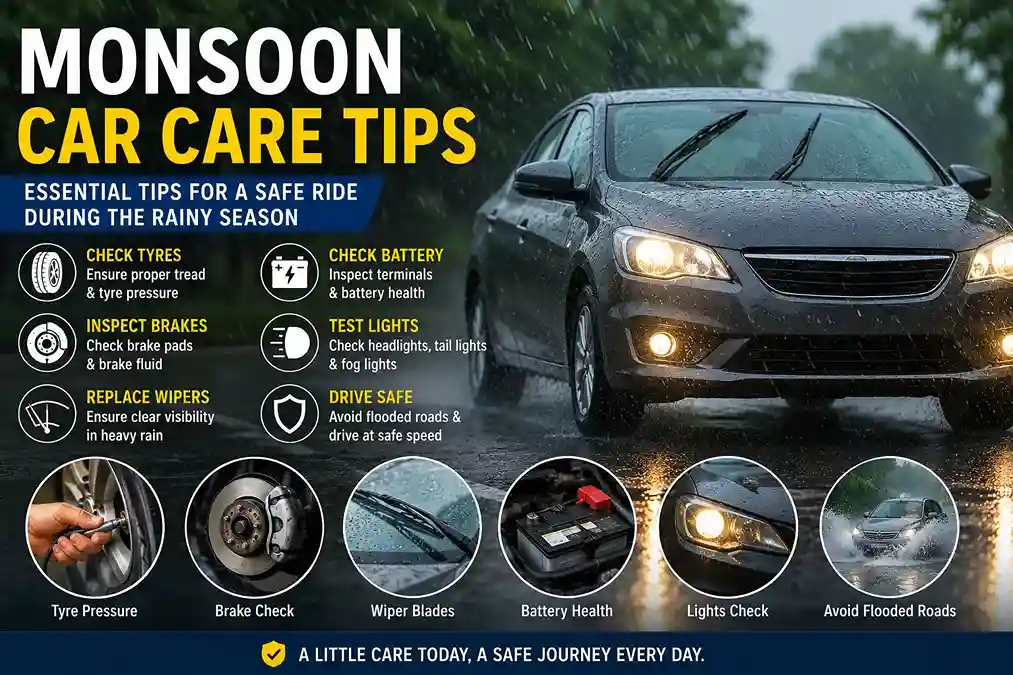
Monsoon Car Care Tips become especially important as heavy rain, flooded roads, poor visibility, and slippery surfaces increase the risk of accidents and unexpected vehicle problems. While monsoon weather brings welcome relief from summer heat, it also creates challenging driving conditions that demand extra attention to vehicle maintenance.
Many drivers only think about their cars after something goes wrong—a worn-out wiper, weak brakes, or a dead battery in the middle of a rainstorm. A little preparation before the rainy season can prevent these situations and help keep you and your passengers safe.
In real-world situations, even a well-maintained car can struggle during heavy rainfall if basic maintenance has been ignored. Spending a little time inspecting your vehicle now can save significant repair costs later.
If your dashboard displays any warning lights before the rainy season, our guide on Check Engine Light Explained can help you understand whether your vehicle needs immediate attention before heading out.
Quick Answer
Proper monsoon car care includes checking tyres, inspecting brakes, replacing worn wiper blades, testing lights, maintaining the battery, protecting the exterior, preventing cabin moisture, monitoring fluid levels, avoiding flooded roads, and washing the underbody regularly. These simple maintenance steps improve safety, reduce breakdowns, and help extend your vehicle’s lifespan during the rainy season.
According to the National Highway Traffic Safety Administration (NHTSA), reduced traction and poor visibility significantly increase crash risks during wet weather, making vehicle maintenance and cautious driving especially important.
Table of Contents
- Why Monsoon Car Care Matters
- Check Your Tyres
- Inspect the Braking System
- Replace Worn Wiper Blades
- Test All Exterior Lights
- Check Battery Health
- Protect the Exterior
- Prevent Cabin Moisture
- Inspect Essential Fluids
- Avoid Flooded Roads
- Wash the Underbody
- FAQs
Why Is Monsoon Car Care Important?
Rain affects almost every part of a vehicle.
During the monsoon season, your car is exposed to:
- Water accumulation
- Mud
- Poor road conditions
- Reduced tyre grip
- Rust formation
- Electrical moisture
- Limited visibility
Ignoring these conditions can increase repair costs and compromise safety.
For example, worn tyres that perform adequately in dry weather may lose grip quickly on wet roads, increasing the likelihood of hydroplaning.
1. Check Your Tyres Before the Rainy Season
Tyres are your vehicle’s only contact with the road, making them one of the most important safety components during monsoon driving.
Inspect:
- Tread depth
- Sidewall cracks
- Uneven wear
- Correct tyre pressure
Adequate tread channels water away from the tyre surface, improving grip on wet roads.
If your tyres are already showing uneven wear or vibration while driving, our guide on Wheel Bearing Noise Symptoms explains another issue that can affect handling and tyre wear.
According to the National Highway Traffic Safety Administration’s tyre safety recommendations, properly maintained tyres are essential for safe braking and steering in wet conditions.
2. Inspect Your Braking System
Rainwater can temporarily reduce braking efficiency, especially during the first few brake applications after driving through standing water.
Before the rainy season, inspect:
- Brake pads
- Brake discs
- Brake fluid
- Brake hoses
- Brake pedal feel
In real-world situations, even slightly worn brakes become much more noticeable on slippery roads where stopping distances naturally increase.
If it’s been a while since your last brake service, our detailed Brake Fluid Change Guide explains when brake fluid should be replaced and why it plays a critical role in maintaining braking performance.
3. Replace Worn Wiper Blades
Clear visibility is one of the biggest safety factors during heavy rainfall.
Old wiper blades often leave:
- Streaks
- Water patches
- Smearing
- Missed areas
These problems become especially dangerous during night driving.
Most manufacturers recommend replacing windshield wipers every 6–12 months, depending on climate and usage.
For example, if your wipers chatter across the windshield or fail to clear water effectively, replacing them is usually inexpensive and greatly improves visibility.
The Car Care Council recommends inspecting windshield wipers regularly, particularly before seasonal weather changes.
4. Test Headlights, Tail Lights and Fog Lamps
Heavy rain reduces visibility for everyone—not just the driver.
Before the monsoon begins, check:
- Low beam headlights
- High beams
- Brake lights
- Tail lights
- Turn indicators
- Reverse lights
- Fog lamps (if equipped)
Clean light lenses as dirt and oxidation reduce brightness.
Remember that functioning lights help other drivers see your vehicle sooner, especially during heavy rain or fog.
5. Check Battery Health
High humidity and moisture can affect battery terminals and electrical connections.
Inspect for:
- Corrosion
- Loose terminals
- Weak starting
- Low voltage
If your car has recently shown slow cranking or electrical issues, don’t ignore them before the rainy season.
Our guide on Alternator Failure Symptoms explains how charging system problems can sometimes be mistaken for a weak battery.
Similarly, if your vehicle struggles to start after rain, it’s worth checking both the battery and charging system together.
The Battery Council International recommends regular battery inspections to improve reliability and prevent unexpected breakdowns.
6. Keep Windshield Washer Fluid Topped Up
Rainwater alone isn’t enough to keep your windshield clean. Mud, road grime, and oily residue can quickly build up, especially when driving behind other vehicles.
Always ensure the washer fluid reservoir is full before long trips during the rainy season. Using plain water may not remove stubborn dirt as effectively as a proper windshield washer solution.
A clean windshield, combined with good-quality wiper blades, significantly improves visibility during sudden downpours.
7. Protect Your Car’s Exterior
Rainwater may seem harmless, but it often carries dust, pollutants, road salt (in coastal areas), and acidic contaminants that can damage your car’s paint over time.
A few preventive steps can help preserve your vehicle’s finish:
- Apply a quality car wax or paint sealant before the monsoon.
- Wash mud and bird droppings promptly.
- Dry the vehicle after washing to prevent water spots.
- Keep door seals clean to reduce water seepage.
In real-world situations, cars parked outdoors throughout the rainy season are more susceptible to paint fading and rust if they aren’t cleaned regularly.
8. Prevent Cabin Moisture and Bad Odours
Moisture trapped inside the cabin can quickly lead to unpleasant smells, fogged windows, and even mould growth.
Common causes include:
- Wet shoes and umbrellas
- Water entering through damaged door seals
- Damp floor mats
- Poor cabin ventilation
To keep your cabin fresh:
- Remove wet floor mats and dry them completely.
- Use rubber floor mats during the rainy season.
- Run the air conditioner occasionally to remove humidity.
- Replace the cabin air filter if airflow becomes weak.
For example, if your windows fog up frequently even in light rain, excess cabin moisture is often the cause.
9. Check Engine Oil, Coolant and Other Essential Fluids
The rainy season is an excellent time to inspect all essential vehicle fluids.
Check:
- Engine oil
- Coolant
- Brake fluid
- Power steering fluid
- Windshield washer fluid
- Transmission fluid (if applicable)
Low or contaminated fluids can increase wear and reduce reliability during long drives.
If you haven’t inspected your braking system recently, our Brake Fluid Change Guide explains why fresh brake fluid is critical for maintaining safe stopping performance in wet weather.
Likewise, unusual engine warning lights should never be ignored. Our Check Engine Light Explained guide can help you understand when professional diagnosis is necessary.
According to the Car Care Council’s preventive maintenance recommendations, checking fluids regularly is one of the simplest ways to improve vehicle reliability.
10. Avoid Driving Through Flooded Roads
One of the biggest mistakes drivers make during the monsoon is attempting to cross flooded roads without knowing the water depth.
Even shallow-looking water can hide:
- Deep potholes
- Open drains
- Broken road surfaces
- Debris
Driving through deep water may also cause:
- Engine hydro-lock
- Electrical failures
- Brake damage
- Transmission problems
If floodwater reaches above the centre of your wheels, it’s generally safer to wait or choose another route.
For example, many vehicles suffer expensive engine damage each year because drivers underestimate the depth of standing water.
The National Weather Service advises motorists to avoid driving through flooded roads because water depth and road conditions are often impossible to judge accurately.
11. Wash the Underbody Regularly
While most drivers wash only the exterior, the underside of the vehicle often collects:
- Mud
- Dirty water
- Road salt (coastal regions)
- Small stones
- Moisture
Over time, these contaminants can accelerate corrosion.
A thorough underbody wash every few weeks during the rainy season helps reduce rust formation and extends the life of suspension and chassis components.
If you notice unusual steering vibration or suspension noises after driving through rough, waterlogged roads, our article on Wheel Bearing Noise Symptoms explains one possible cause that shouldn’t be ignored.
Common Mistakes Drivers Make During Monsoon
Avoid these common errors:
- Driving with worn tyres
- Ignoring brake inspections
- Using damaged wiper blades
- Skipping battery maintenance
- Driving too fast on wet roads
- Braking suddenly on slippery surfaces
- Ignoring dashboard warning lights
- Parking under trees during storms
- Driving through unknown floodwaters
Most of these problems are preventable with routine inspections before and during the rainy season.
Best Practices for Monsoon Driving
In addition to maintaining your vehicle, adopt safer driving habits:
- Reduce speed on wet roads.
- Increase the distance between vehicles.
- Avoid sudden acceleration and harsh braking.
- Use headlights during heavy rain.
- Keep both hands on the steering wheel.
- Avoid using cruise control on slippery roads.
- Inspect your vehicle before long journeys.
These simple habits improve safety regardless of vehicle type.
Monsoon Car Care tips Checklist
Before every long drive during the rainy season, check:
✔ Tyre pressure and tread depth
✔ Brake performance
✔ Brake fluid level
✔ Engine oil level
✔ Coolant level
✔ Windshield washer fluid
✔ Wiper blades
✔ Battery terminals
✔ Headlights and brake lights
✔ Air conditioning and defogger
✔ Spare tyre
✔ Emergency toolkit
✔ Torch and phone charger
✔ First-aid kit
Spending just a few minutes on this checklist can prevent inconvenient breakdowns and improve safety.
Frequently Asked Questions
How should I prepare my car for the rainy season?
Inspect your tyres, brakes, battery, lights, windshield wipers, essential fluids, and ensure your air conditioning and defogger are working properly before the rainy season begins.
Is it safe to drive through flooded roads?
Only if the water is shallow and the road is clearly visible. If the water level reaches the wheel hubs or you cannot judge the depth, avoid driving through it.
How often should I wash my car during the monsoon?
Washing your car every one to two weeks, including the underbody, helps remove mud, contaminants, and moisture that can contribute to corrosion.
Why do my windows fog up during rain?
Warm, humid air inside the cabin condenses on the cooler glass surfaces. Using your air conditioner or defogger helps remove excess moisture.
Should tyre pressure change during the rainy season?
Always follow the manufacturer’s recommended tyre pressure. Underinflated or overinflated tyres can reduce grip on wet roads.
Can rain damage my car battery?
Rain itself doesn’t usually damage the battery, but moisture can accelerate corrosion at the battery terminals and affect electrical connections.
Why do brakes feel weaker after driving through water?
Water temporarily reduces friction between the brake pads and discs. Applying the brakes gently a few times after crossing shallow water can help dry the components.
Are monsoon car inspections really necessary?
Yes. Regular inspections help identify worn tyres, weak batteries, low fluid levels, and other issues before they become safety hazards during heavy rain.
Key Takeaways
- Prepare your car before the rainy season begins.
- Maintain tyres, brakes, battery, lights, and windshield wipers.
- Replace contaminated brake fluid when required.
- Avoid flooded roads whenever possible.
- Wash the underbody regularly to reduce corrosion.
- Keep emergency supplies inside the vehicle.
- Drive cautiously and increase following distance on wet roads.
- Routine maintenance significantly improves safety during monsoon driving.
Conclusion
Following these Monsoon Car Care Tips can make a significant difference to both your safety and your vehicle’s reliability during the rainy season. Wet roads, reduced visibility, and standing water create challenging driving conditions, but most monsoon-related problems can be avoided with regular maintenance and careful driving habits.
By inspecting your tyres, brakes, battery, lights, and essential fluids before the rains begin, you’ll be better prepared for unexpected weather and longer journeys. Simple habits such as replacing worn wiper blades, avoiding flooded roads, and washing your car’s underbody regularly also help protect your vehicle from unnecessary wear and expensive repairs.
A little preparation today can provide greater confidence behind the wheel throughout the monsoon season, helping you travel more safely no matter where the road takes you.
Author: Carsinfos Editorial Team
Published: July 23rd, 2026