
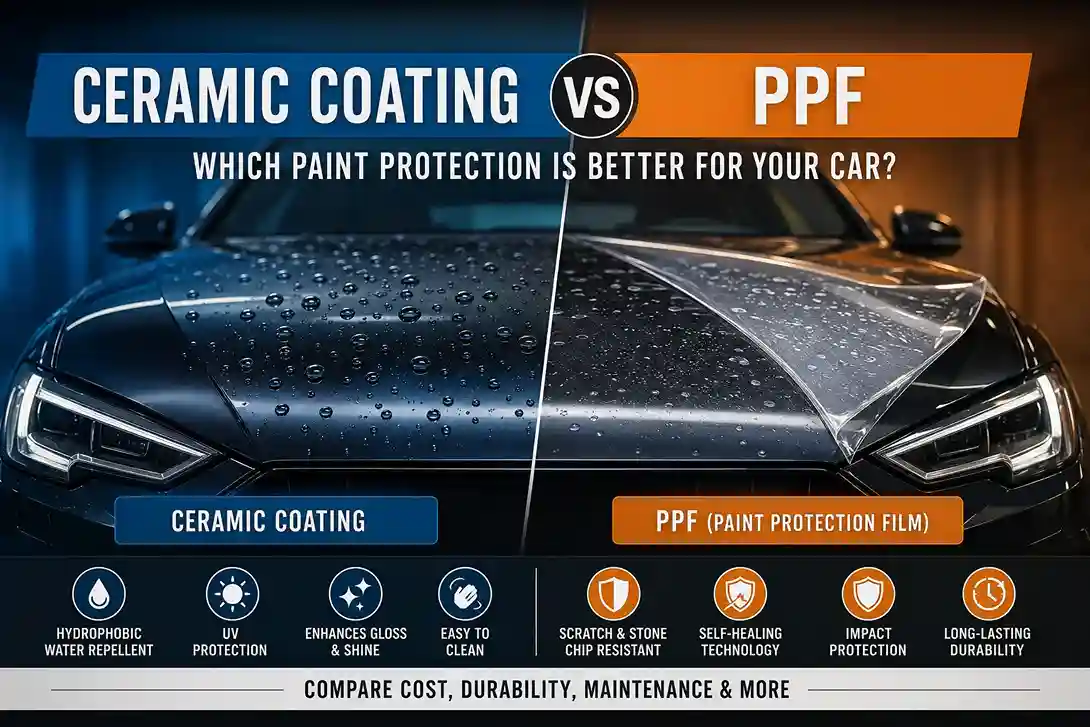
Ceramic Coating vs PPF is one of the most common comparisons car owners make when looking for the best way to protect their vehicle’s paint. Both options help preserve your car’s appearance, but they work differently and offer different levels of protection. Understanding their advantages, limitations, costs, and maintenance requirements will help you choose the right solution for your driving habits and budget.
In India, harsh sunlight, dust, monsoon rains, bird droppings, tree sap, and road debris can gradually damage your car’s paint. Choosing the right paint protection system can help maintain your vehicle’s appearance and resale value over the years.
If you’ve recently purchased a new vehicle or plan to keep your car for a long time, understanding the differences between Ceramic Coating and Paint Protection Film (PPF) can help you make a more informed investment. Before protecting your vehicle’s exterior, you may also find our guide on How to Clean Car Interior at Home useful for maintaining the overall appearance of your car.
Quick Answer
Ceramic Coating and Paint Protection Film (PPF) serve different purposes. Ceramic Coating enhances gloss, makes cleaning easier, and protects against UV rays, light scratches, and chemical stains. PPF provides a thicker physical barrier that protects against stone chips, deep scratches, and road debris. For maximum paint protection, many premium car owners choose both together.
Table of Contents
- What Is Ceramic Coating?
- What Is Paint Protection Film (PPF)?
- Ceramic Coating vs PPF: Key Differences
- Protection Comparison
- Durability Comparison
- Cost Comparison in India
- Maintenance Requirements
- Which Option Is Better for Different Drivers?
- Can You Use Both Together?
- Frequently Asked Questions
- Conclusion
What Is Ceramic Coating?
Ceramic Coating is a liquid polymer that chemically bonds with your vehicle’s clear coat after application. Once cured, it creates a hard, hydrophobic surface that helps repel water, dirt, dust, bird droppings, and certain chemical contaminants.
Unlike traditional waxes or paint sealants, ceramic coatings generally last much longer when properly maintained.
Main Benefits of Ceramic Coating
- Enhances paint gloss and depth
- Makes washing easier
- Repels water and dirt
- Helps reduce UV fading
- Protects against minor swirl marks
- Improves chemical resistance
However, it’s important to understand that ceramic coating does not prevent deep scratches or stone chips.
How Ceramic Coating Works
Rather than acting as a thick protective layer, ceramic coating forms a microscopic chemical bond with the paint surface.
This creates:
- Water beading
- Easier cleaning
- Reduced oxidation
- Better resistance to contaminants
For example, during the Indian monsoon season, muddy water and road grime tend to slide off more easily from a ceramic-coated vehicle, reducing the effort required during washing.
What Is Paint Protection Film (PPF)?
Paint Protection Film, commonly called PPF, is a transparent polyurethane film applied directly over painted body panels.
Unlike ceramic coating, PPF acts as a physical shield that absorbs impacts from:
- Stone chips
- Gravel
- Minor scratches
- Road debris
- Insect stains
- Bird droppings
Many premium PPF products also include self-healing technology, allowing minor scratches to disappear when exposed to heat.
How Paint Protection Film Works
PPF typically measures between 150 and 200 microns thick, making it significantly thicker than ceramic coating.
When a small stone strikes the vehicle, the film absorbs much of the impact before it reaches the paint underneath.
This is one reason why many luxury and performance vehicle owners choose PPF immediately after purchasing a new car.
Ceramic Coating vs PPF: Feature Comparison
| Feature | Ceramic Coating | Paint Protection Film |
|---|---|---|
| Paint Gloss | ⭐⭐⭐⭐⭐ | ⭐⭐⭐⭐ |
| Water Repellency | ⭐⭐⭐⭐⭐ | ⭐⭐⭐ |
| UV Protection | Excellent | Excellent |
| Scratch Protection | Light scratches only | Excellent |
| Stone Chip Protection | Minimal | Excellent |
| Self-Healing | No | Yes (premium films) |
| Paint Thickness | Very Thin | Thick physical layer |
| Lifespan | 2–7 years (varies by product and maintenance) | 5–10 years (varies by film quality and care) |
| Cost | Lower | Higher |
Which Protects Better Against Indian Driving Conditions?
Indian roads present several challenges:
- Loose gravel
- Construction debris
- Heavy traffic
- Dust
- Strong sunlight
- Monsoon rain
- Bird droppings
For city driving, ceramic coating usually provides sufficient protection against environmental contaminants while making the vehicle easier to clean.
However, if you frequently drive on highways or rough roads, where flying stones are more common, PPF offers significantly better protection against paint damage.
If your daily commute also involves uneven roads, our guide on Best Cars for Bad Roads in India discusses how road conditions can affect long-term vehicle maintenance.
Protection Against Common Paint Damage
| Paint Damage | Ceramic Coating | PPF |
|---|---|---|
| UV Rays | ✅ Excellent | ✅ Excellent |
| Bird Droppings | ✅ Excellent | ✅ Excellent |
| Tree Sap | ✅ Excellent | ✅ Excellent |
| Acid Rain | ✅ Excellent | ✅ Excellent |
| Light Swirl Marks | ✅ Good | ✅ Excellent |
| Stone Chips | ❌ Limited | ✅ Excellent |
| Deep Scratches | ❌ No | ✅ Good |
| Road Debris | ❌ Limited | ✅ Excellent |
Real-World Example
Imagine you’ve purchased a new SUV that will regularly travel between cities on highways. At high speeds, small stones thrown up by other vehicles can chip the front bumper, bonnet, mirrors, and fenders.
In this situation, PPF offers much stronger protection because it absorbs the impact before it reaches the paint.
On the other hand, if you primarily drive within city limits and want your vehicle to remain glossy and easier to wash, Ceramic Coating is often the more cost-effective choice.
Throughout ownership, routine maintenance also matters. Regular tyre inspections, proper washing techniques, and timely servicing contribute to preserving your vehicle’s overall condition. You may also find our articles on When Should You Replace Car Tyres in India? and How to Improve Car Mileage in India useful for long-term vehicle care.
Durability Comparison
Both Ceramic Coating and Paint Protection Film (PPF) are designed to protect your vehicle’s paint, but they differ significantly in lifespan and the type of protection they provide.
Ceramic Coating
A professionally applied ceramic coating generally lasts 2 to 7 years, depending on:
- Product quality
- Surface preparation
- Washing habits
- Exposure to sunlight
- Environmental conditions
Routine maintenance using pH-neutral car shampoo can help maximize its lifespan.
Paint Protection Film (PPF)
High-quality PPF typically lasts 5 to 10 years with proper care. Premium films also feature self-healing technology, allowing light scratches to disappear when exposed to heat from sunlight or warm water.
For car owners planning to keep their vehicle for many years, PPF often offers better long-term physical protection.
Cost Comparison in India
Prices vary depending on vehicle size, brand, installer expertise, and product quality.
| Protection Option | Estimated Cost (₹) |
|---|---|
| Ceramic Coating | ₹15,000 – ₹50,000 |
| Partial PPF (Bonnet, Bumper, Mirrors) | ₹30,000 – ₹80,000 |
| Full Body PPF | ₹80,000 – ₹2,50,000+ |
| Ceramic Coating Over PPF | Additional ₹10,000 – ₹30,000 |
Note: Premium luxury vehicles often cost more due to larger surface areas and higher installation complexity.
Maintenance Comparison
| Maintenance Task | Ceramic Coating | PPF |
|---|---|---|
| Regular Washing | ✓ Recommended | ✓ Recommended |
| Wax Required | ❌ No | ❌ No |
| Polishing | Rarely | Not Recommended |
| Self-Healing | ❌ | ✓ Premium Films |
| Easy to Clean | ✓ Excellent | ✓ Very Good |
Even with paint protection, regular washing and proper maintenance remain important.
Keeping your tyres properly inflated and maintained also improves overall vehicle condition. Read our guide on How to Check Car Tyre Pressure at Home in India for practical maintenance tips.
Ceramic Coating Pros & Cons
Advantages
- Excellent gloss and shine
- Hydrophobic surface repels water
- Easier to wash
- UV protection
- Chemical stain resistance
- Lower cost than PPF
- Enhances resale appearance
Disadvantages
- Does not stop stone chips
- Limited scratch resistance
- Requires professional surface preparation
- May require maintenance coatings over time
Paint Protection Film (PPF) Pros & Cons
Advantages
- Superior impact protection
- Protects against stone chips
- Resists deep scratches
- Self-healing capability (premium films)
- Preserves factory paint
- Long service life
Disadvantages
- Higher installation cost
- Professional installation is essential
- Lower-quality films may yellow over time
- Damaged sections often need replacement rather than repair
Which Option Is Best for Different Drivers?
| Driver Type | Best Choice |
|---|---|
| Budget-conscious owner | Ceramic Coating |
| Daily city commuter | Ceramic Coating |
| Luxury car owner | PPF |
| Highway traveller | PPF |
| Off-road enthusiast | PPF |
| Car enthusiast seeking maximum protection | PPF + Ceramic Coating |
| Owner planning to sell within 2–3 years | Ceramic Coating |
| Owner keeping the car for 8–10 years | Full Body PPF |
Can You Use Ceramic Coating and PPF Together?
Yes—and many premium car owners do.
A common approach is:
- Apply PPF to high-impact areas such as the front bumper, bonnet, mirrors, and fenders.
- Apply Ceramic Coating over the exposed painted panels (and, if recommended by the installer, over the PPF itself).
This combination offers:
- Excellent impact protection
- Easier cleaning
- Improved gloss
- Better resistance to environmental contaminants
For expensive SUVs, luxury sedans, and sports cars, this can provide comprehensive long-term protection.
Common Mistakes to Avoid
Many owners spend money on paint protection but overlook these common issues:
- Choosing the cheapest installer rather than an experienced professional.
- Applying ceramic coating without proper paint correction.
- Believing ceramic coating prevents stone chips.
- Washing the car with harsh detergents.
- Ignoring the manufacturer’s maintenance recommendations.
- Skipping regular inspections for PPF damage.
Proper installation is just as important as the product itself.
Best Practices
To get the most from your investment:
- Wash the car using a pH-neutral shampoo.
- Avoid automatic car washes with abrasive brushes.
- Remove bird droppings promptly.
- Park in shaded areas whenever possible.
- Inspect PPF edges periodically for lifting or damage.
- Follow the installer’s maintenance schedule.
Regular exterior care complements routine mechanical maintenance. If you also want to improve fuel efficiency, see our guide on How to Improve Car Mileage in India.
External References
When choosing paint protection products or understanding proper vehicle care, these resources provide useful information:
- The National Highway Traffic Safety Administration (NHTSA) offers guidance on vehicle maintenance and safety.
- 3M Automotive Films explains how paint protection films work and their intended benefits.
- XPEL provides information on self-healing PPF technology and maintenance.
- Meguiar’s Car Care Tips includes advice on proper vehicle washing and paint care.
Frequently Asked Questions
Is Ceramic Coating better than PPF?
Neither is universally better. Ceramic coating improves gloss and makes maintenance easier, while PPF offers superior protection against stone chips and physical damage. The right choice depends on your driving conditions, budget, and expectations.
Can Ceramic Coating prevent scratches?
Ceramic coating can reduce very light swirl marks and minor surface scratches but does not protect against deep scratches or stone chips.
Does PPF turn yellow?
Modern premium PPF products are designed to resist yellowing. However, lower-quality films or poor installation may lead to discoloration over time, particularly in harsh climates.
Is PPF worth it in India?
For drivers who frequently travel on highways or own expensive vehicles, PPF can be a worthwhile investment because it helps protect against stone chips and road debris commonly encountered on Indian roads.
Can Ceramic Coating be applied over PPF?
Yes. Many professional detailers apply ceramic coating over PPF to improve water repellency, enhance gloss, and simplify maintenance. Always follow the film manufacturer’s recommendations.
Which lasts longer?
Generally, PPF lasts longer than ceramic coating. High-quality PPF can remain effective for 5–10 years, while ceramic coatings typically last 2–7 years depending on the product and maintenance.
Does Ceramic Coating eliminate the need to wash my car?
No. It makes cleaning easier by reducing dirt adhesion, but regular washing is still necessary to maintain the vehicle’s appearance and protect the coating.
Should I choose PPF or Ceramic Coating for a new car?
If your priority is maximum protection against stone chips and scratches, PPF is the better choice. If you mainly want improved gloss, easier cleaning, and lower maintenance costs, ceramic coating is often sufficient. Many owners of premium vehicles choose both.
Key Takeaways
- Ceramic coating enhances gloss, hydrophobic properties, and chemical resistance.
- PPF provides a physical barrier against stone chips and scratches.
- Ceramic coating is generally more affordable, while PPF offers stronger impact protection.
- Combining PPF with ceramic coating provides comprehensive paint protection for many owners.
- Choosing an experienced installer is as important as selecting the right product.
- Regular washing and proper maintenance help maximize the lifespan of either solution.
Conclusion
Choosing between Ceramic Coating vs PPF depends on your vehicle, driving habits, budget, and long-term ownership plans.
If you mainly drive in urban areas and want a glossy finish with easier maintenance, ceramic coating offers excellent value. If you frequently travel on highways, own a luxury vehicle, or want the highest level of paint protection, Paint Protection Film is the stronger option.
For owners seeking the best of both worlds, applying PPF to high-impact areas and ceramic coating to the remaining surfaces can deliver outstanding protection while keeping the vehicle looking newer for longer.
Author: Carsinfos Editorial Team
Published: July 15th, 2026