
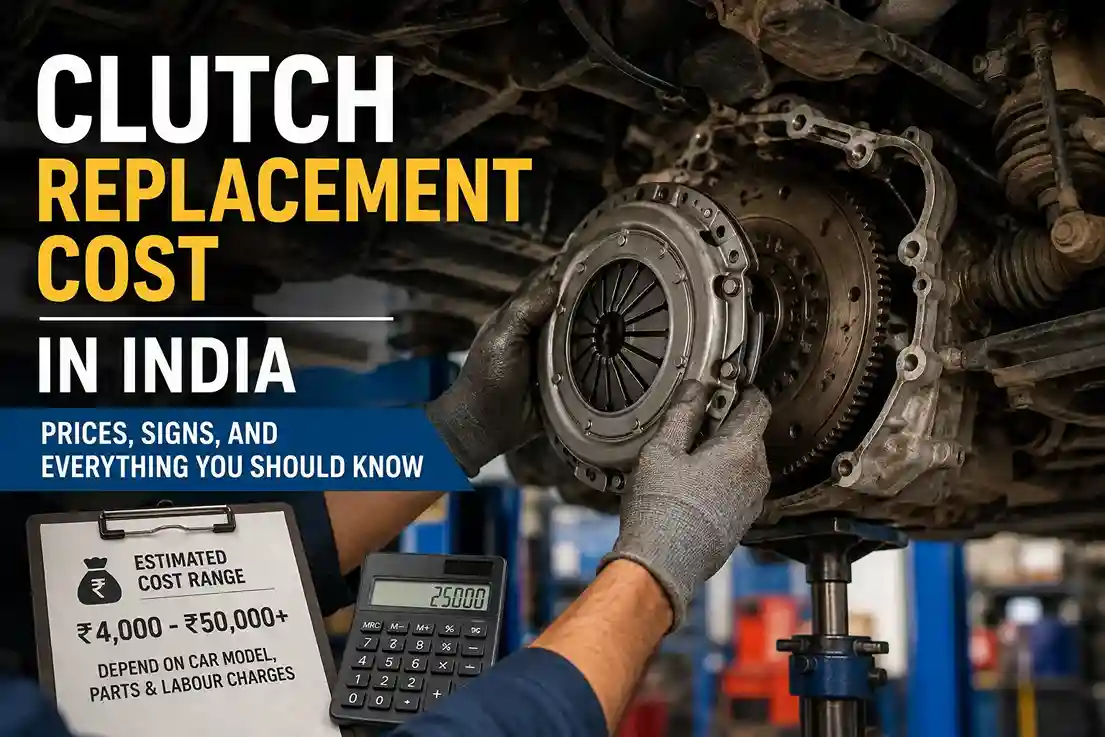
Your car’s clutch is one of the hardest-working components in a manual transmission vehicle. Every gear shift depends on it, and over time, normal wear and tear can reduce its effectiveness. When drivers begin experiencing slipping gears, difficulty shifting, or unusual vibrations, one of the first questions they ask is about the clutch replacement cost in India.
The good news is that clutch replacement is a common repair, and understanding the expected costs can help you budget properly and avoid unnecessary expenses. Whether you own a Maruti Suzuki, Hyundai, Tata, Mahindra, Honda, or another popular vehicle, clutch replacement costs can vary significantly based on the model, labor charges, and the parts used.
If you’re already familiar with warning signs discussed in our guides on Engine Misfire Causes and OBD2 Error Codes Explained, understanding clutch-related symptoms can help you address transmission issues before they become more serious.
What Does a Car Clutch Do?
A clutch connects and disconnects the engine from the transmission.
When you press the clutch pedal:
- Engine power is temporarily disconnected
- Gear changes become possible
- Transmission components experience less stress
When you release the pedal:
- Power transfers back to the wheels
- The vehicle moves forward
This process happens thousands of times throughout a vehicle’s life.
According to information published by the Society of Automotive Engineers (SAE), clutch systems are designed to handle repeated engagement and disengagement while maintaining smooth power delivery.
Average Clutch Replacement Cost in India
The clutch replacement cost in India depends on several factors:
- Vehicle brand
- Engine size
- Parts quality
- Location
- Authorized vs independent workshop
- Labor charges
Estimated Clutch Replacement Costs
| Vehicle Segment | Approximate Cost |
|---|---|
| Small Hatchbacks | ₹4,000 – ₹10,000 |
| Premium Hatchbacks | ₹8,000 – ₹15,000 |
| Compact Sedans | ₹8,000 – ₹18,000 |
| Mid-Size Sedans | ₹12,000 – ₹25,000 |
| Compact SUVs | ₹12,000 – ₹25,000 |
| Premium SUVs | ₹20,000 – ₹50,000+ |
These estimates generally include:
- Clutch plate
- Pressure plate
- Release bearing
- Labor charges
Luxury vehicles may cost significantly more due to specialized components and labor requirements.
Clutch Replacement Cost for Popular Cars in India
Maruti Suzuki Vehicles
Approximate range:
- Alto: ₹4,000–₹7,000
- WagonR: ₹5,000–₹8,000
- Swift: ₹6,000–₹10,000
- Baleno: ₹7,000–₹12,000
- Brezza: ₹10,000–₹18,000
Hyundai Vehicles
Approximate range:
- Grand i10: ₹6,000–₹10,000
- i20: ₹8,000–₹13,000
- Venue: ₹10,000–₹18,000
- Creta: ₹12,000–₹25,000
Tata Vehicles
Approximate range:
- Tiago: ₹6,000–₹10,000
- Altroz: ₹8,000–₹12,000
- Nexon: ₹12,000–₹22,000
Mahindra Vehicles
Approximate range:
- Bolero: ₹10,000–₹18,000
- XUV300: ₹12,000–₹22,000
- Scorpio: ₹15,000–₹30,000
Actual pricing varies depending on location and service center policies.
Signs That Your Clutch Needs Replacement
Many clutch failures develop gradually.
1. Clutch Slipping
One of the most common symptoms.
Signs include:
- Rising engine RPM without acceleration
- Reduced power delivery
- Difficulty climbing inclines
In real-world situations, drivers often notice slipping first while overtaking or driving uphill.
2. Hard Gear Shifts
If gears become difficult to engage, the clutch may not be fully disengaging.
3. Burning Smell
A worn clutch may generate excessive heat.
You may notice:
- Burning odor
- Reduced performance
- Excessive clutch wear
4. Vibrations During Engagement
A damaged clutch assembly can create noticeable vibrations when moving from a standstill.
5. Soft or Spongy Clutch Pedal
Hydraulic clutch systems sometimes develop leaks or pressure issues.
If you notice unusual pedal behavior, inspection should be scheduled promptly.
Why Clutches Wear Out
Clutch lifespan depends heavily on driving habits.
Common Causes of Premature Wear
- Riding the clutch pedal
- Frequent stop-and-go traffic
- Aggressive driving
- Overloading the vehicle
- Improper gear selection
For example, keeping your foot partially on the clutch pedal while driving creates continuous friction and accelerates wear.
Typical Clutch Lifespan
Most clutch systems last:
- 50,000–100,000 km under heavy use
- 80,000–150,000 km under normal conditions
Drivers who primarily travel on highways often experience longer clutch life compared to those navigating congested urban traffic daily.
Components Usually Replaced Together
Many workshops recommend replacing multiple parts simultaneously.
Clutch Kit Components
A complete clutch kit typically includes:
- Clutch disc (clutch plate)
- Pressure plate
- Release bearing
Replacing only one worn component can result in uneven wear and future repairs.
Flywheel Inspection
The flywheel should also be inspected.
If damaged or excessively worn, replacement or resurfacing may be necessary.
According to vehicle maintenance recommendations published by the Automotive Service Association, related components should be inspected whenever major transmission work is performed.
Authorized Service Center vs Local Garage
Authorized Service Centers
Advantages:
- Genuine parts
- Manufacturer-trained technicians
- Warranty coverage
Disadvantages:
- Higher labor costs
- Higher overall repair bills
Independent Workshops
Advantages:
- Lower repair costs
- Flexible part options
Disadvantages:
- Quality varies significantly
- Warranty support may be limited
Choosing a reputable workshop remains important regardless of the option selected.
Factors Affecting Clutch Replacement Cost in India
Vehicle Type
Larger vehicles generally require:
- Larger clutch assemblies
- More labor hours
- Higher-cost parts
Labor Charges
Labor costs vary significantly across cities.
Metro cities often charge higher rates than smaller towns.
OEM vs Aftermarket Parts
OEM (Original Equipment Manufacturer) parts:
- Better reliability
- Higher cost
Aftermarket parts:
- Lower price
- Variable quality
Additional Repairs
Sometimes technicians discover:
- Hydraulic leaks
- Flywheel damage
- Transmission mount issues
These additional repairs can increase the final bill.
Can You Continue Driving With a Worn Clutch?
Technically yes—but it isn’t advisable.
Ignoring clutch symptoms may lead to:
- Complete clutch failure
- Transmission damage
- Unexpected breakdowns
In real-world situations, many drivers postpone repairs until the vehicle becomes difficult to drive, which often results in higher costs later.
Common Mistakes Car Owners Make
Waiting Too Long
Delaying repairs often increases overall costs.
Replacing Only the Clutch Plate
This may seem cheaper initially but often leads to repeat labor charges later.
Choosing Parts Based Only on Price
The cheapest parts may not provide long-term reliability.
Ignoring Early Symptoms
Minor issues frequently become major repairs if ignored.
Best Practices to Extend Clutch Life
Avoid Riding the Clutch
Keep your foot away from the pedal unless shifting gears.
Use Neutral at Long Stops
At traffic lights, use neutral instead of holding the clutch down continuously.
Shift Smoothly
Gentle gear changes reduce wear.
Avoid Excessive Overloading
Extra weight increases clutch stress.
Follow Recommended Maintenance
Routine inspections help identify issues before they worsen.
Just as regular maintenance is important in our guides on Brake Fluid Change Guide and Monsoon Car Care Tips, proactive clutch care can significantly reduce long-term repair costs.
How to Know If a Repair Quote Is Fair
Before approving repairs:
- Request a detailed estimate
- Confirm included parts
- Ask whether labor is included
- Compare multiple workshops
For expensive repairs, obtaining a second opinion is often worthwhile.
Is Clutch Replacement Covered Under Insurance?
Typically, no.
Clutch wear is considered a maintenance item rather than accidental damage.
However, you should review your policy details carefully. If you’re exploring coverage options, our guide on Zero Depreciation Insurance Explained discusses what vehicle insurance policies typically cover.
Frequently Asked Questions
What is the average clutch replacement cost in India?
For most passenger vehicles, costs typically range from ₹5,000 to ₹25,000 depending on the model and workshop.
How long does clutch replacement take?
Most clutch replacements require 4–8 hours of labor.
Can I replace only the clutch plate?
Technically yes, but replacing the complete clutch kit is generally recommended.
How often should a clutch be replaced?
There is no fixed interval. Replacement depends on wear, driving habits, and vehicle usage.
What happens if I ignore a slipping clutch?
The problem usually worsens and may eventually leave the vehicle unable to move.
Are aftermarket clutch kits reliable?
Quality varies significantly. Reputable brands can offer good performance, but OEM parts often provide the most predictable results.
Conclusion
Understanding the clutch replacement cost in India helps vehicle owners plan maintenance expenses and avoid unpleasant surprises. While replacement costs vary based on vehicle type, labor rates, and parts quality, addressing clutch problems early is almost always less expensive than waiting for complete failure.
If you notice slipping, hard shifting, vibrations, or unusual pedal behavior, scheduling an inspection promptly is a smart decision. With proper driving habits, routine maintenance, and timely repairs, many drivers can maximize clutch lifespan and minimize long-term ownership costs. The key is recognizing the warning signs early and understanding when clutch replacement becomes necessary.
Author: Carsinfos Editorial Team
Published: Aug 17th, 2026