
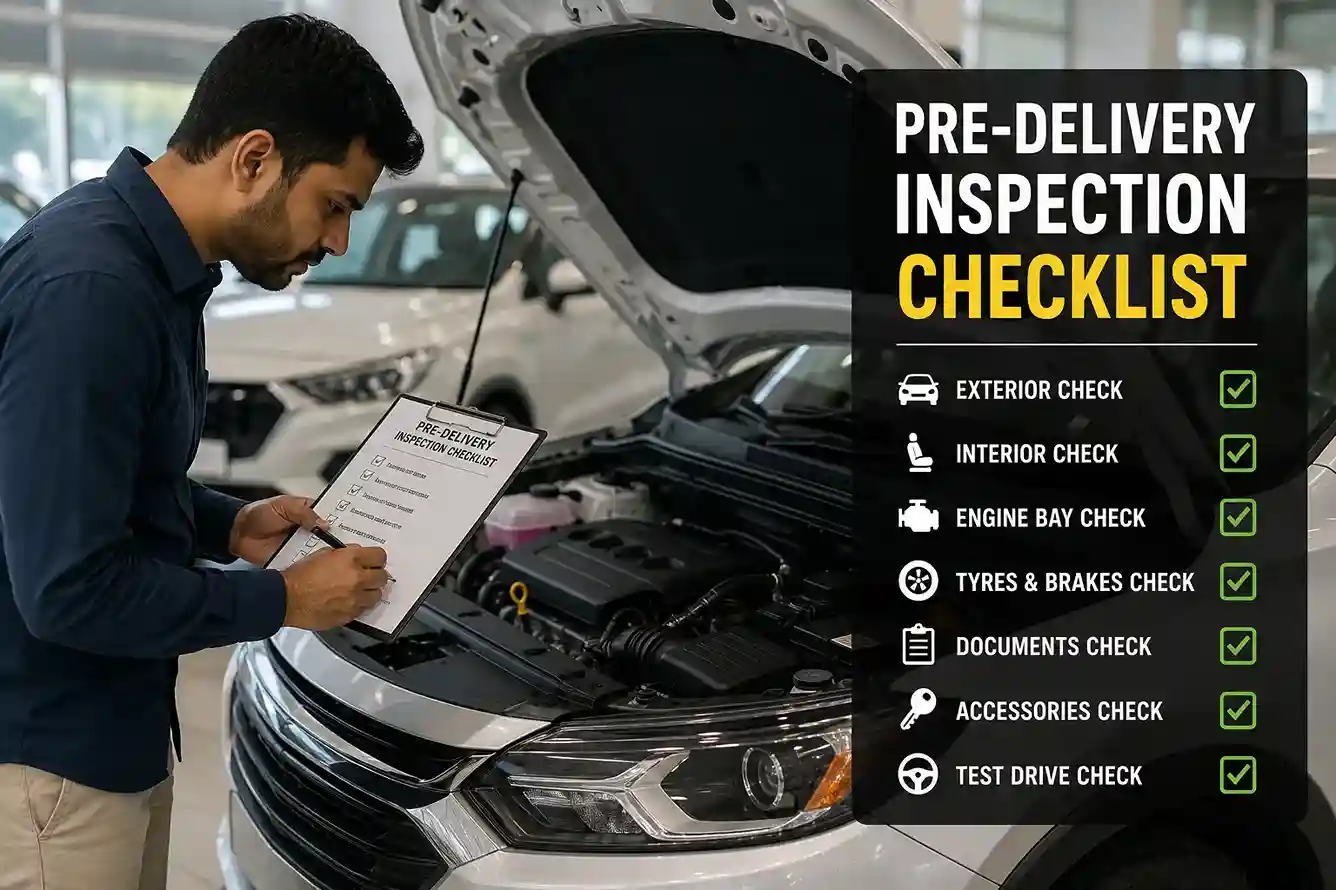
Buying a new vehicle is exciting, but it’s also the moment when many buyers overlook one of the most important steps—the Pre-Delivery Inspection Checklist. Once you sign the delivery documents and drive your new car home, resolving cosmetic defects or missing accessories may become more difficult. Spending a little extra time inspecting the vehicle can help you identify issues before they become your responsibility.
In real-world situations, many first-time buyers focus only on the vehicle’s appearance and forget to inspect essential items such as documentation, electronics, tyres, paint quality, or the spare wheel. Even brand-new vehicles can develop minor transportation or storage-related issues before reaching the dealership.
Preparing yourself with a proper checklist helps ensure you’re receiving the vehicle exactly as promised. After taking delivery, it’s also worth learning about FASTag Rules Explained so your first highway trip is smooth and hassle-free.
Quick Answer
A pre-delivery inspection (PDI) is a detailed examination of a new vehicle before accepting delivery from the dealership. It includes checking the vehicle’s exterior, interior, tyres, electronics, engine bay, documents, accessories, and overall condition to ensure there are no defects, missing items, or operational issues.
Consumer protection organizations, including Consumer Reports, recommend inspecting a new vehicle carefully before completing the purchase.
Table of Contents
- What Is a Pre-Delivery Inspection?
- Why a PDI Is Important
- Exterior Inspection Checklist
- Interior Inspection Checklist
- Engine Bay Inspection
- Electronics & Features
- Test Drive Checklist
- Documentation Checklist
- FAQs
What Is a Pre-Delivery Inspection (PDI)?
A Pre-Delivery Inspection is the final quality check performed before you officially accept your new vehicle.
Although dealerships perform their own inspections, buyers should also conduct an independent visual and functional inspection.
The purpose of a PDI is to confirm that:
- The vehicle matches your booking.
- There are no transportation damages.
- All accessories are installed.
- Every feature operates correctly.
- Required documents are complete.
For example, a vehicle transported over long distances may develop minor paint scratches or wheel scuffs that can easily be corrected before delivery if identified early.
Why Is a Pre-Delivery Inspection Important?
Many buyers assume a factory-fresh vehicle is automatically free from defects.
While modern manufacturing standards are excellent, vehicles still travel through storage yards, transport trucks, and dealership handling before reaching the customer.
A proper inspection helps you identify:
- Paint imperfections
- Missing accessories
- Interior damage
- Incorrect specifications
- Electrical faults
- Warning lights
- Documentation errors
According to the National Highway Traffic Safety Administration (NHTSA), vehicle owners should familiarize themselves with safety equipment and inspect their vehicle before regular use.
If your new vehicle is equipped with modern driver-assistance features, understanding dashboard alerts is equally important. Our guide on Check Engine Light Explained helps you understand warning indicators you may encounter after delivery.
Complete Exterior Inspection Checklist
The exterior is usually the first thing buyers notice, but it’s also where small issues can easily go unnoticed.
Paint Quality
Walk around the vehicle slowly under natural daylight.
Look for:
- Scratches
- Paint bubbles
- Dents
- Uneven paint finish
- Color mismatch
- Polish marks
Avoid inspecting the vehicle only inside the showroom because bright indoor lighting can hide imperfections.
Body Panels
Check whether:
- Door gaps are even
- Bonnet closes properly
- Boot aligns correctly
- Bumpers fit tightly
- Fenders have equal spacing
Uneven panel gaps may indicate transportation damage or improper repairs.
Glass Inspection
Inspect every glass panel carefully.
Look for:
- Cracks
- Chips
- Deep scratches
- Manufacturing defects
Verify the windshield, side windows, rear glass, and sunroof (if equipped).
Lights
Turn on every exterior light.
Check:
- Headlights
- DRLs
- Tail lamps
- Brake lights
- Reverse lights
- Turn indicators
- Hazard lights
- Fog lamps
Before driving regularly, it’s helpful to understand safe nighttime visibility. Our Monsoon Car Care Tips article also explains why properly functioning lights are critical during poor weather conditions.
Wheels and Tyres
Inspect all tyres carefully.
Verify:
- Same brand
- Same size
- Correct manufacturing date
- No sidewall damage
- No cuts
- Proper inflation
Also inspect alloy wheels for:
- Scratches
- Cracks
- Paint damage
Don’t forget the spare wheel.
Many buyers never check it until the first puncture.
Underbody Inspection
If possible, request the dealership to allow a quick underbody inspection.
Check for:
- Fluid leakage
- Loose covers
- Rust
- Damaged suspension parts
Although surface dust is normal, visible leaks should be addressed before delivery.
Interior Inspection Checklist
The cabin is where you’ll spend most of your time, so every detail matters.
Seats
Inspect all seats for:
- Tears
- Loose stitching
- Wrinkles
- Stains
- Uneven leather finish
Operate every seat adjustment manually or electrically.
Dashboard
Carefully inspect:
- Dashboard panels
- Glove box
- Air vents
- Steering wheel
- Instrument cluster
Look for scratches or loose trim pieces.
Upholstery
Check:
- Roof liner
- Floor carpets
- Door trims
- Armrests
- Seat belts
Ensure there are no stains, cuts, or discoloration.
Air Conditioning
Start the engine and test:
- Cooling performance
- Heating (if applicable)
- Fan speeds
- Airflow direction
- Rear AC vents
Allow the AC to run for several minutes.
Weak cooling may require inspection before accepting delivery.
Infotainment System
Verify:
- Touchscreen responsiveness
- Bluetooth pairing
- Android Auto
- Apple CarPlay
- Navigation
- USB ports
- Speakers
- Steering-mounted controls
- Reverse camera
Every feature should operate smoothly without freezing or delayed response.
Engine Bay Inspection
Most buyers never open the bonnet during delivery—but they should.
Take a few minutes to inspect the engine compartment.
Check:
- Engine oil level
- Coolant level
- Brake fluid
- Windshield washer fluid
- Battery terminals
- Wiring connections
Look underneath the vehicle for any signs of oil or coolant leakage.
If your vehicle uses a traditional charging system, understanding Alternator Failure Symptoms can help you recognize early warning signs in the future.
Battery
Inspect the battery for:
- Clean terminals
- Secure mounting
- Manufacturing date
- Proper connections
A healthy battery contributes to reliable vehicle performance from day one.
According to the Car Care Council, regular inspection of battery condition and fluid levels is an important part of preventive vehicle maintenance.
Electronics & Features Checklist
Modern vehicles are packed with electronic systems that improve comfort, convenience, and safety. Before accepting delivery, test every feature individually rather than assuming everything works correctly.
Instrument Cluster
Turn the ignition on and confirm that:
- Speedometer functions correctly
- Tachometer operates smoothly
- Fuel gauge displays accurately
- Temperature gauge works
- Warning lights illuminate briefly and then turn off after the engine starts
If any warning light remains illuminated, ask the dealership for an explanation before signing the delivery documents.
If you’re unfamiliar with dashboard symbols, our guide on Check Engine Light Explained helps you understand what different warning indicators mean.
Power Windows and Door Locks
Operate every window multiple times.
Check for:
- Smooth movement
- Unusual noises
- Auto up/down functionality
- Central locking
- Remote locking
- Keyless entry (if equipped)
Mirrors
Verify that:
- ORVMs adjust properly
- Power folding mirrors work (if available)
- Auto-dimming mirror functions correctly
- Rear-view mirror is securely mounted
Wipers and Washer System
Test:
- Front wipers
- Rear wiper (if available)
- Washer spray
- Intermittent settings
- High-speed mode
For example, replacing faulty wipers before your first rainy season can greatly improve visibility. Our Monsoon Car Care Tips article explains why good wipers are essential for safe driving.
Horn and Steering Controls
Ensure that:
- Horn functions properly
- Steering-mounted controls respond correctly
- Cruise control buttons work (if equipped)
- Voice assistant activates normally
Parking Camera and Sensors
Shift into reverse and verify:
- Rear camera clarity
- Parking guidelines
- Parking sensor alerts
- 360-degree camera (if equipped)
Poor camera quality or inaccurate sensors should be corrected before taking delivery.
Test Drive Checklist
If the dealership permits, take a short test drive before completing the purchase.
Even a few minutes behind the wheel can reveal issues that aren’t obvious while the vehicle is parked.
Steering
Check that:
- Steering feels centered
- No unusual vibrations are present
- Vehicle tracks straight without pulling
- Steering returns smoothly after turns
Brakes
Test braking gently first, then slightly harder in a safe area.
Look for:
- Smooth braking
- No grinding sounds
- No vibration
- No pulling to one side
If you’d like to understand how brake maintenance affects long-term safety, our Brake Fluid Change Guide explains when brake fluid should be replaced and why it’s important.
Suspension
Drive over small bumps.
Listen for:
- Knocking noises
- Loose suspension sounds
- Excessive bouncing
A properly assembled new vehicle should feel stable and composed.
Engine Performance
During the drive, observe:
- Smooth acceleration
- Stable idle
- No hesitation
- No abnormal engine noise
A new engine should run quietly and respond consistently.
Transmission
Whether manual or automatic, ensure:
- Smooth gear engagement
- No jerks
- No slipping
- Proper clutch operation (manual)
- Smooth shifting (automatic)
Documentation Checklist
A perfect vehicle is only part of the delivery process. Equally important is ensuring you receive all required documents.
Before leaving the dealership, verify that you have:
- Vehicle invoice
- Registration documents (or temporary registration)
- Insurance policy
- Owner’s manual
- Service booklet
- Warranty documents
- Pollution Under Control (PUC) certificate (where applicable)
- Spare key
- Tool kit
- Jack and wheel spanner
- FASTag details (if included)
You should also verify that the Vehicle Identification Number (VIN) and engine number match the information on your documents.
Vehicle identification information can usually be found near the windshield, driver’s door frame, or engine compartment. Guidance from the National Highway Traffic Safety Administration (NHTSA) explains how VINs are used to identify vehicles and recalls.
Common Mistakes Buyers Make
Even experienced buyers occasionally overlook important details during delivery.
Some of the most common mistakes include:
- Inspecting the vehicle only inside the showroom
- Skipping a test drive
- Not checking the spare tyre
- Forgetting to verify accessories
- Ignoring warning lights
- Not matching the VIN with the paperwork
- Signing documents before completing the inspection
- Feeling rushed by dealership staff
In real-world situations, buyers are often excited to take delivery and may overlook small defects that become difficult to address later.
Best Practices Before Signing Delivery Documents
A careful approach can prevent unnecessary inconvenience after purchase.
Follow these best practices:
- Inspect the vehicle in daylight whenever possible.
- Take your time—don’t feel pressured to finish quickly.
- Photograph the vehicle before delivery.
- Verify every promised accessory.
- Test all electronic features.
- Match the VIN and engine number with the documents.
- Confirm fuel level and tyre pressure.
- Ask questions if anything seems unclear.
A dealership should be willing to resolve genuine concerns before handing over the vehicle.
Practical Tips for First-Time Buyers
If this is your first new car purchase, remember that asking questions is perfectly normal.
Consider these tips:
- Bring a trusted family member or friend.
- Keep your booking documents handy.
- Use a printed or digital checklist.
- Record any concerns before signing.
- Request written confirmation if accessories will be installed later.
- Don’t hesitate to ask for another demonstration of any feature you’re unsure about.
Taking a little extra time on delivery day can provide peace of mind for years to come.
Frequently Asked Questions
What is a pre-delivery inspection (PDI)?
A pre-delivery inspection is a detailed examination of a new vehicle before accepting delivery to ensure there are no defects, missing accessories, or documentation issues.
How long does a pre-delivery inspection take?
A thorough inspection typically takes between 30 and 60 minutes, depending on the vehicle and the features being checked.
Can I refuse delivery if I find defects?
Yes. If significant issues are found, discuss them with the dealership and request that they be resolved before you accept delivery.
Should I inspect the car in daylight?
Yes. Natural daylight makes it much easier to identify paint imperfections, scratches, dents, and colour variations.
Is a test drive necessary before delivery?
If the dealership allows it, a short test drive is recommended to check steering, brakes, suspension, transmission, and overall driving performance.
What documents should I receive with a new car?
You should receive the invoice, registration documents, insurance papers, owner’s manual, warranty booklet, service booklet, spare key, and any applicable certificates.
Should I check the manufacturing date of the tyres?
Yes. Confirm that all tyres have recent manufacturing dates and are free from visible damage.
What should I do if a warning light stays on?
Do not ignore it. Ask the dealership to diagnose and resolve the issue before accepting delivery.
Key Takeaways
- A Pre-Delivery Inspection helps identify cosmetic, mechanical, electronic, and documentation issues before accepting a new vehicle.
- Inspect the exterior, interior, tyres, lights, engine bay, and electronics carefully.
- Verify all paperwork, accessories, and the Vehicle Identification Number (VIN).
- Take a short test drive if permitted.
- Avoid rushing through the handover process.
- Document any concerns and have them addressed before signing the delivery documents.
Conclusion
Following a Pre-Delivery Inspection Checklist is one of the smartest steps you can take before driving home in your new car. A careful inspection helps ensure that the vehicle meets your expectations, all promised features and accessories are present, and there are no hidden cosmetic or mechanical issues.
Whether you’re buying your first car or replacing an older one, taking the time to inspect the vehicle, verify the documentation, and test its key features can prevent unnecessary inconvenience later. Treat delivery day as the final quality check, not just a formality. A well-executed pre-delivery inspection gives you confidence that your new vehicle is ready for many safe and enjoyable journeys ahead.
Author: Carsinfos Editorial Team
Published: July 27th, 2026