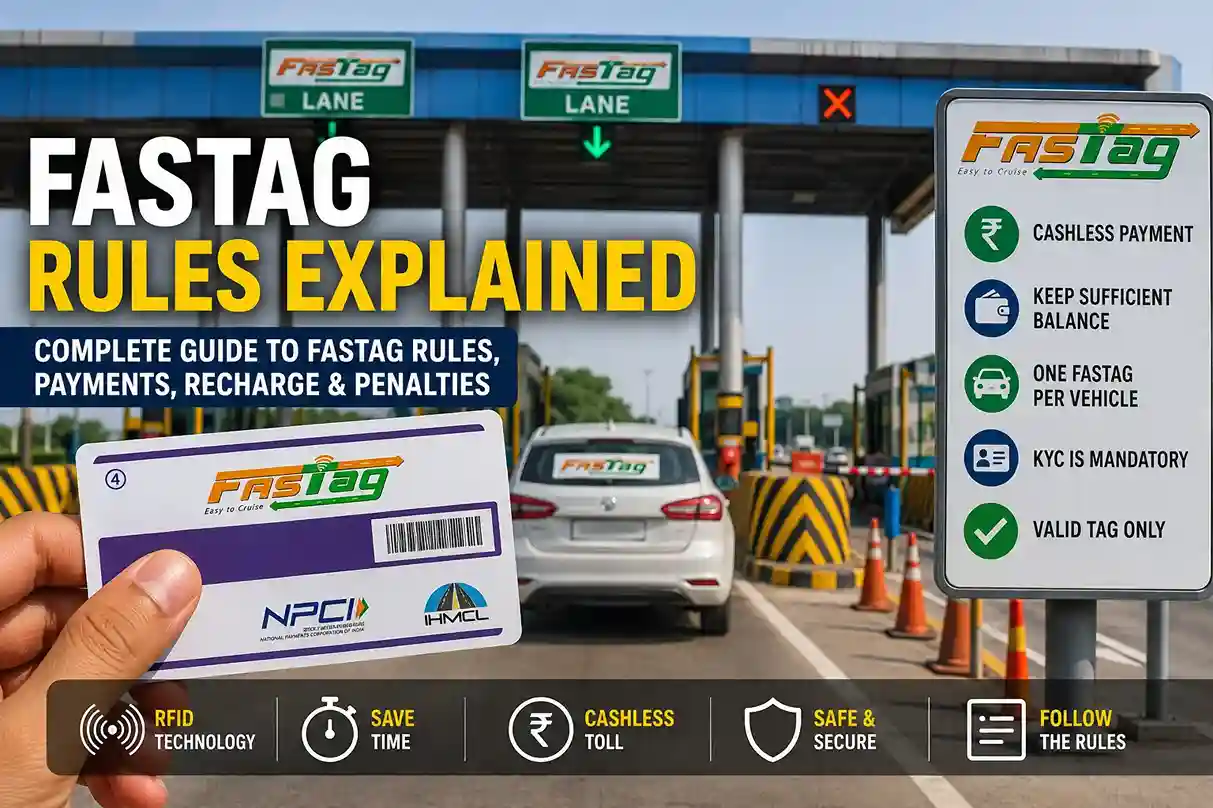
FASTag Rules Explained is one of the most searched topics among Indian vehicle owners because FASTag has become an essential part of highway travel. Whether you’re planning a long road trip or regularly commute through toll plazas, understanding how FASTag works can help you avoid unnecessary delays, penalties, and payment issues.
Introduced to promote seamless electronic toll collection, FASTag eliminates the need to stop and pay cash at toll booths. Instead, toll charges are deducted automatically from your linked wallet or bank account using RFID technology.
In real-world situations, many drivers only realize there’s an issue with their FASTag when they reach a toll plaza and the scanner fails to detect the tag or the balance is insufficient. Knowing the latest FASTag rules beforehand can save both time and frustration.
Before starting a long highway journey, it’s also a good idea to prepare your vehicle. Our guide on Monsoon Car Care Tips explains how routine maintenance can improve safety, especially during adverse weather conditions.
Quick Answer
FASTag is an electronic toll collection system that uses Radio Frequency Identification (RFID) technology to deduct toll charges automatically from a prepaid wallet or linked bank account. Vehicle owners must maintain an active FASTag with sufficient balance and properly affix it to the windshield to avoid penalties or delays at toll plazas.
According to the National Highways Authority of India (NHAI), FASTag has become the primary electronic toll payment system across most national highway toll plazas in India.
Table of Contents
- What is FASTag?
- How Does FASTag Work?
- Latest FASTag Rules Explained
- Benefits of FASTag
- How to Buy and Activate FASTag
- Recharge Methods
- Common FASTag Mistakes
- FAQs
What Is FASTag?
FASTag is a prepaid electronic toll payment system used across India’s national highways.
It consists of a small RFID sticker attached to the inside of your vehicle’s windshield. Whenever your vehicle passes through a FASTag-enabled toll lane, the scanner reads the RFID chip and automatically deducts the applicable toll amount.
The system was introduced to:
- Reduce traffic congestion
- Minimize waiting times
- Promote digital payments
- Improve fuel efficiency
- Create a smoother travel experience
For example, instead of stopping to hand over cash, vehicles can continue moving through dedicated FASTag lanes, making highway travel faster and more convenient.
More information about FASTag is available on the Indian Highways Management Company Limited (IHMCL) website.
How Does FASTag Work?
FASTag uses Radio Frequency Identification (RFID) technology.
Here’s how the process works:
- The FASTag sticker is attached to your windshield.
- The RFID scanner at the toll plaza detects the tag.
- The toll amount is calculated automatically.
- The amount is deducted from your FASTag wallet or linked bank account.
- You receive an SMS confirming the transaction.
The entire process usually takes only a few seconds, significantly reducing waiting time at toll plazas.
Latest FASTag Rules Explained
Several important rules help ensure smooth toll collection.
One FASTag Per Vehicle
Each vehicle should have only one active FASTag linked to its registration number.
Using multiple FASTags for the same vehicle can lead to deactivation or transaction failures.
Keep Sufficient Balance
A low FASTag balance may cause payment failures.
In real-world situations, many drivers discover insufficient balance only after reaching a toll booth, resulting in delays and, in some cases, additional charges.
Checking your balance before long trips is always recommended.
Correct Vehicle Registration
Your FASTag should always be linked to the correct:
- Registration number
- Vehicle class
- Owner details
Incorrect information may result in rejection during verification.
Proper Placement Matters
The FASTag sticker should be fixed exactly as instructed on the inside of the windshield.
Avoid placing it:
- Behind metallic sun films
- On damaged glass
- Under stickers
- On removable windshield accessories
Improper placement may prevent RFID scanners from reading the tag correctly.
Replace Damaged FASTags
If your windshield is replaced or the FASTag becomes damaged, request a replacement immediately.
Never attempt to remove and reuse an existing FASTag.
Benefits of FASTag
FASTag offers several advantages beyond faster toll payments.
Saves Time
Vehicles spend significantly less time waiting at toll plazas.
This becomes particularly beneficial during holiday travel when highway traffic increases substantially.
Reduces Fuel Consumption
Less idling means less fuel wasted while waiting in queues.
Over multiple highway trips, the savings can become noticeable.
Promotes Digital Payments
FASTag supports India’s growing digital payment ecosystem by reducing dependence on cash transactions.
Automatic Transaction Records
Every toll deduction generates an SMS notification.
This makes it easier to:
- Track expenses
- Verify toll charges
- Monitor travel history
Better Highway Travel Experience
Long-distance driving becomes more convenient without repeatedly stopping to make payments.
If you’re preparing your car for long road trips, our Brake Fluid Change Guide explains why healthy brakes are essential before highway driving.
How to Buy and Activate FASTag
FASTags are available through:
- Authorized banks
- Online marketplaces
- NHAI-authorized agencies
- Vehicle dealerships
To activate a FASTag, you’ll typically need:
- Vehicle Registration Certificate (RC)
- Owner identification
- Vehicle details
- Mobile number
- KYC documents
Activation usually takes only a few minutes after verification.
According to the NPCI FASTag program, users should complete KYC requirements to ensure uninterrupted FASTag services.
Recharge Your FASTag Regularly
Most FASTags support recharge through:
- UPI
- Net Banking
- Credit Cards
- Debit Cards
- Mobile Banking Apps
- Bank Wallets
Setting up automatic recharge can help prevent insufficient balance during travel.
If your vehicle’s battery has recently shown signs of weakness before a long trip, our article on Alternator Failure Symptoms explains how charging system problems can affect overall vehicle reliability.
What Happens If Your FASTag Has Insufficient Balance?
A FASTag with a low or zero balance can interrupt your journey and may result in additional charges at toll plazas.
If the RFID scanner cannot successfully deduct the toll amount, the transaction may fail. Depending on the toll operator’s policies and applicable regulations, you could be directed to another lane or required to pay additional charges.
In real-world situations, this often happens when drivers forget to recharge their FASTag before starting a long trip. Checking your balance before leaving home takes only a few minutes and can save considerable time on the road.
You can monitor your FASTag transactions through your issuing bank’s mobile app or the official National Electronic Toll Collection (NETC) platform.
What Is a Blacklisted FASTag?
A FASTag may become blacklisted for several reasons, including:
- Insufficient balance for an extended period
- Incomplete KYC verification
- Multiple FASTags linked to the same vehicle
- Suspicious activity detected by the issuing bank
- Account closure or deactivation
When a FASTag is blacklisted, toll payments may fail until the issue is resolved.
Fortunately, most cases can be fixed by completing KYC, recharging the account, or contacting the issuing bank’s customer support.
Common FASTag Mistakes Drivers Make
Although FASTag is designed to simplify toll payments, a few common mistakes can create unnecessary inconvenience.
Waiting Until the Last Minute to Recharge
Many drivers remember to recharge only after reaching a toll plaza.
Instead, maintain a small reserve balance to avoid failed transactions.
Using Multiple FASTags
Some vehicle owners accidentally activate multiple FASTags for the same registration number.
Always keep only one active FASTag linked to your vehicle.
Ignoring KYC Updates
Banks periodically require customers to complete or update Know Your Customer (KYC) details.
Failure to do so may lead to temporary service interruptions.
Incorrect Windshield Placement
Improper placement may prevent the RFID scanner from detecting your FASTag.
Always follow the installation instructions provided by the issuing bank.
Ignoring SMS Alerts
Every successful toll transaction generates an SMS notification.
Reviewing these messages helps you:
- Verify toll deductions
- Detect duplicate transactions
- Monitor remaining balance
- Identify unauthorized activity quickly
FASTag Security Tips
FASTag is generally secure, but following a few precautions can help protect your account.
Use Only Official Recharge Platforms
Recharge your FASTag through:
- Official bank websites
- Bank mobile applications
- UPI apps
- Authorized FASTag portals
Avoid unofficial websites or suspicious payment links.
Protect OTPs
Never share:
- OTPs
- Banking passwords
- UPI PINs
- Card details
No legitimate bank representative will ask for these details over the phone.
The Reserve Bank of India (RBI) regularly advises customers to remain cautious of digital payment fraud and phishing attempts.
Monitor Transactions Regularly
Review your FASTag transaction history periodically.
If you notice an incorrect deduction, report it to your issuing bank immediately.
Remove FASTag Before Selling Your Vehicle
When transferring vehicle ownership:
- Close the existing FASTag
- Remove the sticker
- Inform your issuing bank
- Allow the new owner to obtain a fresh FASTag
This helps avoid future billing disputes.
Best Practices for Using FASTag
To enjoy uninterrupted highway travel:
- Maintain an adequate balance.
- Complete KYC verification promptly.
- Use only one FASTag per vehicle.
- Keep your registered mobile number updated.
- Check SMS alerts after each toll payment.
- Replace damaged FASTags immediately.
- Verify toll deductions regularly.
- Recharge before long journeys.
These simple habits reduce delays and make highway travel more convenient.
FASTag Travel Checklist
Before beginning a highway trip, confirm the following:
✔ FASTag has sufficient balance
✔ KYC is completed
✔ FASTag sticker is securely attached
✔ Registered mobile number is active
✔ Vehicle registration details are correct
✔ Recharge options are available on your phone
✔ SMS notifications are enabled
✔ Windshield is clean around the FASTag
Completing this checklist helps ensure a smooth experience at toll plazas.
Frequently Asked Questions
Is FASTag mandatory in India?
FASTag is required for most vehicles using national highway toll plazas where electronic toll collection is implemented. Check the latest guidelines issued by the National Highways Authority of India (NHAI) for current requirements.
Can I use one FASTag for two vehicles?
No. Each FASTag is linked to a specific vehicle registration number and cannot be shared between multiple vehicles.
How do I check my FASTag balance?
You can check your FASTag balance through your issuing bank’s mobile app, internet banking, UPI-supported apps, SMS alerts, or the official FASTag customer portal.
What happens if my FASTag is damaged?
A damaged FASTag should be replaced through your issuing bank or authorized FASTag issuer. Do not attempt to reuse a damaged tag.
Can I recharge FASTag using UPI?
Yes. Most banks and FASTag issuers support recharge through UPI, debit cards, credit cards, internet banking, and mobile banking applications.
Why is my FASTag not being detected?
Possible reasons include:
- Incorrect placement
- Damaged RFID chip
- Blacklisted FASTag
- Low balance
- Technical issues at the toll plaza
Can I transfer my FASTag to another vehicle?
No. FASTag is permanently linked to one vehicle registration number. A new vehicle requires a new FASTag.
Is FASTag safe to use?
Yes. When obtained from authorized banks or official agencies and used with proper security practices, FASTag is a secure and reliable electronic toll payment system.
Key Takeaways
- FASTag enables seamless electronic toll payments across India’s highways.
- Maintain sufficient balance before every trip.
- Complete KYC to avoid service interruptions.
- Use only one FASTag for each vehicle.
- Recharge through trusted platforms.
- Monitor SMS alerts and transaction history.
- Replace damaged FASTags promptly.
- Follow official NHAI and issuing bank guidelines for uninterrupted travel.
Conclusion
Understanding FASTag Rules Explained helps you travel more efficiently while avoiding unnecessary delays, failed toll transactions, and potential penalties. With electronic toll collection now widely adopted across India’s highway network, keeping your FASTag active, correctly installed, and adequately funded is an important part of responsible vehicle ownership.
Simple practices such as maintaining sufficient balance, completing KYC verification, reviewing transaction alerts, and replacing damaged FASTags can ensure a hassle-free experience every time you travel. Whether you’re commuting daily or planning a long-distance road trip, staying informed about the latest FASTag rules will help you enjoy faster, safer, and more convenient highway journeys.
Author: Carsinfos Editorial Team
Published: July 24th, 2026