
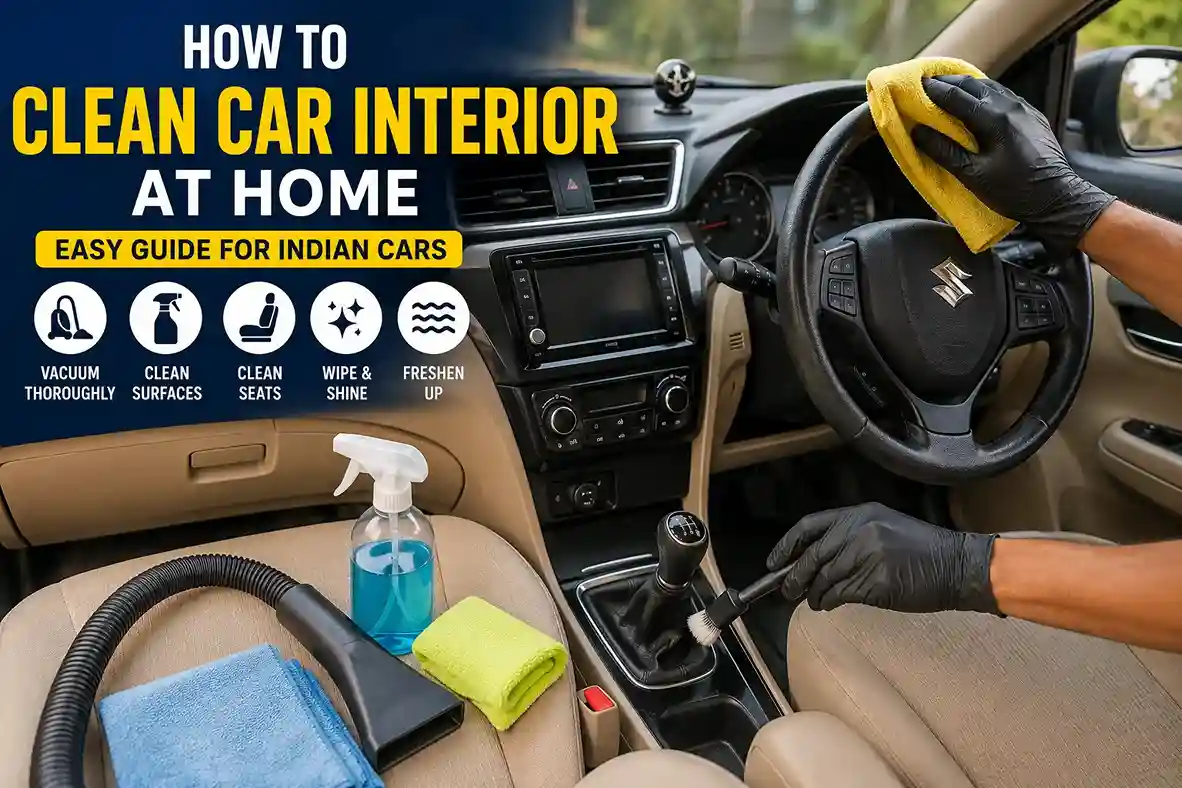
A clean cabin makes every drive feel better, and how to clean car interior at home is one of those maintenance habits that pays off quickly in comfort, hygiene, and long-term care. In Indian conditions, dust, food crumbs, sticky spills, monsoon mud, and daily traffic all build up faster than most people expect. A simple home routine can keep the cabin fresh without expensive detailing, especially when you also stay on top of basics like How to Check Car Tyre Pressure at Home in India, Signs Your Car Battery Is Weak – 10 Warning Signs, and How to Improve Car Mileage in India. Consumer Reports and CDC guidance both support a practical approach: remove loose dirt first, vacuum carefully, clean high-touch surfaces when needed, and use products correctly rather than aggressively.
How to Clean Car Interior at Home: Start With the Right Order
The biggest mistake people make is spraying cleaners before removing dust and trash. That usually turns dry dirt into a smear. A better order is simple: clear the cabin, vacuum the loose debris, clean the hard surfaces, then handle seats, glass, and final touch-ups. Consumer Reports recommends using the right vacuum attachments for carpets, cloth seats, and tight spaces, while CDC guidance says visibly dirty surfaces should be cleaned first and disinfection is only needed in specific situations, not as a substitute for normal cleaning.
In real-world situations, this order matters even more in Indian cars because small trips often bring in more dust than a driver notices. A few days of shoes, snacks, and open-window driving can leave the cabin looking far worse than it seems at first glance.
What You Need Before You Start
You do not need fancy tools. A basic home cleaning kit is enough:
- microfiber cloths
- a handheld vacuum or home vacuum with attachments
- a soft brush
- mild interior cleaner
- a bucket of clean water
- a dry towel
- cotton swabs or a detailing brush for vents and seams
If you plan to use any cleaner, EPA advises reading the label first and following the directions for use. That matters because many household products can damage surfaces if they are overused or applied to the wrong material. EPA also recommends safer product choices when available, including products with the Safer Choice label.
Step-by-Step: How to Clean Car Interior at Home
1) Remove all trash and personal items
Start by taking out bottles, wrappers, receipts, mats, loose papers, and anything stored in door pockets or cup holders. This makes every later step easier and prevents you from pushing dirt around.
Floor mats should come out first. If they are rubber, shake them out and wash them separately. If they are fabric mats, vacuum them thoroughly before any wet cleaning. Consumer Reports specifically recommends removing floor mats and using a crevice tool under the seats to reach hidden dust and debris.
2) Vacuum the whole cabin carefully
Vacuum the seats, carpet, floor mats, seat tracks, cup holders, and under-seat area. Use a crevice tool for tight spots and a brush attachment for cloth seats and carpet. Move the seats forward and backward so you do not miss the hidden areas behind the rails. Consumer Reports notes that the right attachment makes a noticeable difference when cleaning upholstery and hard-to-reach spaces.
A good home vacuum routine is one of the easiest ways to improve the feeling of the cabin without using any strong chemicals. It is also a smart habit if you already care about other maintenance areas like How to Check Car Brake Pads at Home in India or How to Check Car Engine Coolant Level at Home in India, because it keeps the car easier to inspect overall.
3) Clean the dashboard, console, and steering area
Use a microfiber cloth slightly dampened with a mild interior cleaner. Wipe the dashboard, centre console, steering wheel, gear area, and door handles. For dust in buttons, seams, and AC vents, use a soft brush or a cotton swab.
Do not spray cleaner directly onto electronics, screens, or control panels. Apply it to the cloth first. That simple habit reduces streaks and keeps moisture away from sensitive components.
For high-touch surfaces, the CDC says regular cleaning is appropriate, and disinfection is reserved for situations where someone is sick or the surface needs that extra level of treatment. In most normal home use cases, cleaning is the more important daily habit.
4) Clean the seats by material type
Fabric seats and leather seats need different approaches.
For fabric seats, vacuum first, then spot-clean stains using a cleaner designed for upholstery. Work gently so you do not soak the foam underneath. Consumer Reports recommends vacuuming cloth upholstery with the right attachment before deeper cleaning.
For leather seats, use a cleaner made for leather or a mild interior-safe solution. Wipe with a soft cloth and dry it afterward. Avoid harsh household cleaners unless the product label clearly says it is safe for that surface. EPA’s label guidance is useful here because the label tells you how to use the product safely, what surfaces it is meant for, and what precautions to follow.
If your car’s AC also leaves the cabin musty, the issue may not be cleaning alone. A dirty cabin filter or weak airflow can make the interior feel less fresh, which is why many owners check Car AC Not Cooling? 10 Critical Reasons and Easy Fixes as part of their cabin-care routine.
5) Clean the door panels, cup holders, and storage spaces
These areas collect sticky residue, fingerprints, and crumbs. Use a slightly damp microfiber cloth for door panels and a soft brush for textured plastic. Cup holders often need a second pass because they trap dried spills and dust at the bottom.
In real-world situations, this is one of the places where a car can still look “fine” at a glance but feel dirty the moment you touch it. A little extra time here makes the whole cabin feel more finished.
6) Wipe the glass and mirrors
Use a glass-safe cleaner and a lint-free cloth. Work in straight passes and finish with a dry cloth to reduce streaking. Clean the inside of the windshield carefully because haze builds up there and can affect night visibility.
If you have ever noticed glare that seems worse after sunset or after rain, the inside glass is often the culprit. Cleaning it properly can make the cabin feel brighter and safer immediately.
7) Freshen the cabin without overdoing fragrance
A clean car should smell neutral, not heavily perfumed. If you need odor control, fix the source first: old food, wet mats, damp carpets, or dirty vents. Consumer Reports notes that removing mats, vacuuming thoroughly, and addressing damp or dirty areas are key parts of keeping a car interior truly clean.
For example, if monsoon moisture gets trapped in the floor mats, the smell may return no matter how much fragrance you use. Drying the mats and carpets fully is more effective than covering the smell.
Common Mistakes to Avoid
One common mistake is using too much liquid. Excess moisture can soak into fabric, stay trapped under mats, and create mildew or lingering smell.
Another mistake is using a single household cleaner on every surface. EPA specifically advises reading labels because product directions explain safe use, storage, and surface compatibility. A product that works on one surface may damage another.
A third mistake is ignoring the high-touch areas. Steering wheel, gear knob, door handles, and seat controls are touched constantly, so they deserve regular attention even when the rest of the cabin looks okay. CDC’s advice to clean high-touch surfaces regularly fits this kind of everyday use.
A fourth mistake is cleaning the interior only after it gets visibly bad. Small weekly cleanups are much easier than a deep rescue job after months of dust and spills.
Best Practices for Indian Driving Conditions
Indian cars often deal with dust, heat, traffic, food spills, and monsoon moisture in the same week. That means a practical schedule works better than a perfect one.
- Vacuum lightly every week or two.
- Wipe high-touch surfaces often.
- Clean mats more frequently during rainy season.
- Keep tissues and a small microfiber cloth in the car.
- Use only product-safe cleaners for screens and trim.
- Let the cabin air out after cleaning.
This also pairs well with wider maintenance habits such as checking tyre pressure, monitoring mileage changes, and noticing dashboard warnings early. A cleaner cabin makes it easier to spot leaks, stains, unusual smells, or signs of moisture around the floor area. That is one reason guides like How to Improve Car Mileage in India and How Long Do Car Batteries Last in India? Signs & Fixes belong in the same ownership mindset: small routines prevent bigger problems.
When a Deep Clean Makes More Sense
A deeper interior clean is worth doing when:
- the car has visible stains or spills
- monsoon water has entered the cabin
- kids or pets have used the car heavily
- the AC smell has changed
- dust keeps reappearing quickly
- the car has not been cleaned for months
In those cases, a full vacuum, detailed wipe-down, spot treatment, and careful drying session usually gives the best result. Consumer Reports’ interior-cleaning advice also supports a methodical approach rather than random spraying and wiping.
FAQ: How to Clean Car Interior at Home
How often should I clean my car interior?
A light clean every one to two weeks is usually enough for most drivers, with a deeper clean when dust, spills, or weather make it necessary.
Can I use household cleaners inside my car?
Some can work, but only if the product label says the surface is safe. EPA recommends reading the label first and following the directions carefully.
What is the best way to clean a dusty dashboard?
Use a microfiber cloth and a small amount of interior-safe cleaner. Avoid spraying directly onto the dashboard or into switches.
Should I disinfect my car interior regularly?
Not necessarily. CDC says cleaning high-touch surfaces regularly is appropriate, while disinfection is mainly needed in specific situations, such as when someone is sick or at higher risk.
How do I keep the cabin smelling fresh?
Remove the source of the odor first. Clean mats, vacuum thoroughly, dry damp areas, and avoid overusing air fresheners.
Conclusion
Learning how to clean car interior at home is less about buying expensive products and more about following a simple, repeatable routine. Remove debris, vacuum properly, clean surfaces gently, treat seats by material type, and pay attention to the areas you touch most often. That approach works especially well in Indian driving conditions, where dust, heat, traffic, and monsoon moisture can wear down a cabin quickly.
The best results usually come from consistency. A short weekly clean, careful product use, and a few smart habits can keep the interior looking better, smelling fresher, and feeling much more comfortable every day.
Author: Carsinfos Editorial Team
Published: June 1st, 2026