
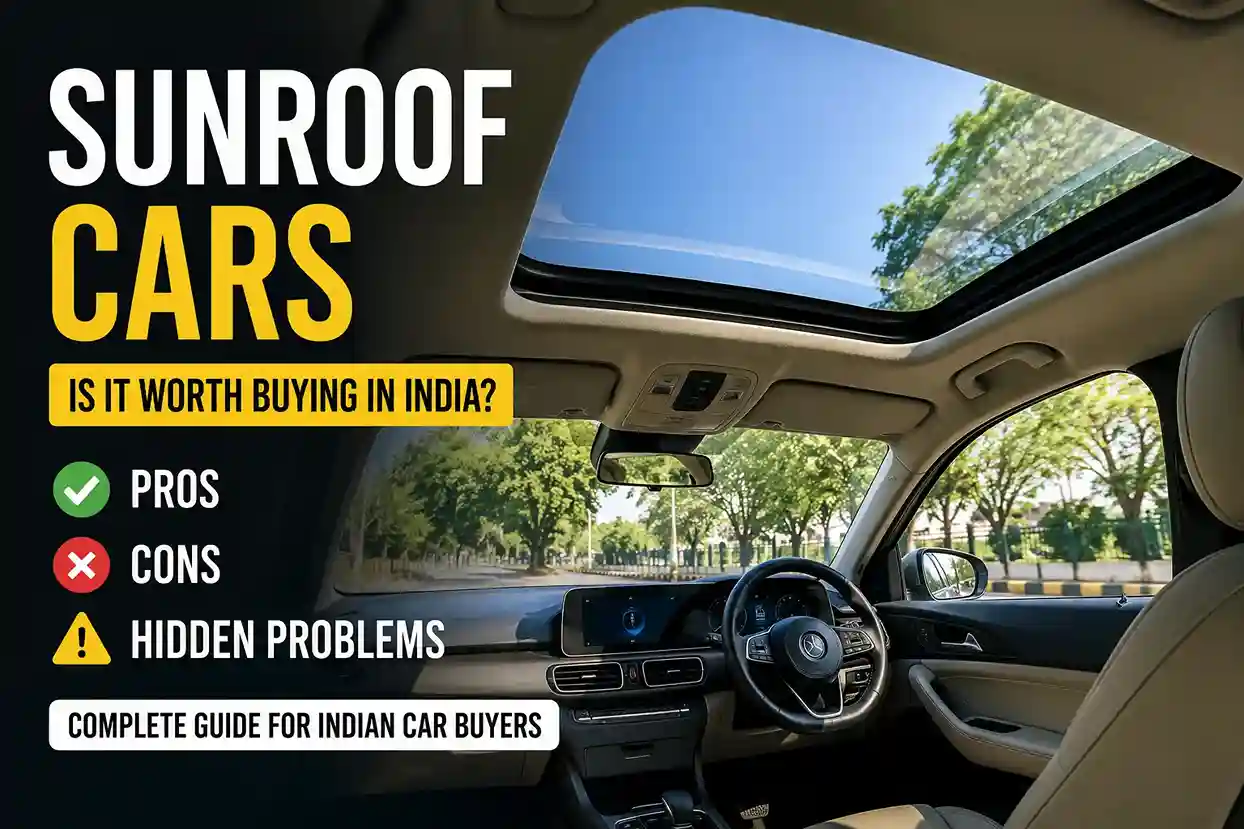
Sunroof cars are one of those features that can make a showroom car feel instantly more premium. The cabin looks brighter, the car feels a little more open, and a sliding roof can make early-morning or evening drives feel more enjoyable. At the same time, a sunroof is not a free upgrade in any real sense: it can add weight, reduce headroom, increase heat gain in hot weather, and eventually need maintenance. That is why the decision should be based on how you actually use the car, not just how the variant looks on the brochure. If you are already comparing body styles, this question often sits right next to SUV vs Sedan: Which One Should Indian Families Choose in 2026? and Best Family Cars Under 10 Lakh in India.
What sunroof cars really add
A sunroof changes the feel of the cabin more than it changes the way the car drives. The biggest practical benefits are extra light and a more airy sense of space, especially in compact cabins where the roofline can otherwise feel close. A usable opening roof can also improve ventilation when the weather is pleasant. That is one reason many buyers see sunroof cars as a lifestyle feature rather than a strict necessity. As Cars.com explains, the main upside is the open-cabin feel, while the trade-offs include extra weight, maintenance needs, and more heat in hot weather.
In real-world situations, that means the sunroof is most enjoyable when the climate is mild, the car is parked in shade, and the driver actually uses the feature. For example, a weekend highway drive with the roof open can feel pleasant; a crowded summer commute in stop-and-go traffic usually makes the same feature much less impressive. If your budget is being stretched to get a sunroof variant, it is worth comparing that money against a stronger package in Best Automatic Cars Under 10 Lakh in India or Best SUVs Under 15 Lakh in India.
Sunroof Cars: Pros and cons in Indian conditions
The biggest pro is obvious: the cabin feels richer. Many buyers like the premium experience, especially if the car is used for family trips or weekend outings. The extra brightness can make a smaller cabin feel less cramped, and open-roof ventilation can be pleasant on cooler days. Cars.com also notes that a moonroof can help with ventilation more comfortably than opening side windows because it reduces wind buffeting and road noise.
But Indian conditions make the downsides more visible too. Heat is the first problem. A glass roof can make the cabin warmer when the car is parked in direct sun, and it can ask more from the air-conditioning system once you start driving. That matters in cities where cars sit outside for hours and in regions where summer temperatures stay high for long stretches. The second issue is practicality: a sunroof can slightly reduce headroom, which tall passengers notice quickly. Cars.com also flags eventual maintenance as a normal ownership reality because gaskets, drains, motors, and shade mechanisms can age over time.
This is why many buyers should think of sunroof cars as an emotional purchase, not a utility-first purchase. If the feature makes you genuinely happier every time you drive, it can be worth the premium. If you are only choosing it because it looks good in photos, the same money may be better spent on safer trim upgrades, better tyres, or a more suitable car from Best Cars Under 15 Lakh in India.
The hidden problems most brochures do not mention
The first hidden issue is leakage and water management. A sunroof is not just a piece of glass; it depends on seals, drainage paths, and correct fitment. When those parts age or are assembled poorly, problems can show up as wind noise, moisture, or water intrusion. NHTSA recall documentation has also shown that improper bonding on panoramic roof panels can lead to wind noise, water leaks, and, in some cases, separation from the vehicle. That is not a reason to panic about every sunroof, but it is a reminder that build quality and service support matter.
The second issue is the long-term cost of repair. A basic mechanical roof is easier to live with than a large panoramic setup with motors, tracks, shades, and extra glass area. When something fails, the repair cost is often far more annoying than the original feature price. The third issue is comfort in hot weather. Cars.com specifically notes that a moonroof can increase the greenhouse effect in hot weather, meaning the cabin heats up more when parked and puts more work on the AC while driving. That is exactly the kind of ownership detail many buyers only discover after the honeymoon period ends.
There is also a safety myth worth correcting. A sunroof does not automatically make a car unsafe. Consumer Reports notes that government crash-test results show the presence of a sunroof has an insignificant effect on overall roof strength, because crash protection depends mainly on the car’s steel structure and pillars, not the middle section of the roof. The larger danger in a serious crash is ejection, which is why seat belts remain essential for everyone in the car.
When a sunroof car makes sense
A sunroof car makes sense when the feature fits your lifestyle and the rest of the vehicle already suits you. If you mostly drive in moderate weather, keep the car in covered parking, and enjoy occasional open-air drives, the feature can be genuinely satisfying. It also makes sense if you regularly use the car for family leisure trips and the premium feel matters to you more than absolute practicality.
It makes less sense if you drive in extreme heat for most of the year, if the car will live outdoors, or if your budget is tight enough that the sunroof variant forces you to compromise on a more important feature. In many cases, buyers are better off choosing a well-equipped non-sunroof trim and comparing that value against the features listed in Manual vs Automatic Cars: Which One Should You Buy? and Best Family Cars Under 10 Lakh in India.
If your main goal is comfort, the better question may be this: would you rather have a glass roof, or stronger AC, better tyres, more useful safety equipment, and lower ownership stress? For many Indian buyers, especially first-time family-car owners, that answer changes once they think beyond the showroom moment.
What to check before buying sunroof cars
Before you choose a sunroof variant, inspect the car like an owner, not like a visitor.
- Open and close the roof several times and listen for noise, hesitation, or uneven movement.
- Check the rubber seals closely for poor fit, damage, or visible gaps.
- Look at the headliner area around the roof for any sign of dampness or staining.
- Ask the dealer how the drain channels are routed and how they should be cleaned.
- Sit in the car and confirm that the roof does not make the cabin feel cramped, especially for tall passengers.
- Find out whether the sunroof is part of a larger package that includes other features you do not really need.
- Ask about warranty coverage for the roof mechanism, shade, and glass panel.
A good test is to imagine ownership after two or three years, not delivery day. In real-world situations, a car with a simpler roof can often be easier to live with than a higher trim that looks more exciting for the first month. That is especially true if the car will also be used for long family trips or daily city errands where comfort and reliability matter more than novelty.
Common mistakes buyers make
One common mistake is treating the sunroof as proof that a car is “more premium” overall. A roof panel does not automatically mean better suspension, better safety, or better long-term value. Another mistake is ignoring climate. A feature that feels pleasant during a test drive in the evening can feel far less useful in the middle of summer traffic.
Buyers also sometimes overlook resale. Sunroof cars can attract attention, but resale value still depends more on the model’s reputation, maintenance history, mileage, and condition. A clean, well-kept car without a sunroof can easily be a better used-buy than a neglected one with a panoramic roof. If you are shopping at a higher budget, it helps to compare the sunroof variant against options in Best SUVs Under 15 Lakh in India rather than paying only for visual appeal.
Does a sunroof affect mileage?
It can, but usually not in a dramatic way for most buyers. Cars.com notes that the extra glass and mechanisms add weight, which can have a small effect on fuel economy. The larger practical effect is not always the mileage number itself; it is the extra load on the air conditioner and the general trade-off between style and efficiency. If your priority is running cost, it may make more sense to focus on overall vehicle efficiency and practical ownership choices, including the ideas discussed in How to Improve Car Mileage in India.
FAQ
Are sunroof cars safe in a crash?
Yes, the sunroof itself is not the main factor that determines crash safety. Consumer Reports says government crash-test results show the roof’s overall strength is not significantly changed by the presence of a sunroof, and the most important protection step is proper seat-belt use.
Do sunroof cars leak easily?
Not necessarily, but leaks are one of the better-known ownership risks when seals, drains, or bonding are not right. NHTSA recall documents have shown that panoramic roof problems can involve water leaks and even separation in rare cases, which is why build quality and service support matter.
Is a panoramic sunroof worth it in India?
It is worth it for buyers who genuinely value the airy cabin feel and plan to use it often. It is usually not worth prioritizing over core comfort, safety, and practicality if the car will spend most of its life in hot sun or if the extra cost forces you to compromise elsewhere.
Should tall people avoid sunroof cars?
Not always, but they should sit in the car first. Some sunroof variants reduce headroom slightly, and that difference can matter more than expected once you are wearing shoes, sitting upright, and driving for long periods.
Conclusion
Sunroof cars are worth buying in India only when the feature matches your climate, parking conditions, budget, and actual usage. The glass roof can make a car feel more premium and enjoyable, but it can also bring heat, maintenance, headroom trade-offs, and extra ownership complexity. If the rest of the vehicle is strong and the sunroof variant still fits your budget comfortably, it can be a satisfying choice. If not, you are usually better off choosing a more practical trim and spending the money on a better overall package instead. For many buyers, that means comparing against Best Automatic Cars Under 10 Lakh in India or Best Cars Under 15 Lakh in India before paying extra for a glass roof.
Author: Carsinfos Editorial Team
Published: May 19th, 2026