If you have ever been told your car needs wheel alignment or wheel balancing, it is easy to assume both jobs do the same thing. They do not. The difference between wheel alignment vs wheel balancing matters because each service fixes a different problem, and choosing the right one can improve ride comfort, tyre life, and steering feel. In practical terms, alignment is about wheel angles, while balancing is about weight distribution in the wheel-and-tyre assembly. Michelin and Bridgestone both describe them as separate services that affect wear and vibration in different ways.
If you are already checking maintenance basics like How to Check Car Tyre Pressure at Home in India, When Should You Replace Car Tyres in India?, and Car Dashboard Warning Lights Explained, this topic fits naturally into the same routine. A car that feels slightly off can be trying to tell you something long before a major repair is needed.
Wheel Alignment vs Wheel Balancing Explained Simply
What wheel alignment does
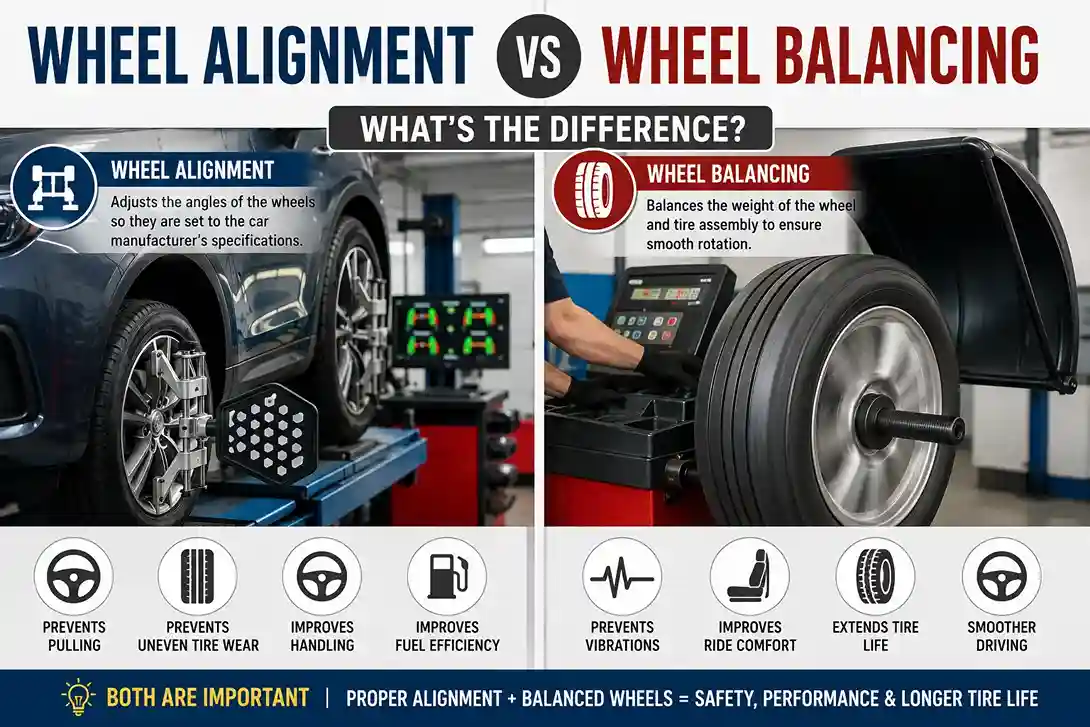
Wheel alignment adjusts the angles of the wheels so they meet the road correctly and work together as intended. Michelin explains that alignment changes wheel angles relative to each other and the road surface, helping tyres roll straight and make even contact with the ground. When alignment is off, the car may pull to one side, the steering wheel may sit crooked, or one edge of the tyre may wear faster than the other.
What wheel balancing does
Wheel balancing corrects uneven weight distribution in the tyre-and-wheel assembly. Bridgestone notes that balancing compensates for weight imbalances and is often done along with alignment. When balance is off, the wheel can wobble or vibrate, especially at speed. That is why balancing is often associated with steering wheel shake or a noticeable vibration through the cabin.
The easiest way to remember it
Think of it this way: alignment helps the wheels point and track properly, while balancing helps the wheels spin smoothly. In real-world situations, drivers often describe both problems as “the car feels weird,” but the symptoms usually point in different directions.
Signs You May Need Wheel Alignment
A wheel alignment issue usually shows up as a driving or wear problem, not a shaking problem. The most common signs include:
- the car pulling to one side on a straight road
- the steering wheel not being centered when driving straight
- uneven tyre wear, especially on one edge
- a vague, wandering, or unstable steering feel
- the car feeling less predictable after hitting a pothole or curb
Michelin lists pulling, an off-center steering wheel, and one-sided tread wear as classic alignment clues. Bridgestone also recommends checking alignment if you notice irregular wear or handling issues.
If the car has recently hit a deep pothole, speed breaker, or curb, alignment is often worth checking soon. That is especially true on roads where ground clearance and underbody stress are already part of the driving experience. You can see why this matters in Ground Clearance Explained: Why It Matters on Indian Roads.
Signs You May Need Wheel Balancing
Balancing problems usually feel like vibration. The car may still drive straight, but it does not feel smooth.
Common signs include:
- steering wheel vibration at speed
- vibration through the seat or floor
- a light shimmy that appears on highways
- a “hopping” or “buzzing” feeling from the tyres
- vibration that begins after tyre installation, rotation, or a wheel service
Bridgestone says an unbalanced tyre and wheel assembly can create vibration and uneven wear, and it can become more noticeable after tyre installation, rotation, or pothole impact. Michelin also notes that balancing is meant to correct uneven weight in the wheel assembly and reduce wobble or vibration.
For example, if your steering wheel starts trembling only at 80–100 km/h, balancing is usually a stronger suspect than alignment. On the other hand, if the car keeps drifting left on a straight road, alignment is more likely the issue.
Why the Two Services Are Often Done Together
Wheel alignment and wheel balancing are different, but they are often checked at the same time because they both affect tyre wear, handling, and ride quality. Michelin’s tyre-care guidance says these services are commonly paired with tyre rotation and correct inflation to support predictable vehicle performance. Bridgestone also notes that balancing is often performed in conjunction with alignment.
That is why a good workshop may suggest more than one service after a tyre change, suspension repair, or impact with a pothole. The goal is not to sell extra work. The goal is to restore the car to a stable baseline.
Common Mistakes Drivers Make
One of the biggest mistakes is assuming a steering vibration always means alignment. It does not. Vibration more often points to balancing, while pulling and crooked steering usually point to alignment. Another mistake is delaying the check until tyre wear becomes severe. By then, the tyres may already be damaged in a way that cannot be reversed.
A third mistake is ignoring the rest of the maintenance picture. Tyre pressure, rotation, brake wear, and suspension condition all affect how the car feels. If one of those areas is neglected, the alignment or balancing issue may keep coming back. That is why maintenance habits like How to Check Car Brake Pads at Home in India and How to Check Car Engine Coolant Level at Home in India are useful companion checks, even though they do not directly fix wheel geometry.
How Mechanics Diagnose the Difference
A workshop usually starts with the driver’s complaint and then checks the tyres, steering feel, and wear pattern.
For alignment, the mechanic may inspect:
- toe, camber, and caster angles
- steering wheel centering
- tyre wear pattern
- suspension parts that may have shifted after impact
For balancing, the mechanic may:
- remove the wheel and tyre assembly
- spin it on a balancing machine
- add weights to correct uneven mass distribution
- recheck for vibration after installation
Bridgestone describes balancing as correcting unequal weight distribution, while Michelin describes alignment as adjusting wheel angles so the tyre contacts the road properly. Those are two different diagnostic paths.
When You Should Get Alignment or Balancing Checked
A practical rule is this:
- Get alignment checked if the car pulls, drifts, or wears tyres unevenly.
- Get balancing checked if the car vibrates, especially at speed.
- Get both checked after hitting a major pothole, replacing tyres, or repairing suspension parts.
Bridgestone recommends periodic balance and alignment checks as part of tyre care, and Michelin says these services work together with tyre rotation and proper inflation to support predictable performance.
If your car recently started feeling rough after a service visit, that does not always mean something was done wrong. Sometimes a new tyre simply reveals an old issue that was already there.
Best Practices to Keep the Difference Clear
A few simple habits make it easier to tell alignment and balancing issues apart:
- Keep tyre pressure at the manufacturer’s recommended level.
- Rotate tyres on schedule.
- Watch for vibration versus pulling.
- Inspect tyres for uneven wear regularly.
- Recheck after pothole impacts or wheel repairs.
- Ask for both services when new tyres are installed if the workshop recommends it.
NHTSA’s tyre guidance emphasizes regular inspection, rotation, and attention to irregular wear because these habits help preserve tyre performance and safety.
The practical benefit is simple: if you maintain tyres properly, problems become easier to diagnose. A clean tyre history makes symptom tracking much more reliable.
Wheel Alignment vs Wheel Balancing: Which One Saves More Tyres?
Both can save tyres, but in different ways. Alignment prevents tyre edges from wearing down too quickly because the wheels are tracking correctly. Balancing reduces vibration that can contribute to uneven wear and discomfort. Michelin and Bridgestone both note that both services affect wear and ride quality, just through different mechanisms.
If a car has alignment issues and the tyres keep scrubbing on one edge, the tyre may wear out early even if balancing is perfect. If the car is balanced but not aligned, the ride may be smooth but the tyres can still wear incorrectly. That is why it is not an either-or decision in many cases.
FAQ
Is wheel alignment the same as wheel balancing?
No. Alignment adjusts wheel angles so the car tracks properly, while balancing corrects uneven weight in the tyre-and-wheel assembly so it spins smoothly.
Does wheel balancing fix steering pull?
Usually not. Steering pull is more commonly an alignment issue. Balancing is more likely to fix vibration.
Does alignment fix vibration?
Not usually. Vibration at speed is more often related to balancing, tyre condition, or wheel issues.
How often should I get alignment or balancing checked?
A good rule is to check them during tyre service, after a major pothole impact, or whenever you notice pulling, vibration, or uneven wear. Michelin and Bridgestone both recommend periodic tyre-care checks as part of regular maintenance.
Can bad suspension affect alignment and balancing?
Bad suspension can definitely affect alignment, and it can make tyre wear and vibration worse. That is one reason alignment checks are often recommended after suspension work.
Conclusion
The difference between wheel alignment vs wheel balancing is straightforward once you know what each service does. Alignment is about angles and straight tracking. Balancing is about smooth rotation and eliminating vibration. If your car pulls, drifts, or wears tyres unevenly, think alignment. If it shakes or vibrates at speed, think balancing. Many drivers need both at different times, especially after potholes, tyre replacement, or suspension repairs.
For a car that feels composed, predictable, and easier on its tyres, the best approach is regular inspection, proper tyre pressure, and timely service. That is the most practical way to avoid wasting tyres and to keep the car feeling right on the road.
Author: Carsinfos Editorial Team
Published: May 31st, 2026