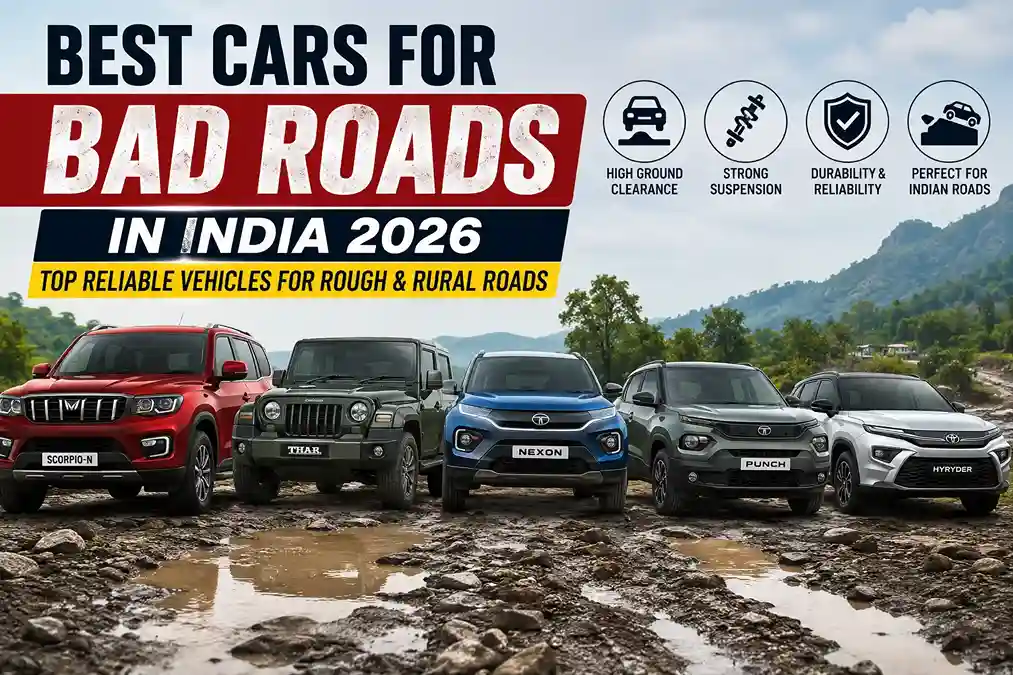
India’s road network continues to improve every year, but many drivers still face broken surfaces, potholes, uneven village roads, waterlogged streets, and poorly maintained highways. That’s why choosing the best cars for bad roads in India 2026 is more important than ever, especially for families, daily commuters, and long-distance travelers.
A vehicle that performs well on rough roads can improve comfort, reduce maintenance costs, and provide greater confidence behind the wheel. Whether you regularly drive through rural areas, construction zones, mountain roads, or urban streets filled with potholes, selecting the right car can make a noticeable difference.
Before buying your next vehicle, it may also help to understand factors like suspension design, ground clearance, and maintenance requirements. Readers interested in vehicle ownership costs can explore car maintenance tips and essential car buying advice for additional guidance.
What Makes a Car Suitable for Bad Roads?
Many buyers focus only on engine power or fuel efficiency. However, rough-road performance depends on several other factors.
High Ground Clearance
Ground clearance is the distance between the lowest part of the vehicle and the road surface.
Higher ground clearance helps prevent:
- Scraping on speed breakers
- Underbody damage
- Contact with large potholes
- Issues on unpaved roads
For Indian conditions, a ground clearance of 180 mm or more is generally desirable.
Strong Suspension Setup
A well-tuned suspension absorbs shocks from potholes and uneven roads.
In real-world situations, a good suspension often improves comfort more than additional horsepower.
Durable Build Quality
Bad roads can put significant stress on:
- Tires
- Suspension components
- Steering systems
- Wheels
Vehicles with robust construction typically handle rough conditions better over time.
Suitable Tire Profile
Cars with slightly taller tire sidewalls often absorb road imperfections more effectively than low-profile tires.
According to the National Highway Authority of India, road infrastructure is expanding rapidly, but local road conditions can still vary considerably between regions.
Best Cars for Bad Roads in India 2026
1. Mahindra Scorpio-N
The Mahindra Scorpio-N remains one of the strongest choices for Indian road conditions.
Key Advantages
- Ground clearance around 187 mm
- Rugged ladder-frame chassis
- Strong suspension tuning
- Excellent rural-road capability
- Available four-wheel-drive option
The Scorpio-N handles potholes, gravel roads, and uneven terrain with confidence.
For example, drivers in semi-urban and rural regions often appreciate its ability to maintain stability where smaller hatchbacks struggle.
2. Mahindra Thar Roxx
The newer Thar Roxx expands upon the traditional Thar’s strengths while improving practicality.
Why It Performs Well
- Exceptional suspension travel
- High ground clearance
- Strong body structure
- Designed for challenging terrain
Although primarily known as an adventure vehicle, it also performs well on damaged roads and poorly maintained highways.
Those interested in SUV ownership may also find our guide on SUV maintenance essentials useful.
3. Tata Punch
The Tata Punch continues to be a favorite among budget-conscious buyers.
Highlights
- Compact size
- High seating position
- Ground clearance of approximately 187 mm
- Affordable ownership costs
Despite being a compact SUV, the Punch handles rough city roads surprisingly well.
Its suspension absorbs everyday road imperfections better than many similarly priced hatchbacks.
4. Tata Nexon
The Tata Nexon remains one of India’s most balanced compact SUVs.
Benefits for Rough Roads
- Strong suspension setup
- Solid build quality
- Comfortable ride quality
- Good ground clearance
In real-world driving, the Nexon often feels composed even when encountering consecutive potholes or uneven surfaces.
The vehicle’s safety reputation is supported by testing organizations such as Global NCAP.
5. Maruti Suzuki Brezza
The Brezza continues to attract buyers seeking reliability and practicality.
Strengths
- Comfortable suspension
- Proven reliability
- Low maintenance costs
- Good fuel efficiency
While it may not be an off-road specialist, it handles everyday rough roads comfortably.
6. Hyundai Creta
The Hyundai Creta remains one of India’s best-selling SUVs for good reason.
Why Buyers Like It
- Refined ride quality
- Comfortable cabin
- Balanced suspension
- Strong service network
The Creta performs particularly well on mixed road conditions, including highways and urban roads with moderate damage.
7. Toyota Hyryder
Toyota’s reputation for durability makes the Hyryder an attractive option.
Advantages
- Reliable engineering
- Efficient hybrid options
- Comfortable ride quality
- Good long-term ownership experience
Drivers who frequently travel long distances often appreciate the vehicle’s comfort and efficiency.
You can also learn more about vehicle efficiency through our article on improving fuel economy.
8. Kia Seltos
The Kia Seltos combines modern features with practical road manners.
Notable Features
- Comfortable suspension
- High driving position
- Strong feature list
- Good highway stability
Although more urban-focused than some competitors, it remains capable on moderately rough roads.
Best SUVs for Rural Roads in India
For drivers regularly traveling through villages or agricultural regions, SUVs often offer additional confidence.
Top options include:
- Mahindra Scorpio-N
- Mahindra Thar Roxx
- Tata Nexon
- Toyota Hyryder
- Maruti Suzuki Brezza
These vehicles generally offer a better combination of ground clearance and suspension durability.
Common Mistakes Buyers Make
Choosing Style Over Practicality
Many buyers prioritize appearance instead of suitability.
A stylish car with low ground clearance may look appealing but can become frustrating on poor roads.
Ignoring Ground Clearance
Ground clearance should be one of the first specifications checked when buying a car for Indian road conditions.
Overlooking Service Availability
A reliable service network matters, especially in smaller towns.
Organizations such as Consumer Reports consistently highlight maintenance and reliability as critical ownership factors.
Focusing Only on Engine Power
More power does not necessarily mean better rough-road performance.
Suspension quality and chassis tuning often matter more.
Best Practices When Driving on Bad Roads
Even the best vehicle can suffer damage if driven carelessly.
Slow Down Before Potholes
Braking early reduces suspension stress.
Maintain Proper Tire Pressure
Incorrect tire pressure can worsen ride quality and increase wear.
Inspect Suspension Components Regularly
Routine inspections help identify problems before they become costly repairs.
Avoid Overloading
Excessive weight places additional strain on:
- Suspension
- Tires
- Brakes
- Steering components
For more ownership advice, readers can also check our guide to extending vehicle lifespan.
How Ground Clearance Affects Daily Driving
Ground clearance is often discussed in marketing materials, but its practical importance is sometimes overlooked.
For example:
- Large speed breakers become easier to cross.
- Flooded streets pose less risk.
- Village roads become more manageable.
- Undercarriage damage becomes less likely.
However, extremely high ground clearance can slightly affect handling characteristics, so balance remains important.
Should You Buy an SUV or Hatchback for Bad Roads?
The answer depends on your driving environment.
Choose an SUV If:
- You frequently travel outside cities.
- Roads are poorly maintained.
- You need higher seating visibility.
- You encounter flooding or rough terrain regularly.
Choose a Hatchback If:
- Most driving occurs in cities.
- Parking space is limited.
- Fuel economy is your primary concern.
For many Indian buyers in 2026, compact SUVs provide the best compromise.
Frequently Asked Questions
Which car is best for bad roads in India in 2026?
The Mahindra Scorpio-N is among the strongest choices due to its rugged construction, capable suspension, and excellent rough-road performance.
What is the minimum ground clearance recommended for Indian roads?
A ground clearance of around 180 mm or higher is generally considered suitable for challenging Indian road conditions.
Is a compact SUV better than a hatchback for pothole-filled roads?
In most cases, yes. Compact SUVs usually provide better ground clearance and suspension travel.
Which budget-friendly car handles bad roads well?
The Tata Punch is one of the most affordable options that performs well on rough roads.
Are expensive SUVs always better for rough roads?
Not necessarily. Suspension tuning, build quality, and ground clearance matter more than price alone.
Conclusion
Finding the best cars for bad roads in India 2026 requires looking beyond marketing claims and focusing on real-world usability. Ground clearance, suspension quality, durability, and service support all play a major role in long-term satisfaction.
For most buyers facing rough roads, potholes, broken surfaces, and rural routes, vehicles such as the Mahindra Scorpio-N, Tata Nexon, Tata Punch, Maruti Suzuki Brezza, Toyota Hyryder, Hyundai Creta, and Mahindra Thar Roxx offer strong value and dependable performance.
Before making a purchase, evaluate the roads you drive on most often, compare maintenance costs, and take an extended test drive. The right choice can provide greater comfort, lower repair expenses, and a much better ownership experience for years to come.
Author: Carsinfos Editorial Team
Published: June 6th, 2026